
Emilio García Gómez
Spanish Arabist, literary historian and critic
About Emilio García Gómez
Lived 1905 – 1995 (aged 89). Emilio García Gómez was a Spanish linguist, diplomat, university teacher, literary critic, translator and arabist.
Emilio García Gómez, 1st Count of Alixares (4 June 1905 – 31 May 1995) was a Spanish Arabist, literary historian and critic, whose talent as a poet enriched his many translations from Arabic.
Life
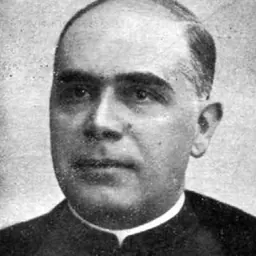
Emilio García Gómez decided to pursue Arabic as a career after attending Arabic language classes taught by Prof. Miguel Asín Palacios at the Complutense University of Madrid. He had been a student of law. In his Arabic studies he was mentored by the professors Julián Ribera y Tarragó, and by Asín.
Recipient of a scholarship to Cairo he studied there under Prof. Ahmad Zaki Pasha and the Egyptian writer Taha Husayn. His doctoral thesis on the Alexander legend in the Maghrib won the Fastenrath Prize. In 1930 he became Professor of Arabic at the University of Granada, until he returned to Madrid in 1944.
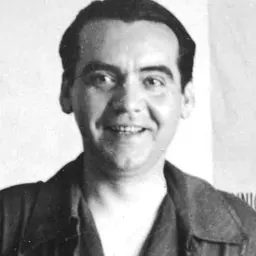
While living in Granada he had become friends with classical music composer Manuel de Falla and with poet Federico García Lorca, both aficionados of Flamenco. Inspired by the translations of Gómez, García Lorca wrote his Diván de Tamarit. Here, the poet was not following in imitation of a traditional Arabic verse but rather paying it contemporary homage, García Gómez favorably observed.
He was again in Egypt during 1947. García Gómez spent the following year in Damascus, Syria, where he was appointed to the Arabic Academy [Al-Majma' Al-Ilmi Al-Arabi], a notable distinction for a westerner. He gave lectures at the University of Cairo in 1951 during celebrations on its silver jubilee.
Later, he served as the Spanish Ambassador to Iraq (Baghdad), Lebanon (Beirut), and Turkey (Ankara), as well as to Afghanistan during the years 1958 to 1969.
Throughout his career, Emilio García Gómez was widely admired. and received several prestigious academic and literary awards. He lived until the age of ninety.
On 7 October 1994 García Gómez was raised into the Spanish nobility by King Juan Carlos I and received the hereditary title conde de los Alixares (English: Count of Alixares). García Gómez died in 1995, and since he had no successors his title became extinct.
Works
A major focus of his academic work was Arabic poetry, acting as a literary historian and critic as well as translator. As a Spanish Arabist, of course, he interpret Muslim culture generally. A. J. Arberry praised the "wide scholarship and literary judgement that has characterized Prof. Gómez's numerous contributions to Islamic studies." In a series of articles published over many years, he developed a theory of the origin and development of the Andaluz Arabic muwashshahat genre of popular strophic verse, which is often sung. It is said to be related to the Mozarabic jarchas (Arabic kharja) poetic form.
His many translations of Arabic poetry were received with acclaim by the literary public, as well as by many Spanish poets, including Federico García Lorca, and artists, e.g., Manuel de Falla. Particular mention may be made of his translation of Ibn Said al-Maghribi's 1243 anthology of poetry, the Pennants of the Champions, and of later translation of and commentary on the Andalusian poet and scholar Ibn Hazm (994–1064). García Gómez also published a collection of his literary essays, Silla del Moro y nuevas escenas andaluzas, which drew on his experiences while living in Granada during the early thirties.
Assisting two of his mentor professors, García Gómez edited shorter, more popular versions (though still rigorous) of the well-known tomes by Julián Ribera y Tarragó and Miguel Asín Palacios Later, he and Prof. Rafael Lapesa produced several articles on their teacher and elder Miguel Asín Palacios.
After returning from his travels to the Middle East in the late 1940s and early 1950s, he published (under the title Los Días) his translation of the Egyptian writer Taha Husayn's recent autobiographical work Al-Ayyam. In 1955 he translated another modern work of Arabic literature, about an Egyptian rural prosecutor.
Though his main academic work was in Arabic poetry, he also approached the social issues involved in understanding the Islamic presence in medieval Spain. García Gómez collaborated with the French historian Évariste Lévi-Provençal in editing and translating an anonymous chronicle written in medieval Córdoba under the rule of Caliph 'Abd al-Rahman III. He also translated Lévi-Provençal's well known history of Muslim Spain into Spanish. For the first volume he wrote a prologue commenting on the significance of the Muslim period in Spanish history, where he refers approvingly to the work of Américo Castro.
In his later years García Gómez labored on the various facets of the literary events surrounding the Alhambra, an architectural gem, site of the government offices and the residence of the Muslim rulers of Granada, where the Islamic presence lingered the longest.
Don’t just read it —
keep it.
Full-length biographies made to live with: read them, listen on the way to work, watch them tonight.
- E-book
- Audio
- Video
Instant download · yours to keep · every purchase keeps this site free
Important facts
People in Emilio García Gómez's life
Named in this biography and alive at the same time




Related people
Same field, nearest in time


Contemporaries
People whose lives overlapped Emilio García Gómez's


Frequently asked questions
Who was Emilio García Gómez?
Spanish Arabist, literary historian and critic (1905–1995)
When was Emilio García Gómez born?
Emilio García Gómez was born on 4 June 1905 in Madrid.
When did Emilio García Gómez die?
Emilio García Gómez died on 31 May 1995 in Madrid.
What was Emilio García Gómez's occupation?
Emilio García Gómez was a linguist, diplomat, university teacher, literary critic, translator and arabist.
What nationality was Emilio García Gómez?
Emilio García Gómez was Spanish.
Sources & further reading
· Wikipedia: Emilio García Gómez
· DBpedia: Emilio García Gómez
Cite this page
APA: Biography.guide. (2026). Emilio García Gómez. https://biography.guide/emilio-garcia-gomez/
MLA: "Emilio García Gómez." Biography.guide, https://biography.guide/emilio-garcia-gomez/.
Chicago: "Emilio García Gómez." Biography.guide. https://biography.guide/emilio-garcia-gomez/.
Data last updated: 2026-09-20 · Spot an error? Report a correction.
Page generated 2026-09-27 05:20 UTC