
Emilie Widemann Macfarlane
Native Hawaiian activist
About Emilie Widemann Macfarlane
Lived 1859 – 1947 (aged 87). Emilie Widemann Macfarlane was an American.
Emilie Kekāuluohi Widemann Macfarlane (October 3, 1859 – March 13, 1947) was a Native Hawaiian activist and civic organizer during the late 19th and early 20th centuries She was known for her charitable work and civic involvement in Honolulu, including women's suffrage, public health, education, and the preservation of Hawaii's historical legacy.
Macfarlane was born of German and Native Hawaiian descent, and her family were connected to the aliʻi (nobility) class of the Hawaiian Kingdom. She married Hawaiian-born British businessman Frederick W. Macfarlane and had three children.
In 1893, shortly after the overthrow of the Hawaiian Kingdom, Macfarlane was elected the first president of Hui Aloha ʻĀina for Women, an organization formed in opposition to the deposition of Queen Liliʻuokalani and efforts to annex the islands to the United States. Macfarlane resigned after a few weeks in office after a subsequent rift with members of the organization. In 1895, she co-founded the Hawaiian Relief Society to assist the victims of a cholera epidemic in Honolulu. After Hawaii's annexation to the United States in 1898, Macfarlane led knitting circles for Hawaiian servicemen during World War I and supported her sister Wilhelmine Dowsett's campaign for women's suffrage in the Territory of Hawaii.
Early life and family Macfarlane was born on October 3, 1859, in Lihue on the island of Kauai to German immigrant and businessman Hermann A. Widemann and his Hawaiian wife, Mary Kaumana Pilahiuilani. Her mother was descended from the aliʻi (nobility) class of the Hawaiian Kingdom, and her mother's grandfather, Kalawa, was a retainer and close associate of the aliʻi of Kauai. Macfarlane's father was a prominent politician in the Hawaiian Kingdom and a cabinet minister of the last queen, Liliʻuokalani.
alt=A mustachioed Frederick W. Macfarlane during the 1880s or the 1890s On April 5, 1879, Emilie and Hawaiian-born British businessman Frederick Washington Macfarlane (1854–1929) married in Waikiki. The Macfarlanes, like the Widemanns, were well connected in Hawaiian society. Frederick Macfarlane was a younger brother of George W. Macfarlane (the last chamberlain of King Kalākaua) and Edward C. Macfarlane, who was Queen Liliʻuokalani's cabinet minister in 1892.
They had three children: Frederick Walter Kalaninuikukailimoku Macfarlane (1882–1953), Guy E. Kalanimalokuloku-i-kepoookalani Macfarlane (1889–1961) and Hawaii Territorial legislator Walter James Macfarlane (1907–1943). Frederick married Alice Kamokilaikawai Campbell, and they had five children. Her daughter-in-law, Alice Kamokilaikawai Campbell, became a Hawaii Territorial senator and was active in the opposition to Hawaiian statehood.
Macfarlane was known as Auntie Mela by her extended family. Her eldest sister, Emma Kalanikauleleiwinuiamamao Widemann (1852–1931), was married to Frederick's eldest brother, Henry R. Macfarlane. Their younger sister, Wilhelmine Kekelaokalaninui Widemann Dowsett, was a suffragist who helped organize the National Women's Equal Suffrage Association of Hawaii in 1912—the first women's suffrage club in the Territory of Hawaii.
Civic engagement Macfarlane was known for her charitable work and civic involvement in Honolulu, including women's suffrage, public health, education, and the preservation of Hawaii's historical legacy.
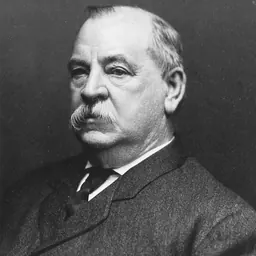
Macfarlane was elected the first president of the organization; her sister, Martha Widemann Berger, and Abigail Kuaihelani Campbell were vice-presidents. When US President Grover Cleveland sent James H. Blount to investigate the overthrow, both Hui Aloha ʻĀina groups drafted resolutions to restore the monarchy. The drafting of the resolution for the Hui Aloha ʻĀina for Women was particularly contentious. The version drafted by Macfarlane and the group's leaders was rejected; Macfarlane resigned the presidency on April 17, 1893, and was replaced by Campbell. The sisters' great-granddaughter, Alice Flanders Guild, said that they remained lifelong friends despite the rift. According to contemporary newspaper reports, the rift in the group stemmed from suspicions by its older Hawaiian members that the younger, better-educated members wanted to replace Liliʻuokalani with Queen Kapiʻolani or Princess Kaʻiulani. The organization also hosted luau and bazaars to raise funds after the end of the epidemic. The monarchy's former heir presumptive, Princess Kaʻiulani, was also an active member of the society.
Involvements after annexation
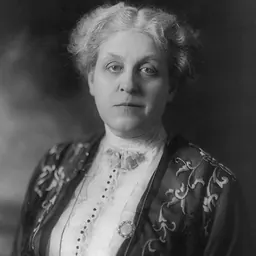
Macfarlane became a supporter of the women's-suffrage movement with her sister, Wilhelmine, in 1912. Native Hawaiian women of high societal rank like Macfarlane were key early campaigners for this cause. Her sister became president of the National Women's Equal Suffrage Association of Hawaii, the islands' first women's suffrage club. The major obstacle to female enfranchisement was the Organic Act, which established the Territory of Hawaii. Unlike the United States constitution and most state constitutions, it specifically forbade the territorial legislature from granting suffrage. With the assistance of suffragist leaders on the mainland such as Almira Hollander Pitman and Carrie Chapman Catt, Hawaiian suffragists and their allies were able to push an act (ignored until then) through Congress granting Hawaii the power to decide the issue. In 1919, a local bill to enfranchise the women of Hawaii was proposed. Although the Macfarlane sisters were among the leading Hawaiian women to speak at mass meetings in favor of the legislation, the bill stalled. The Nineteenth Amendment to the United States Constitution was passed by the United States House of Representatives on May 21, 1919, however, and by the Senate on June 4. The amendment was ratified by 36 states (a two-thirds majority) on August 18, 1920, granting all female citizens of the United States and its territories the right to vote. On August 30, Macfarlane became one of the first twelve women to register to vote in Honolulu.
Macfarlane and her friend, Emma Ahuena Taylor, organized knitting units on behalf of Native Hawaiian soldiers who were fighting in World War I; her sister was president of the Hawaiian Knitting Unit, which was formed in March 1918. According to historian Rumi Yasutake, Native Hawaiians of German descent (such as Macfarlane and her sisters) felt political pressure from their paternal connections to the German Empire—the wartime enemy of the United States—and their past anti-annexation activities. Regardless, they channeled their wartime efforts into helping Native Hawaiian servicemen. During the war, Macfarlane was a member of the Women's Committee of the Territorial Food Commission and Federal Food Administration.
Macfarlane was also a member of the Daughters of Hawaii, which was founded in 1903 to preserve the islands' historic legacy. Macfarlane generated interest from 1913 to 1914 in the preservation of Hānaiakamalama, the former summer palace of Queen Emma now managed by the Daughters of Hawaii:
Macfarlane was a founding member of the Kapiolani Maternity Home and Kaʻiulani Home for Girls, and was involved with the board of an industrial school which helped rehabilitate youths of the Territory of Hawaii. She and her husband were founding members of Saint Augustine by the Sea Catholic Church in Waikiki.
Don’t just read it —
keep it.
Full-length biographies made to live with: read them, listen on the way to work, watch them tonight.
- E-book
- Audio
- Video
Instant download · yours to keep · every purchase keeps this site free
Important facts
Family & relationships
People in Emilie Widemann Macfarlane's life
Named in this biography and alive at the same time




Contemporaries
People whose lives overlapped Emilie Widemann Macfarlane's


Frequently asked questions
Who was Emilie Widemann Macfarlane?
Native Hawaiian activist
When was Emilie Widemann Macfarlane born?
Emilie Widemann Macfarlane was born on 3 October 1859 in Līhuʻe.
When did Emilie Widemann Macfarlane die?
Emilie Widemann Macfarlane died on 13 March 1947 in The Queen's Medical Center.
What nationality was Emilie Widemann Macfarlane?
Emilie Widemann Macfarlane was American.
Sources & further reading
· Wikipedia: Emilie Widemann Macfarlane
· DBpedia: Emilie Widemann Macfarlane
Cite this page
APA: Biography.guide. (2026). Emilie Widemann Macfarlane. https://biography.guide/emilie-widemann-macfarlane/
MLA: "Emilie Widemann Macfarlane." Biography.guide, https://biography.guide/emilie-widemann-macfarlane/.
Chicago: "Emilie Widemann Macfarlane." Biography.guide. https://biography.guide/emilie-widemann-macfarlane/.
Data last updated: 2026-09-20 · Spot an error? Report a correction.
Page generated 2026-09-27 05:26 UTC