
About Émile Petitot
Lived 1838 – 1916 (aged 77). Émile Petitot was a French geographer, anthropologist, folklorist, cartographer, catholic priest and missionary, known for Ethnologist and Linguist.
Émile-Fortuné Petitot (Inuk name, Mitchi Pitchitork Tchikraynarm iyoyé, meaning "Mr. Petitot, son of the Sun"; December 3, 1838 – May 13, 1916) was a French Missionary Oblate who worked in the Canadian northwest as a cartographer, ethnologist, geographer, linguist, and writer. Returning to France later in life, he served as a parish priest and wrote of Northern Canada.
Early life and education Émile-Fortuné-Stanislas-Joseph Petitot was born in Grancey-le-Château-Neuvelle, France. His father, Jean-Baptiste Petitot, was a clockmaker; his mother was Thérèse-Julie-Fortunée Gagneur. Petitot attended the minor seminary and the Collège du Sacré-Cœur in Grancey. In 1859, he took minor orders of the priesthood before joining the Oblates in September 1860. His training occurred at Notre-Dame-de-l'Osier, and on March 15, 1862, he was ordained in Marseille. on July 20. By August 1862, he had traveled to Great Slave Lake in Canada's Northwest Territories with the Hudson's Bay Brigade Trail.
Petitot was based at Northwest Territories' missions for 12 years, including Fort Norman, Fort Providence, Fort Resolution, and Fort Good Hope. Here he collected material for his dictionary of several Athabascan languages.
Petitot returned to France in 1874 and published his dictionaries and other works. The following year, in 1875, he spoke at the inaugural International Congress of Americanists in Nancy, France making a strong case for the Asiatic origin of Inuit and North American Indians. He was awarded a silver medal by the Société de Géographie for his Arctic maps, including the partially traveled Hornaday River, though he referred to it as Rivière La Roncière-le Noury, named in honor of the president of the Société de Géographie.
After two years in France, Petitot returned to the North, mostly helping and studying the people of the Great Slave Lake area. In late 1881, at Fort Pitt (Sask) he "married" Margarite (Margarita) Valette, a mature Metis woman. In January 1882 he was forcibly taken east by Constantine Scollen, an Oblate who had traveled with him and Bishop Tache, to Canada, in 1862. He entered an asylum near Montreal. By 1883, however, his ill health forced him to end his missionary work and return to France. Honoring his scientific contributions, he was awarded the 1883 Back Prize by the Royal Geographical Society.
He became a parish priest on October 1, 1886, at Mareuil-lès-Meaux, France. Here, he ministered to the sick, and published books and articles on Northern Canada.
Death and legacy He died in 1916.
The Petitot River is named in his honor. Painted circa 1867, Petitot's painting of Fort Edmonton hangs in the Alberta Legislature's library.
Selected works In English Moir, John; Moir, Jacqueline; Laverdue, Paul, eds. Travels Around Great Slave Lake and Great Bear Lakes, 1862-1882 The Champlain Society. Toronto: Champlain Society, 2005.
In French Vocabulaire Français-Esquimau Les Amérindiens du nord-ouest canadien du 19e siècle selon Emile Petitot préc. d'une prés. gén. des indiens dènè-dindjié (The Amerindians of the Canadian Northwest in the 19th century, as seen by Émile Petitot), Monographie de Dènè-Dindjié., De l'origine asiatique des Indiens de l'Amérique arctique, Petit vocabulaire sarcis, Mémoire abrégé sur la géographie de l'Athabaskaw-Mackenzie et des grands lacs du bassin arctique de l'Amérique, (1874). Outils en pierre et en os du MacKenzie (cercle polaire arctique), (1876). Dictionnaire de la langue dènd̀indjié ; dialectes montagnais ou chippewayan, peaux de lièvre et loucheux renfermant en outre un grand nombre de termes propres a sept autres dialectes de la même langue; précédé d'une monographie des dènè-dindjié, d'une grammaire et de tableaux synoptiques des conjugaisons, (1884). De la formation du langage. Mots formés par le redoublement de racines hétérogènes, quoique de signification synonyme, c'est-a-dire par réitèration copulative, (1890). Accord des mythologies dans la cosmogonie des Danites arctiques, (1911). Dates importantes pour l'histoire de la découverte géographique de la puissance du Canada.,
Musical score (1889). Chants indiens du Canada Nord-Ouest,
Filmography (2001). I, Emile Petitot — Arctic Explorer and Missionary, a Getaway Films documentary. A one-hour documentary produced by Tom Shandel (who also portrays Petitot in the documentary!).
Don’t just read it —
keep it.
Full-length biographies made to live with: read them, listen on the way to work, watch them tonight.
- E-book
- Audio
- Video
Instant download · yours to keep · every purchase keeps this site free
Important facts
People in Émile Petitot's life
Named in this biography and alive at the same time

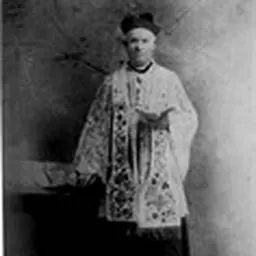
Related people
Same field, nearest in time


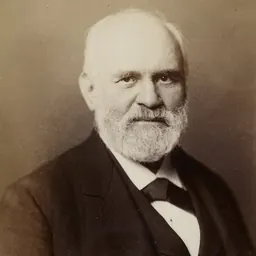

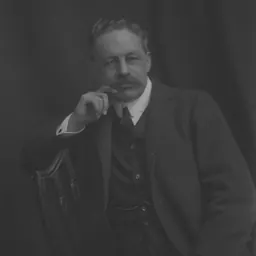
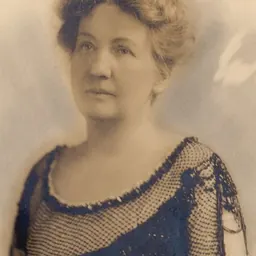
Contemporaries
People whose lives overlapped Émile Petitot's

Frequently asked questions
Who was Émile Petitot?
French missionary to Canada (1838–1916)
When was Émile Petitot born?
Émile Petitot was born on 3 December 1838 in Grancey-le-Château-Neuvelle.
When did Émile Petitot die?
Émile Petitot died on 13 May 1916 in Mareuil-lès-Meaux.
What was Émile Petitot's occupation?
Émile Petitot was a geographer, anthropologist, folklorist, cartographer, catholic priest and missionary.
What was Émile Petitot known for?
Émile Petitot was known for Ethnologist and Linguist.
What nationality was Émile Petitot?
Émile Petitot was French.
Sources & further reading
Cite this page
APA: Biography.guide. (2026). Émile Petitot. https://biography.guide/emile-petitot/
MLA: "Émile Petitot." Biography.guide, https://biography.guide/emile-petitot/.
Chicago: "Émile Petitot." Biography.guide. https://biography.guide/emile-petitot/.
Data last updated: 2026-09-20 · Spot an error? Report a correction.
Page generated 2026-09-27 05:13 UTC