
Emil Julius Gumbel
German mathematician and statistician
About Emil Julius Gumbel
Lived 1891 – 1966 (aged 75). Emil Julius Gumbel was a German and American mathematician, translator, statistician, university teacher, journalist and pacifist, known for Gumbel distribution.
Emil Julius Gumbel (18 July 1891 – 10 September 1966) was a German mathematician and political writer.
Gumbel specialised in mathematical statistics and, along with Leonard Tippett and Ronald Fisher, was instrumental in the development of extreme value theory, which has practical applications in many fields, including engineering and finance. In 1958, Gumbel published a key book, Statistics of Extremes, in which he derived and analyzed the probability distribution that is now known as the Gumbel distribution in his honor.
In the 1920s and early 1930s, Gumbel was considered unusual and highly controversial in German academic circles for his vocal support of left-wing politics and pacifism, and his opposition to Fascism. From this time onwards, he became much more politically active. He joined the Independent Social Democrat Party in 1917, and became a prominent member of the pacifist New Fatherland League which was later renamed the German League for Human Rights.
Among the Nazis' most-hated public intellectuals, the German Minister of Culture revoked his teaching license on August 6, 1932 . He was the first German professor to be expelled from the university, nearly a year before his friend Albert Einstein. He then left Heidelberg for Paris, where he had already been lecturing at the Sorbonne since August 1932. After losing his appeal against his dismissal from the University of Heidelberg in late January 1933 , he was stripped of his German citizenship as part of the German Reich's first list of denaturalizations in August 1933. He taught at the École libre des hautes études in Paris, and in Lyon, as well as continuing his political activities and helping other refugees. In 1939, he and his family received French citizenship. He taught at the New School for Social Research and Columbia University in New York City until his death in 1966.
When he died of lung cancer in 1966, Gumbel's papers were made a part of The Emil J. Gumbel Collection, Political Papers of an Anti-Nazi Scholar in Weimar and Exile. These papers include reels of microfilm that document his activities against the Nazis.
Influences Emil Gumbel was strongly influenced from a young age by his uncle, Abraham Gumbel (1852-1930) with whom he had long conversations about political and social issues. The death of Abraham's son (Emil's cousin) in the First World War, is thought to have been a triggering factor in both Abraham and Emil's life-long commitment to pacifism.
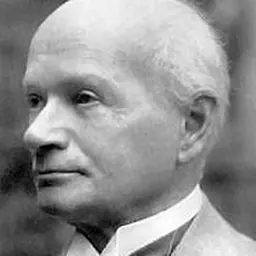
During his time at the Ludwig-Maximilians-Universität München (1910-1914), Gumbel was taught mathematics, economics and the social sciences by eminent scholars known to have liberal political views, including Alfred Pringsheim and Lujo Brentano. He also studied actuarial science and gained insurance qualifications and work experience (including a summer job with a London insurance company), before completing his doctorate dissertation under the supervision of extraordinary professor of statistics Friedrich Böhm in July 1914.
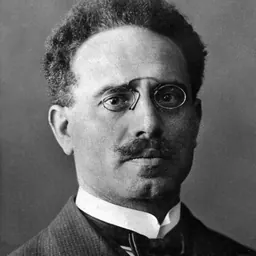
After the 1919 murder of prominent USPD member, Karl Liebknecht, who Gumbel greatly admired, there was strong criticism by journalist Kurt Tucholsky that the trial judge completely ignored evidence against the Nazi Brownshirts. Horrified, Gumbel ardently investigated many similar political murders that had occurred and published his findings in numerous publications and books, including Two Years of Murder in 1921, followed by Four Years of Political Murder in 1922, the deeply controversial Conspirators in 1924, The Armor of War of the Imperialistic States in 1928, which dealt with the causes of political murder, and Traitors fall victim to the Feme in 1929.
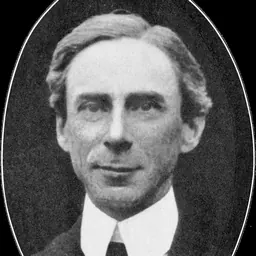
Gumbel was an admirer of the British intellectual and pacifist Bertrand Russell, though they never met. He translated some of Russell's work into German. She died of cancer in 1952.
Selected publications
[French edition in modern LaTeX and translations into English and German "Die extreme Lebensdauer des Menschen" (2026). Zenodo]. . Dover reprint 2004
Don’t just read it —
keep it.
Full-length biographies made to live with: read them, listen on the way to work, watch them tonight.
- E-book
- Audio
- Video
Instant download · yours to keep · every purchase keeps this site free
Important facts
People in Emil Julius Gumbel's life
Named in this biography and alive at the same time




Related people
Same field, nearest in time


Contemporaries
People whose lives overlapped Emil Julius Gumbel's


Frequently asked questions
Who was Emil Julius Gumbel?
German mathematician and statistician (1891–1966)
When was Emil Julius Gumbel born?
Emil Julius Gumbel was born on 18 July 1891 in Munich.
When did Emil Julius Gumbel die?
Emil Julius Gumbel died on 10 September 1966 in New York City.
What was Emil Julius Gumbel's occupation?
Emil Julius Gumbel was a mathematician, translator, statistician, university teacher, journalist and pacifist.
What was Emil Julius Gumbel known for?
Emil Julius Gumbel was known for Gumbel distribution.
What nationality was Emil Julius Gumbel?
Emil Julius Gumbel was German and American.
Sources & further reading
· Wikipedia: Emil Julius Gumbel
Cite this page
APA: Biography.guide. (2026). Emil Julius Gumbel. https://biography.guide/emil-julius-gumbel/
MLA: "Emil Julius Gumbel." Biography.guide, https://biography.guide/emil-julius-gumbel/.
Chicago: "Emil Julius Gumbel." Biography.guide. https://biography.guide/emil-julius-gumbel/.
Data last updated: 2026-09-20 · Spot an error? Report a correction.
Page generated 2026-09-27 05:18 UTC