
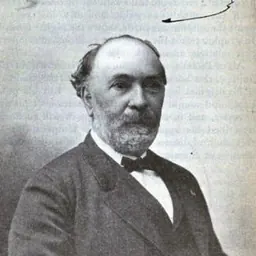
Emil Hácha
Czech politician, political prisoner, lawyer, translator and judge
About Emil Hácha
Lived 1872 – 1945 (aged 72). Emil Hácha was an Austrian and Czech judge, politician, translator, lawyer, poet and jurist.
Emil Dominik Josef Hácha (; 12 July 1872 – 27 June 1945) was a Czech lawyer, serving as the president of Czechoslovakia from November 1938 to March 1939. In March 1939, after the breakup of Czechoslovakia, Hácha was the nominal president of the newly proclaimed German Protectorate of Bohemia and Moravia.
Early life and legal career Emil Hácha was born on 12 July 1872 in the South Bohemian town of Trhové Sviny.
He graduated from a secondary school in České Budějovice and then applied for the law faculty at the University of Prague. After finishing his studies in 1896 (JUDr.) he worked for the Country Committee of the Kingdom of Bohemia in Prague (a self-government body with quite limited power). In 1902, Hácha married Marie Klausová (1873–1938). They had a daughter, Milada. Marie died ten months before Hácha became president.
Shortly after the outbreak of World War I, he became a judge at the Supreme Administrative Court in Vienna (the court was responsible for Cisleithania). He met there. After the Treaty of Versailles, Pantůček became President of the Supreme Administrative Court of the Republic of Czechoslovakia in Prague, and Hácha became a judge (1918) and Deputy President (1919) of the court.
After Pantůček's death in 1925, he was chosen by T. G. Masaryk as his successor, becoming first President of the Supreme Administration Court. a specialist in English common law and international law. He was also a translator of English literature (most notably Three Men in a Boat by Jerome K. Jerome), collector of art and a poet. His book Omyly a přeludy (Errors and Delusions) was published in 1939 anonymously, then later under his own name in 2001. He also became a member of the Legislative Council.
President of Czechoslovakia Second Czechoslovak Republic
Following the Munich Agreement, Hácha was nominated as successor to Edvard Beneš on 30 November 1938 as President of Czechoslovakia. When Hácha first arrived in Berlin, he first met with the German Foreign Minister, Joachim von Ribbentrop, prior to meeting with Hitler. Von Ribbentrop testified at the Nuremberg trials that during this meeting Hácha had told him that "he wanted to place the fate of the Czech State in the Führer's hands."
In the evening of 14 March 1939, Hitler summoned President Hácha to the Reich Chancellery in Berlin. Generalfeldmarschall Wilhelm Keitel, in his memoirs, recalled that when Hácha arrived, Hitler said that "he was going to let the old gentleman rest and recover for two hours," which was incomprehensible to Keitel. Finally, at 1:30 a.m., on 15 March 1939, Hitler saw the President. He told Hácha that as they were speaking, the German army was about to invade Czechoslovakia. Minutes of the conversation noted that for Hácha this was the most difficult decision of his life, but believed that in only a few years this decision would be comprehensible and in 50 years would probably be regarded as a blessing. According to Joachim Fest, Hácha suffered a heart attack induced by Göring's threat to bomb the capital and by four o'clock he contacted Prague, effectively "signing Czechoslovakia away" to Germany. Göring however does not mention that Hácha had a heart attack because of his threat.
The French Ambassador, Robert Coulondre, reported that according to an unnamed source considered reliable by Coulondre, by half past four, Hácha was "in a state of total collapse, and kept going only by means of injections." Coulondre described the scene at the Reich Chancellery:"The German ministers [Göring and Ribbentrop] were pitiless. They literally hunted Dr. Hácha and M. Chvalkovsky round the table on which the documents were lying, thrusting them continually before them, pushing pens into their hands, incessantly repeating that if they continued in their refusal, half of Prague would lie in ruins from bombing within two hours, and that this would be only the beginning. Hundreds of bombers were waiting the order to take off, and they would receive that order at six in the morning if the signatures were not forthcoming". However, Hitler's interpreter Paul Schmidt, who was present during the meeting, in his memoirs denied such turbulent scenes ever taking place with the Czechoslovak President. Jewish-American historian Jean Ancel noted that Schmidt's memoirs are not a reliable source of information as he consistently downplayed and ignored the criminal policies of the Nazi regime as well as his own role in them.
Protectorate of Bohemia and Moravia After the occupation of the remnants of Czechoslovakia on 16 March, Hácha retained his office as President, but was forced to swear an oath to Hitler, who appointed Konstantin von Neurath as Protector of Bohemia and Moravia. During his time as President of the Protectorate, Hácha also signed into law legislation modeled after the Nazi Nuremberg Laws that discriminated against Czech Jews. He dissolved the parliament, replacing it with the National Partnership.
Hácha's situation changed on 29 September 1941, when Reinhard Heydrich was appointed Deputy Protector of Bohemia and Moravia, as Neurath had been considered not harsh enough by Hitler. Hácha lost all remaining influence over political affairs in his country and became a puppet. Many of his colleagues and friends were arrested (including the Prime Minister Alois Eliáš) and shot or sent to Nazi concentration camps.
After the assassination of Heydrich, the new Deputy Protector became Kurt Daluege. Hitler had originally planned to murder 10,000 Czechs in reprisal for the murder of Heydrich and warned Hácha that if another such incident occurred, "we should have to consider deporting the whole Czech population". This threat was made at Heydrich's funeral.
Capture, torture, and death On 9 May 1945, Prague was captured by the Red Army during the Prague offensive. Hácha was brutally beaten and arrested by NKVD agents on 13 May and transferred immediately to Pankrác Prison. He died in prison on 27 June 1945 under mysterious circumstances. After his death, he was buried at first in an unmarked grave at the Vinohrady Cemetery, although since at least 2005 there has been a marker present on his grave.
Don’t just read it —
keep it.
Full-length biographies made to live with: read them, listen on the way to work, watch them tonight.
- E-book
- Audio
- Video
Instant download · yours to keep · every purchase keeps this site free
Important facts
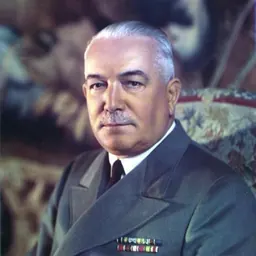
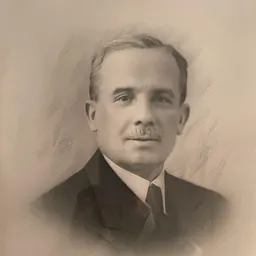
People in Emil Hácha's life
Named in this biography and alive at the same time


Related people
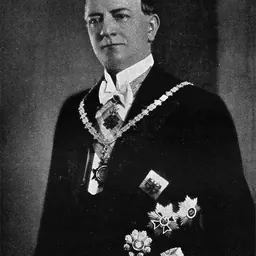
Same field, nearest in time
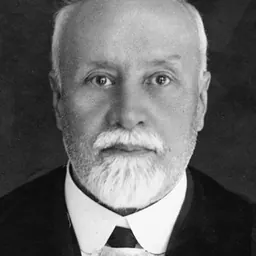
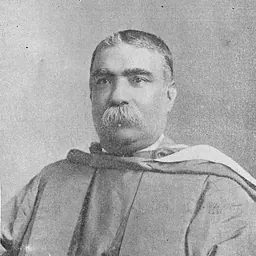


Contemporaries
People whose lives overlapped Emil Hácha's


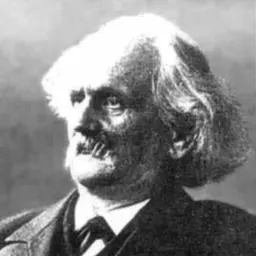
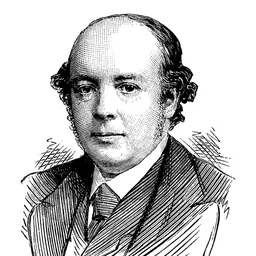

Frequently asked questions
Who was Emil Hácha?
Czech politician, political prisoner, lawyer, translator and judge (1872-1945)
When was Emil Hácha born?
Emil Hácha was born on 12 July 1872 in Trhové Sviny.
When did Emil Hácha die?
Emil Hácha died on 27 June 1945 in Prague, Pankrác.
What was Emil Hácha's occupation?
Emil Hácha was a judge, politician, translator, lawyer, poet and jurist.
What nationality was Emil Hácha?
Emil Hácha was Austrian and Czech.
Sources & further reading
Cite this page
APA: Biography.guide. (2026). Emil Hácha. https://biography.guide/emil-hacha/
MLA: "Emil Hácha." Biography.guide, https://biography.guide/emil-hacha/.
Chicago: "Emil Hácha." Biography.guide. https://biography.guide/emil-hacha/.
Data last updated: 2026-09-20 · Spot an error? Report a correction.
Page generated 2026-09-27 05:33 UTC