
About Emil Eichhorn
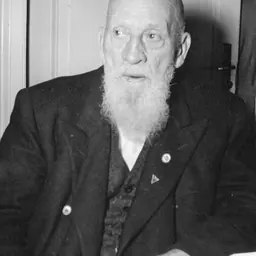
Lived 1863 – 1925 (aged 61). Emil Eichhorn was a German politician, journalist, editor-in-chief, editing staff and chief of police.
Robert Emil Eichhorn (9 October 1863 – 26 July 1925) was a German politician and journalist who served as President of the Berlin Police during the German Revolution of 1918–1919. His dismissal from that position triggered the Spartacist Uprising. Before his political career, while working as the editor for the Dresden based Sächsischen Arbeiterzeitung, he was also one of Germany's top amateur road cyclists.
Biography
Eichhorn was born in Röhrsdorf (now part of Chemnitz) in the Kingdom of Saxony in October 1863 and became apprenticed as a glass worker in 1878, becoming active in the Social Democratic Party of Germany (SPD). He became a full-time official in 1893 and was the head of its press office from 1908–17, when he left with others to form the USPD where he played a similar role. Eichorn worked for the post-revolutionary Russian Telegraph Agency in Berlin.
On 9 November 1918 he led the occupation of police headquarters in Berlin, the infantry guarding the building surrendering their weapons without a struggle. Inside the building Eichhorn took over the office of police chief and 600 political prisoners were set free.
The attempt to dismiss Eichhorn by the Prussian cabinet on 4 January 1919 and to replace him with the SPD politician Eugen Ernst provoked mass opposition and a general strike, with Eichhorn declaring the following day in front of a mass demonstration of 200,000, "I got my job from the Revolution, and I shall give it up only to the Revolution." The attempt to remove Eichhorn had been preceded by slander in Vorwärts accusing him of having received Russian gold, possessing stolen foodstuffs and illegally bought arms.
In 1920, Eichhorn joined the KPD when it merged with the USPD left. After Paul Levi was expelled in 1921, Eichhorn joined the Communist Working Group (KAG) for a short time. However, he remained a member of the KPD and a KPD deputy until he died in Berlin in July 1925.
Don’t just read it —
keep it.
Full-length biographies made to live with: read them, listen on the way to work, watch them tonight.
- E-book
- Audio
- Video
Instant download · yours to keep · every purchase keeps this site free
Important facts
People in Emil Eichhorn's life
Named in this biography and alive at the same time

Related people
Same field, nearest in time




Contemporaries
People whose lives overlapped Emil Eichhorn's




Frequently asked questions
Who was Emil Eichhorn?
German politician (1863-1925)
When was Emil Eichhorn born?
Emil Eichhorn was born on 9 October 1863 in Röhrsdorf.
When did Emil Eichhorn die?
Emil Eichhorn died on 26 July 1925 in Berlin.
What was Emil Eichhorn's occupation?
Emil Eichhorn was a politician, journalist, editor-in-chief, editing staff and chief of police.
What nationality was Emil Eichhorn?
Emil Eichhorn was German.
Sources & further reading
Cite this page
APA: Biography.guide. (2026). Emil Eichhorn. https://biography.guide/emil-eichhorn/
MLA: "Emil Eichhorn." Biography.guide, https://biography.guide/emil-eichhorn/.
Chicago: "Emil Eichhorn." Biography.guide. https://biography.guide/emil-eichhorn/.
Data last updated: 2026-09-27 · Spot an error? Report a correction.
Page generated 2026-09-27 05:17 UTC