
About Emil Abderhalden
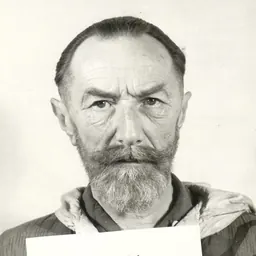
Lived 1877 – 1950 (aged 73). Emil Abderhalden was a Swiss racial theorist, politician, biochemist, university teacher, physiologist and physician.
Emil Abderhalden (9 March 1877 – 5 August 1950) was a Swiss biochemist and physiologist. His main findings, though disputed already in the 1910s, were not finally rejected until the late 1990s. Whether his misleading findings were based on fraud or simply the result of a lack of scientific rigour remains unclear. Abderhalden's drying pistol, used in chemistry, was first described by one of his students in a textbook Abderhalden edited.
Biography Emil Abderhalden was born in Oberuzwil in the Canton of St. Gallen in Switzerland. He moved to Basel to study at the University of Basel.
During his time in Basel, he joined the rowing club and was a founding member of FC Basel. Eleven men attended the meeting of founding Fussball Club Basel on 15 November 1893. Abderhalden played his first game for the club in the home game in the Stadion Schützenmatte on 22 September 1894 as Basel won 2–0 against FC Gymnasia. Abderhalden left the club in January 1895.
Abderhalden studied medicine at the University of Basel and received his doctorate in 1902. He then studied in the laboratory of Emil Fischer and worked at the University of Berlin. In 1911 he moved to the University of Halle and taught physiology in the medical school. From 1931 to 1950, he was president of the German Academy of Natural Scientists Leopoldina. In 1936 he was appointed member of the Pontifical Academy of Sciences.
During World War I, he established a children's hospital and organized the removal of malnourished children to Switzerland. Subsequently, he resumed his research into physiological chemistry and began to study metabolism and food chemistry.
After World War II, Abderhalden returned to Switzerland in 1945 and lectured physiological chemistry at the University of Zurich as the replacement of Bonifaz Flaschenträger, who had to leave due to his membership in the NSDAP. He died there at age 73. The minor planet 15262 Abderhalden was named in his honour. In late 1912 Abderhalden's "defensive ferments reaction test" was applied to the differential diagnosis of dementia praecox from other mental diseases and from normals by Stuttgart psychiatrist August Fauser (1856–1938), and his miraculous claims of success were soon replicated by researchers in Germany and particularly in the United States. However, despite the worldwide publicity this "blood test for madness" generated, within a few years the "Abderhalden–Fauser reaction" was discredited and only a handful of American psychiatric researchers continued to believe in it. Certainly by 1920 the test was all but forgotten in the USA. Abderhalden's reputation continued to grow in Germany, however, where collaborators managed to "replicate" his results, usually by simply repeating experiments until they succeeded and discarding the negative results. As Abderhalden was seen as the founder of scientific biochemistry in Germany, questioning his work could harm one's career, as Leonor Michaelis, who had been a collaborator with Abderhalden, discovered when he reported inability to reproduce Abderhalden's claims for his pregnancy test; by 1922, Michaelis's situation in Germany was so tarnished that he had to leave the country to embark on an outstanding career of scientific success abroad. Otto Westphal described Abderhalden's work in conversation with Ute Deichmann as follows: the entire extent of the rejection was revealed. However, in Abderhalden's days, the science of immunology was all but non-existent. That his experiments indeed seemed to "work" on occasion was probably due to immunoprecipitation. The crucial difference between this and Abderhalden's theory is that the former is an effect of antibodies, whereas the fictitious Abwehrfermente were presumed to be proteases; a difference that has large implications for biochemistry and immunology.
The most comprehensive analysis of the issue as to whether Abderhalden was simply grossly mistaken or perpetuated deliberate fraud can be found in Kaasch.
Personal life Emil Abderhalden had a son, Rudolf Abderhalden who also was a chemist and moved to Switzerland after World War II.
Don’t just read it —
keep it.
Full-length biographies made to live with: read them, listen on the way to work, watch them tonight.
- E-book
- Audio
- Video
Instant download · yours to keep · every purchase keeps this site free
Important facts
People in Emil Abderhalden's life
Named in this biography and alive at the same time


Related people
Same field, nearest in time



Contemporaries
People whose lives overlapped Emil Abderhalden's



Frequently asked questions
Who was Emil Abderhalden?
Swiss biochemist and physiologist (1877–1950)
When was Emil Abderhalden born?
Emil Abderhalden was born on 9 March 1877 in Oberuzwil.
When did Emil Abderhalden die?
Emil Abderhalden died on 5 August 1950 in Zurich.
What was Emil Abderhalden's occupation?
Emil Abderhalden was a racial theorist, politician, biochemist, university teacher, physiologist and physician.
What nationality was Emil Abderhalden?
Emil Abderhalden was Swiss.
Sources & further reading
Cite this page
APA: Biography.guide. (2026). Emil Abderhalden. https://biography.guide/emil-abderhalden/
MLA: "Emil Abderhalden." Biography.guide, https://biography.guide/emil-abderhalden/.
Chicago: "Emil Abderhalden." Biography.guide. https://biography.guide/emil-abderhalden/.
Data last updated: 2026-09-20 · Spot an error? Report a correction.
Page generated 2026-09-27 05:34 UTC