
About Emerîkê Serdar
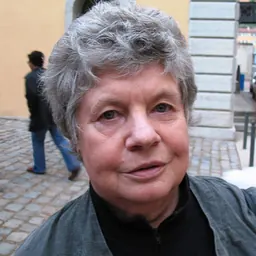
Lived 1935 – 2018 (aged 82–83). Emerîkê Serdar was a Russian and Armenian writer, prose writer, opinion journalist, translator, literary critic and public figure.
Emerîkê Serdar (Amarik Davreshovich Sardaryan) (8 February 1935 – 19 February 2018) was a Kurdish–Yazidi writer from Armenia. He was born in the village of Pampa Kurda (Sîpan) in Armenian SSR.
Life and career Emerîkê Serdar's parents, Dewrêşê Serdar and Seyra Khudo, were villagers. His father died in World War II when Serdar was less than six years old, leaving his mother, Seyra, to raise him alone. By the age of 15, Serdar had developed an interest in writing and journalism,
Serdar received his secondary education in the village of Alagyaz and graduated from the Faculty of History and Philology of an Armenian Pedagogical Institute named after Khachatur Abovyan.
He worked for three months in the village of Alagyaz, where he taught Armenian as well as Kurdish language and literature. In the same year in 1959, he began working for the Kurdish department of Radio Yerevan until 1962.
He was employed as a journalist for the Kurdish newspaper, Rya Taza, where he worked from 1962 until 2006. Throughout the years of working there, he also became a translator, head of the department of culture, executive secretary, deputy editor, and after 1991 he became chief editor of the newspaper until he retired in 2006.
Serdar was a member of the Union of Journalists of Armenia since 1965, and in 1995 a member of the Union of Writers of Armenia. He also was a member of the international club PEN Kurd. In 1980, Serdar was awarded the Certificate of Honor of the Presidium of the Supreme Soviet, for his active contributions and work as a journalist. In 1986 he was awarded the honorary title "Honored Journalist of the Armenian SSR". Serdar was twice appointed a delegate to the congresses of the Union of Journalists in the USSR, which were held in Moscow. After 1992, he was the chairman of the Board of the Council of the Kurdish Intelligentsia of Armenia.
Works Emerîkê authored hundreds of articles related to Kurdish culture, he also published a dozen of storybooks, many of which were in Kurdish.
"Destê dê" (Mother's hand) (1974) “Îdî dereng bû” (It's too late) (1979) “Dengê dil” (Voice of the Heart) (1985) “Gundê me” (Our Village) (2006) “Hisreta emir” (2008) “Bijare” (2011) “Keşkûl” (2013) “Mukurî” (2014)
Don’t just read it —
keep it.
Full-length biographies made to live with: read them, listen on the way to work, watch them tonight.
- E-book
- Audio
- Video
Instant download · yours to keep · every purchase keeps this site free
Important facts
Related people
Same field, nearest in time



Contemporaries
People whose lives overlapped Emerîkê Serdar's





Frequently asked questions
Who was Emerîkê Serdar?
Armenian Kurdish writer (1935–2018)
When was Emerîkê Serdar born?
Emerîkê Serdar was born on 8 February 1935 in Sipan.
When did Emerîkê Serdar die?
Emerîkê Serdar died in 2018.
What was Emerîkê Serdar's occupation?
Emerîkê Serdar was a writer, prose writer, opinion journalist, translator, literary critic and public figure.
What nationality was Emerîkê Serdar?
Emerîkê Serdar was Russian and Armenian.
Sources & further reading
Cite this page
APA: Biography.guide. (2026). Emerîkê Serdar. https://biography.guide/emerike-serdar/
MLA: "Emerîkê Serdar." Biography.guide, https://biography.guide/emerike-serdar/.
Chicago: "Emerîkê Serdar." Biography.guide. https://biography.guide/emerike-serdar/.
Data last updated: 2026-09-20 · Spot an error? Report a correction.
Page generated 2026-09-27 05:00 UTC