
About Emanuel Haldeman-Julius
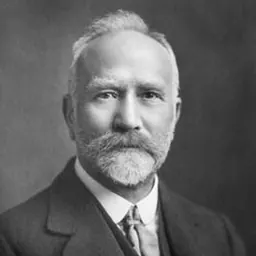
Lived 1889 – 1951 (aged 62). Emanuel Haldeman-Julius was an American publisher, writer, thinker and publishing.
Emanuel Haldeman-Julius (né Emanuel Julius) (July 30, 1889 – July 31, 1951) was a Jewish-American socialist writer, atheist thinker, social reformer and publisher. He is best remembered as the head of Haldeman-Julius Publications, the creator of a series of pamphlets known as "Little Blue Books," total sales of which ran into the hundreds of millions of copies.
Biography
Early years
Emanuel Julius was born July 30, 1889, in Philadelphia, Pennsylvania, the son of David Julius (né Zolajefsky), a bookbinder. His parents were Jewish emigrants who fled Odessa (then part of the Russian Empire) and emigrated to America to escape religious persecution. His paternal and maternal grandfathers had both been rabbis but his own parents were not religious. "hey were indifferent, for which I thank them."
As a boy, Emanuel read voraciously. Literature and pamphlets produced by the socialists were inexpensive; Julius read them and was convinced by their arguments. As he put it in 1913, "Only four years ago, I was a factory hand — slaving away in a textile mill in Philadelphia. I came upon the philosophy of Socialism and it put a new spirit into me. It lifted me out of the depths and pointed the way to something higher. I commenced to crave for expression. I felt that I have something to say. So, I scribbled things down. And, to my surprise, Socialist editors gave me a little encouragement." He joined the Socialist Party before World War I
Career Haldeman-Julius on May 16, 1926. From left to right: Gilbert Frankau, Sinclair Lewis, Leon Milton Birkhead, Clarence Darrow, Haldeman-Julius, Birkhead's wife, and Darrow's wife. After working for various newspapers, Julius rose to particular prominence as an editor (1915–1922) of the Appeal to Reason, a socialist newspaper with a large but declining national circulation. He and his first wife, Marcet Haldeman (whose last name he adopted in hyphenate ), purchased the Appeal's printing operation in Girard, Kansas and began printing pocket books on cheap pulp paper (similar to that used in pulp magazines), stapled in paper cover. These were first were called The Appeal's Pocket Series and sold in 1919 for 25 cents. The covers were either red or yellow. Over the next several years Haldeman-Julius changed the name successively to The People's Pocket Series, Appeal Pocket Series, Ten Cent Pocket Series, Five Cent Pocket Series, Pocket Series and finally in 1923, Little Blue Books. The five cent price of the books remained in place for many years. Many titles of classic literature were given lurid titles in order to increase sales. Eventually, millions of copies per year were sold in the late 1920s.
In 1922 they renamed the Appeal as The Haldeman-Julius Weekly (known from 1929 to 1951 as The American Freeman), which became the house organ. In 1924 they launched The Haldeman-Julius Monthly (later renamed The Debunker), which had a greater emphasis on Freethought, and in 1932 added The Militant Atheist, among other journals.
The novelist Louis L’Amour (1908–1988) described the Haldeman-Julius publications in his autobiography and their potential influence: Riding a freight train out of El Paso, I had my first contact with the Little Blue Books. Another hobo was reading one, and when he finished he gave it to me. The Little Blue Books were a godsend to wandering men and no doubt to many others. Published in Girard, Kansas, by Haldeman-Julius, they were slightly larger than a playing card and had sky-blue paper covers with heavy black print titles. I believe there were something more than three thousand titles in all and they were sold on newsstands for 5 or 10 cents each. Often in the years following, I carried ten or fifteen of them in my pockets, reading when I could.
Among the books available were the plays of Shakespeare, collections of short stories by De Maupassant, Poe, Jack London, Gogol, Gorky, Kipling, Gautier, Henry James, and Balzac. There were collections of essays by Voltaire, Emerson, and Charles Lamb, among others. There were books on the history of music and architecture, painting, the principles of electricity; and, generally speaking, the books offered a wide range of literature and ideas. […] In subsequent years I read several hundred of the Little Blue Books, including books by Tom Paine, Charles Darwin, and Thomas Huxley.
Personal life, death and legacy
The couple had two children: Alice Haldeman-Julius Deloach (1917–1991) and Henry Haldeman-Julius (1919–1990; he later changed his name to Henry Julius Haldeman). They adopted Josephine Haldeman-Julius Roselle (b. 1910). Marcet and Emanuel legally separated in 1933. Marcet died in 1941, and a year later Haldeman-Julius married Susan Haney, an employee.
In June 1951 Haldeman-Julius was found guilty of income tax evasion by a Federal grand jury and sentenced to six months in Federal prison and fined $12,500. as well as at the University of Illinois at Chicago, Indiana University and California State University, Northridge.
Selected works
"Mark Twain: Radical." International Socialist Review, vol. 11.2 (Aug., 1910), pp. 83–88. Emanuel's first bylined article. Dust (with Marcet Haldeman-Julius). New York: Brentano's, 1921. Studies in Rationalism. Girard, KS: Haldeman-Julius Publications, 1925. The Militant Agnostic. Amherst, NY: Prometheus, 1995 . My First Twenty-Five Years. Girard, KS: Haldeman-Julius Publications, 1949. My Second Twenty-Five Years. Girard, KS: Haldeman-Julius Publications, 1949. The World of Haldeman-Julius (compiled Albert Mordell). New York: Twayne, 1960. Short Works (with Marcet Haldeman-Julius). Topeka: Center for Kansas Studies, Washburn University, 1992.
Footnotes
Don’t just read it —
keep it.
Full-length biographies made to live with: read them, listen on the way to work, watch them tonight.
- E-book
- Audio
- Video
Instant download · yours to keep · every purchase keeps this site free
Important facts
Family & relationships
People in Emanuel Haldeman-Julius's life
Named in this biography and alive at the same time




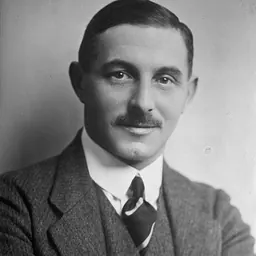
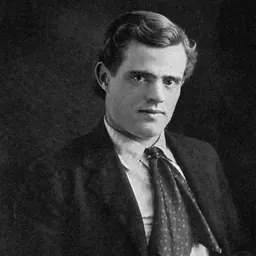
Related people
Same field, nearest in time

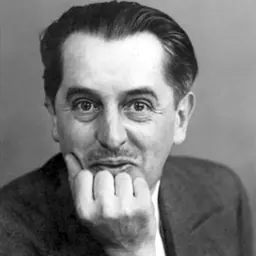



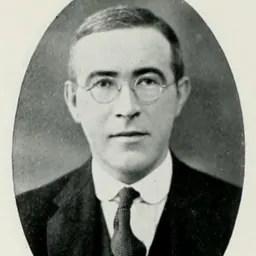
Contemporaries
People whose lives overlapped Emanuel Haldeman-Julius's





Frequently asked questions
Who was Emanuel Haldeman-Julius?
American publisher and activist (1889–1951)
When was Emanuel Haldeman-Julius born?
Emanuel Haldeman-Julius was born on 30 July 1889 in Philadelphia.
When did Emanuel Haldeman-Julius die?
Emanuel Haldeman-Julius died on 31 July 1951 in Girard.
What was Emanuel Haldeman-Julius's occupation?
Emanuel Haldeman-Julius was a publisher, writer, thinker and publishing.
What nationality was Emanuel Haldeman-Julius?
Emanuel Haldeman-Julius was American.
Sources & further reading
· Wikipedia: Emanuel Haldeman-Julius
Cite this page
APA: Biography.guide. (2026). Emanuel Haldeman-Julius. https://biography.guide/emanuel-haldeman-julius/
MLA: "Emanuel Haldeman-Julius." Biography.guide, https://biography.guide/emanuel-haldeman-julius/.
Chicago: "Emanuel Haldeman-Julius." Biography.guide. https://biography.guide/emanuel-haldeman-julius/.
Data last updated: 2026-09-22 · Spot an error? Report a correction.
Page generated 2026-09-27 05:24 UTC