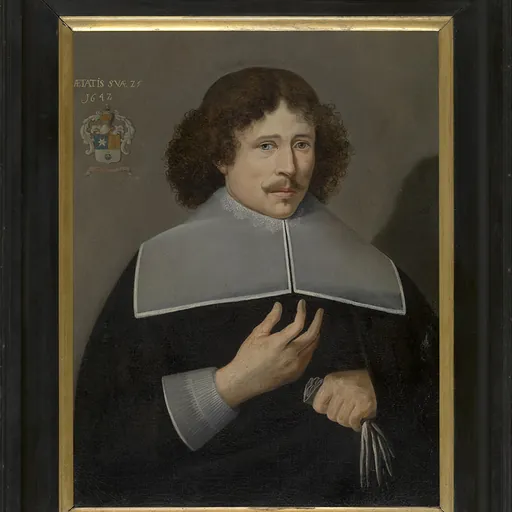
About Emanuel d'Aranda
Lived 1612 – 1686 (aged 73–74). Emanuel d'Aranda was a Spanish writer and poet.
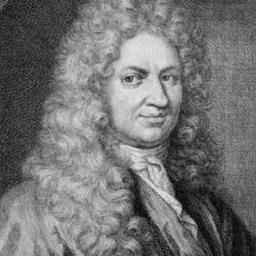
Emmanuel de Aranda or Emanuel d'Aranda (1612x14–c. 1686) was a traveller and historian from the Spanish Netherlands. In 1640–1642 he spent more than a year as a captive in North Africa, later writing a well-known slave narrative about the experience.
Biography Early life and education Aranda was a descendant of a family that came from Valladolid in Spain and had settled in Bruges for several generations. They were mainly active in the textile trade and were of distinguished rank in Spain. Emmanuel's father, Don Francisco, was a consul for the Spanish merchants in Bruges. His mother was Anne Van Severen. His oldest brother, Franciscus, married Isabelle Cloribus, had moved to Bruges and became the mayor.
After graduating licentiate of laws from the University of Leuven, Aranda was ready to step into the family business. In preparation, he made a trip to Spain, to see the country and learn the language. He left in 1639 and was joined by Renier Saldens (a doctor from Oostkamp), Jan Baptiste Van Caloen (a young man from Bruges), and the knight Philips de Cerf (or Ducherf), lord of Hondschoote and Leystrate, who later became mayor of Veurne.
Enslavement In 1640, the group set off to return to the County of Flanders. They travelled overland to San Sebastián and took passage on an English merchant ship that was captured off the coast of Brittany on 22 August by Barbary pirates under the command of an English turncoat. One day earlier, the English merchantman had been chased by a suspicious caravel, but the naive captain had not taken evasive action. The caravel was joined by two larger ships, which hoisted the silver green flag of Algeria. The crew of the merchant ship were captured without a fight and taken to a nearby port.
Aranda and his companions were taken to Algeria and sold as slaves. He was a captive for almost a year and a half before his exchange was negotiated and he was able to return to Flanders.
In Algeria captives were led to the palace of the Pasha, who was entitled to claim one out of every eight prisoners brought in. Aranda and his other companions were sold at the slave market (also known as zoco or bedesten). Grand Admiral Ali Pegelin paid 200 pieces of eight for Aranda.
Aranda, unused to physical labour, was put to work treading grain, which he was unable to do to his overseer's satisfaction. He then became a construction worker at Pegelin's country house, and later a house servant.
Release and return Negotiations for ransom were complicated because the prisoners had given false names and wanted to avoid the impression that their families were wealthy. Finally, Aranda and Caldoen were exchanged for five Muslims who were being held in Dunkirk. Caldoen was released to fetch them and brought them to Ceuta, where the exchange took place. On 24 March 1642, Aranda made the crossing to Gibraltar from where he travelled by land to Rouen. There, he embarked to Dover, from there to Dunkirk, reaching his native city on 20 August 1642.
Thanks to Francisco de Valcárcel y Velásquez, Aranda gained appointment as judge advocate for military justice in the Franc of Bruges. On 26 December 1644 he married the 18-year-old Catharina van Hauweghem in Saint Michael's Church, Ghent. They had fourteen children.
Writings Aranda's account of his experiences in the bagnio became a popular text in the late-17th century. The first edition was published in Brussels in 1656 by Jan Mommaert the Younger. The book was in three parts: a brief account of his enslavement and his months in captivity, a short history of Algiers, and a number of moralising anecdotes based on stories that he heard from and about other slaves. There were a total of at least eight editions up to 1682, in French, Dutch, Latin and English, printed variously in Brussels, Paris, The Hague, and London. He went on to write other collections of moralising anecdotes, which had much less success.
Don’t just read it —
keep it.
Full-length biographies made to live with: read them, listen on the way to work, watch them tonight.
- E-book
- Audio
- Video
Instant download · yours to keep · every purchase keeps this site free
Important facts
Related people
Same field, nearest in time

Contemporaries
People whose lives overlapped Emanuel d'Aranda's






Frequently asked questions
Who was Emanuel d'Aranda?
Spanish writer and poet (1602-1686)
When was Emanuel d'Aranda born?
Emanuel d'Aranda was born in 1612 in Bruges.
When did Emanuel d'Aranda die?
Emanuel d'Aranda died in 1686 in Bruges.
What was Emanuel d'Aranda's occupation?
Emanuel d'Aranda was a writer and poet.
What nationality was Emanuel d'Aranda?
Emanuel d'Aranda was Spanish.
Sources & further reading
Cite this page
APA: Biography.guide. (2026). Emanuel d'Aranda. https://biography.guide/emanuel-d-aranda/
MLA: "Emanuel d'Aranda." Biography.guide, https://biography.guide/emanuel-d-aranda/.
Chicago: "Emanuel d'Aranda." Biography.guide. https://biography.guide/emanuel-d-aranda/.
Data last updated: 2026-09-20 · Spot an error? Report a correction.
Page generated 2026-09-27 05:09 UTC