
About Eloise Greenfield
Lived 1929 – 2021 (aged 92). Eloise Greenfield was an American writer, children's writer and biographer.
Eloise Greenfield (May 17, 1929 – August 5, 2021) was an American children's book and biography author and poet famous for her descriptive, rhythmic style and positive portrayal of the African-American experience.
After college, Greenfield began writing poetry and songs in the 1950s while working in a civil service job. In 1962, after years of submitting her work, her first poem was finally accepted for publication. In 1972, she published the first of her 48 children's books, including picture books, novels, poetry and biographies. She focused her work on realistic but positive portrayals of African-American communities, families and friendships. She also worked to encourage the writing and publishing of African-American literature and taught creative writing.
Biography Greenfield was born Eloise Little in Parmele, North Carolina, and grew up in Washington, D.C., during the Great Depression in the Langston Terrace housing project, which provided a warm childhood experience for her. She was the second oldest of five children of Weston W. Little and his wife Lessie Blanche (née Jones) Little (1906–1986). A shy and studious child, she loved music and took piano lessons. Greenfield experienced racism first-hand in the segregated southern U.S., especially when she visited her grandparents in North Carolina and Virginia. She graduated from Cardozo Senior High School in 1946 and attended Miner Teachers College (now known as University of the District of Columbia) until 1949. In her third year, however, she realized that she was too shy to be a teacher and dropped out.
Greenfield began work in the civil service at the U.S. Patent Office, where she soon became bored and also experienced racial discrimination. She resigned from the Patent Office in 1960 to spend more time with her children and took temporary jobs. She continued to write, publishing some of her work in magazines during the 1960s. She said that she sought to "choose and order words that children will celebrate".
Dismayed by the depiction of blacks and black communities in popular media, Greenfield focused her work on realistic but positive portrayals of African-American communities, families and friendships. Her semi-autobiographical book Childtimes: A Three-Generation Memoir (1979), co-written with her mother, describes her happy childhood in a neighborhood with strong positive relationships.
In 1971, Greenfield began work for the District of Columbia Black Writers' Workshop, as co-director of adult fiction and then, in 1973, as director of children's literature. That group's goal was to encourage the writing and publishing of African-American literature. She was writer-in-residence at the District of Columbia Commission on the Arts and Humanities in 1985–86 and taught creative writing in schools under grants from the Commission. She also lectured and gave free workshops on writing of African-American children's literature. She was a member of the National Literary Hall of Fame for Writers of African Descent and a member of the African-American Writers Guild.
In 2013, Greenfield received the Living Legacy Award from the Association for the Study of African American Life and History. She also won a Hurston/Wright Foundation North Star Award for lifetime achievement.
Selected works Fiction Bubbles (1972, illustrated by Eric Marlow, later reprinted as Good News) She Comes Bringing Me that Little Baby Girl (1974, illustrated by John Steptoe; winner of the Irma Simonton Black Award, Bank Street College of Education) Sister (1974, illustrated by Moneta Barnett; winner of The New York Times Outstanding Book of the Year citation) Me and Neesie (1975, illustrated by Moneta Barnett) First Pink Light (1976, illustrated by Barnett) Africa Dream (1976, illustrated by Carole Byard; Coretta Scott King Award winner) I Can Do It by Myself (1978, with her mother, Lessie Jones Little, illustrated by Byard) Talk About a Family (1978, illustrated by James Calvin) Darlene (1980, illustrated by George Ford) Grandmama's Joy (1980, illustrated by Byard) Grandpa's Face (1988, illustrated by Floyd Cooper) Big Friend, Little Friend (1991, illustrated by Jan Spivey Gilchrist) I Make Music (1991, illustrated by Gilchrist) Lisa's Daddy and Daughter Day (1991, illustrated by Gilchrist) My Doll, Keshia (1991, illustrated by Gilchrist) My Daddy and I (1991, illustrated by Gilchrist) Koya DeLaney and the Good Girl Blues (1992) Aaron and Gayla's Alphabet Book (1993, illustrated by Gilchrist) William and the Good Old Days (1993, illustrated by Gilchrist) Sweet Baby Coming (1994, illustrated by Gilchrist) Honey, I Love (1995 picture book, illustrated by Gilchrist) On My Horse (1995, illustrated by Gilchrist) Easter Parade (1998, illustrated by Gilchrist) Water, Water (1999) MJ and Me (1999) Grandma's Joy (1999) The Friendly Four (2006, illustrated by Gilchrist) Thinker: my puppy poet and me (2019, illustrated by Ehsan Abdollahi) Alaina and the Great Play (2021, illustrated by Colin Bootman)
Biographies and non-fiction Rosa Parks (1973, illustrated by Eric Marlow; winner of the 1974 Carter G. Woodson Book Award from the National Council for the Social Studies) Paul Robeson (1975, illustrated by Ford; winner of the 1976 Jane Addams Children's Book Award; Coretta Scott King Honor) Mary McLeod Bethune (1977, illustrated by Pinkney; Coretta Scott King Honor) Childtimes: A Three-Generation Memoir (1979, with her mother, L. J. Little, illustrated by Jerry Pinkney; Coretta Scott King Honor; Boston Globe-Horn Book Award) Alesia (1981, with Alesia Revis, illustrated by Ford, with photographs by Sandra Turner Bond) For the Love of the Game: Michael Jordan and Me (1997, illustrated by Gilchrist) How They Got Over: African Americans and the Call of the Sea (2003, illustrated by Gilchrist) The Women Who Caught the Babies: A Story of African American Midwives (2019, illustrated by Daniel Minter)
Poetry Honey, I Love and Other Poems (1978, illustrated by Leo and Diane Dillon; winner of the Recognition of Merit Award) Daydreamers (1981, illustrated by Tom Feeling) Nathaniel Talking (1988, illustrated by Gilchrist; Coretta Scott King Honor) Under the Sunday Tree (1988, illustrated by Amos Ferguson) Night on Neighborhood Street (1991, illustrated by Gilchrist; Coretta Scott King Honor) Angels (1998, illustrated by Gilchrist) I Can Draw a Weeposaur and Other Dinosaurs (2001, illustrated by Gilchrist) In the Land of Words (2004, illustrated by Gilchrist) When the horses ride by: Children in the times of war (2006, illustrated by Gilchrist) Brothers & Sisters (2008, illustrated by Gilchrist) The Great Migration: Journey to the North (2011, illustrated by Gilchrist; Coretta Scott King Honor)
Don’t just read it —
keep it.
Full-length biographies made to live with: read them, listen on the way to work, watch them tonight.
- E-book
- Audio
- Video
Instant download · yours to keep · every purchase keeps this site free
Important facts
People in Eloise Greenfield's life
Named in this biography and alive at the same time
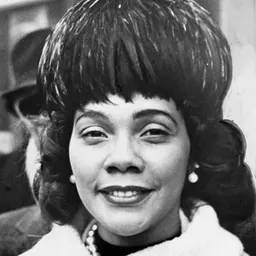





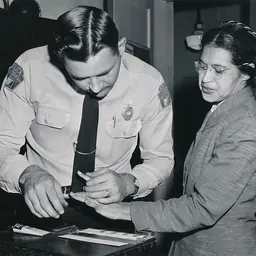

Related people
Same field, nearest in time



Contemporaries
People whose lives overlapped Eloise Greenfield's



Frequently asked questions
Who was Eloise Greenfield?
American writer
When was Eloise Greenfield born?
Eloise Greenfield was born on 17 May 1929 in Parmele.
When did Eloise Greenfield die?
Eloise Greenfield died on 5 August 2021.
What was Eloise Greenfield's occupation?
Eloise Greenfield was a writer, children's writer and biographer.
What nationality was Eloise Greenfield?
Eloise Greenfield was American.
Sources & further reading
· Wikipedia: Eloise Greenfield
Cite this page
APA: Biography.guide. (2026). Eloise Greenfield. https://biography.guide/eloise-greenfield/
MLA: "Eloise Greenfield." Biography.guide, https://biography.guide/eloise-greenfield/.
Chicago: "Eloise Greenfield." Biography.guide. https://biography.guide/eloise-greenfield/.
Data last updated: 2026-09-20 · Spot an error? Report a correction.
Page generated 2026-09-27 05:25 UTC