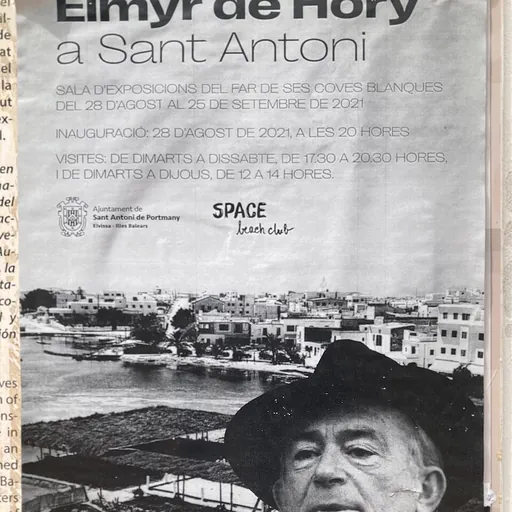
About Elmyr de Hory
Lived 1906 – 1976 (aged 70). Elmyr de Hory was a Hungarian and Spanish art forger and painter, known for Forgery.
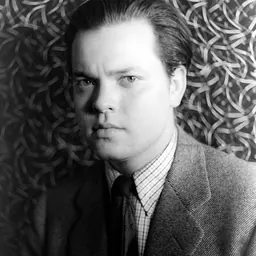
Elmyr de Hory (born Elemér Albert Hoffmann; April 14, 1906 – December 11, 1976) was a Hungarian-born painter and art forger. It is claimed he was responsible for producing over a thousand forgeries that were sold to reputable art galleries all over the world. His activities garnered celebrity from a Clifford Irving book, Fake, and a documentary essay film by Orson Welles, F for Fake (1974).
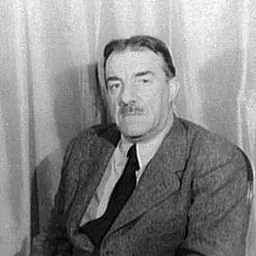
Early life De Hory claimed that he was born into an aristocratic family, that his father was an Austro-Hungarian ambassador and that his mother came from a family of bankers. However, subsequent investigation has suggested that de Hory more likely had a middle-class childhood; he was born Elemér Albert Hoffmann on April 14, 1906. (An acquaintance, Fernand Legros, said that de Hory was born in Budapest (Hungary) 14 April 1905, but that de Hory changed the date to 1914 to appear younger. ) Both his parents were Jewish. His father's occupation was listed as "wholesaler of handcrafted goods". His parents did not divorce when he was sixteen, as he had asserted in the Clifford Irving biography.
At the age of 16, he began his formal art training in the Nagybánya artists' colony (now in Romania). At 18, he joined the Akademie Heinmann art school in Munich, Germany, to study classical painting. In 1926 he moved to Paris and enrolled in the Académie de la Grande Chaumière, where he studied under Fernand Léger. By the time he concluded his traditional education in Paris in 1928, the focus of his studies in figurative art had been eclipsed by Fauvism, Expressionism, Cubism and other nontraditional movements, all of which made his art appear passé, out of step with new trends and public tastes. This harsh reality and the economic shock waves of the Great Depression dimmed his prospects of making a living from his art. New evidence (Geneva police records) indicates charges and arrests for minor crimes during the late 1920s and 1930s.
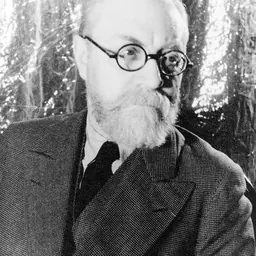
De Hory returned to Hungary at the outbreak of the Second World War. Shortly after, he became involved with a British journalist and suspected spy. This friendship landed him in a Transylvanian prison for political dissidents in the Carpathian Mountains. During this time, de Hory befriended the prison camp officer by painting his portrait. Later, during the Second World War, de Hory was released. He decided to stay there, moving between New York City, Los Angeles, Miami, and Chicago for the next twelve years. De Hory expanded his forgeries to include works in the manner of Henri Matisse, Amedeo Modigliani and Renoir. When some of the galleries de Hory had sold his forgeries to were becoming suspicious, he began to use pseudonyms and to sell his work by mail order. Some of de Hory's many pseudonyms included Louis Cassou, Joseph Dory, Joseph Dory-Boutin, Elmyr Herzog, Elmyr Hoffman and E. Raynal. (Fernand Legros listed de Hory's pseudonyms; "Elmyr de Hory, Elmer Hoffman, Elementer alias Hofman, baron de Hory, Haury, Hury or Hurry, Hory, baron Raynal, Raynor, Raynol or Rainol, comte de Herzog, baron de Boughady, von Bonhyday, Boundjy, Elmyr Lazlo, Dauray, Dory, Boutin, Dory-Boutin, Cassou Robert or Cassou Charles, Louis Curiel or Curiel Charles. Further compounding de Hory's plight was that the manner of his forgeries had become recognizable, and he was now a person of interest to the FBI. This unwanted attention may have prompted de Hory to temporarily abandon his fakery and resume creating his own artwork once more. This led him to an ascetic existence in a low-rent apartment near Pershing Square in Los Angeles. Here, he had limited success, mostly selling paintings of pink poodles to interior decorators. However, his self-imposed exile was not to his liking. He decided to return to the East Coast return to producing art forgeries, for which he always found an eager buyer—eventually. In Washington, D.C., de Hory began an ill-fated association with a picture dealer that ended in disaster.
In 1959, suffering from depression, he attempted suicide by overdosing on sleeping pills. A friend rescued him and called an ambulance. His stomach was pumped, and after a stay in the hospital de Hory convalesced in New York City, helped by an enterprising young man, Fernand Legros. Legros's account of his dealings with de Hory but it is unclear if this is an error, an intentional feminization, or "Elmyr" with a separate exclamation after. A character based on de Hory appears in the incomplete final Tintin story Tintin and Alph-Art. Hory is also mentioned in Dale Basye's Fibble: where the lying kids go, the fourth in the series. In Fate/Strange Fake, the Caster servant, whose ability entails modifying and recreating legends, states that if you wanted someone to recreate legends without limit, you would have to call de Hory. The documentary Almost True: The Noble Art of Forgery (1997). Season 3 Episode 5 of the Bad Gays podcast, a history podcast about evil and complicated queer people, covers de Hory's life.
Don’t just read it —
keep it.
Full-length biographies made to live with: read them, listen on the way to work, watch them tonight.
- E-book
- Audio
- Video
Instant download · yours to keep · every purchase keeps this site free
Important facts
People in Elmyr de Hory's life
Named in this biography and alive at the same time



Related people
Same field, nearest in time


Contemporaries
People whose lives overlapped Elmyr de Hory's


Frequently asked questions
Who was Elmyr de Hory?
Hungarian painter & art forger (1906-1976)
When was Elmyr de Hory born?
Elmyr de Hory was born on 14 April 1906 in Budapest.
When did Elmyr de Hory die?
Elmyr de Hory died on 11 December 1976 in Ibiza.
What was Elmyr de Hory's occupation?
Elmyr de Hory was an art forger and painter.
What was Elmyr de Hory known for?
Elmyr de Hory was known for Forgery.
What nationality was Elmyr de Hory?
Elmyr de Hory was Hungarian and Spanish.
Sources & further reading
Cite this page
APA: Biography.guide. (2026). Elmyr de Hory. https://biography.guide/elmyr-de-hory/
MLA: "Elmyr de Hory." Biography.guide, https://biography.guide/elmyr-de-hory/.
Chicago: "Elmyr de Hory." Biography.guide. https://biography.guide/elmyr-de-hory/.
Data last updated: 2026-09-22 · Spot an error? Report a correction.
Page generated 2026-09-27 05:09 UTC