
Elmo Hope
American jazz pianist, composer, and arranger
About Elmo Hope
Lived 1923 – 1967 (aged 43). Elmo Hope was an American jazz pianist, composer, music arranger, jazz musician and pianist.
St. Elmo Sylvester Hope (June 27, 1923 – May 19, 1967) was an American jazz pianist, composer, and arranger, chiefly in the bebop and hard bop genres. He grew up playing and listening to jazz and classical music with Bud Powell, and both were close friends of another influential pianist, Thelonious Monk.
Hope survived being shot by police as a youth to become a New York-based musician who recorded with several emerging stars in the early to mid-1950s, including trumpeter Clifford Brown, and saxophonists John Coltrane, Lou Donaldson, Jackie McLean, and Sonny Rollins. A long-term heroin user, Hope had his license to perform in New York's clubs withdrawn after a drug conviction, so he moved to Los Angeles in 1957. He was not happy during his four years on the West Coast, but had some successful collaborations there, including with saxophonist Harold Land.
More recordings as leader ensued following Hope's return to New York, but they did little to gain him more public or critical attention. Further drug and health problems reduced the frequency of his public performances, which ended a year before his death, at the age of 43. He remains little known, despite, or because of, the individuality of his playing and composing, which were complex and stressed subtlety and variation rather than the virtuosity predominant in bebop.
Early life Elmo Hope was born on June 27, 1923, in New York City. His parents, Simon and Gertrude Hope, were immigrants from the Caribbean, and had several children. In the enlistment records, Hope was listed as being single, with dependents. The terms of enlistment stated that Hope would be in the army "for the duration of the War [World War II] or other emergency, plus six months". and played briefly with Snub Mosley around the same time. This band toured all over the United States.
Some of those Hope met in Morris' band were also interested in jazz. One, saxophonist Johnny Griffin, recalled a group of musicians, including Hope, who practiced and learned together in New York in the days of late-1940s bebop: "We'd go to Monk's house in Harlem or to Elmo's house in the Bronx, we just did a lot of playing. I played piano a bit, too, so I could hear what they were all doing harmonically. But if something stumped me, I'd ask and Elmo would spell out harmonies. We'd play Dizzy [Gillespie]'s tunes or Charlie Parker's."
This interest had expanded by June 1953, when Hope recorded in New York as part of a quintet led by trumpeter Clifford Brown and alto saxophonist Lou Donaldson. That 1953 session also helped Hope gain exposure with Blue Note Records' producer Alfred Lion, who supervised his debut recording as a leader around a week later.
In August 1954, Hope was pianist for a Prestige Records session led by saxophonist Sonny Rollins, which was released as Moving Out, and for another session with Donaldson. Hope signed to Prestige in 1955, and recorded the trio album Meditations for them that year. This was followed by the sextet Informal Jazz the following year, with Donald Byrd (trumpet), John Coltrane and Hank Mobley (tenor saxophones), Paul Chambers (bass), and Jones (drums). Some commentators have suggested that sessions such as this and the ones with Brown and Rollins were a hindrance to Hope's career: "He too often recorded with young, rising overshadowing talents" wrote a Buffalo Jazz Report reviewer in 1976.
In January 1956, Hope recorded with another rising star, Jackie McLean, for the saxophonist's Lights Out!, again for Prestige. In April of the same year, Hope should have appeared on saxophonist Gene Ammons' The Happy Blues, but he left the record company's building before the session began and did not return. His drug problem and associated criminal record led to the withdrawal of Hope's New York City Cabaret Card around 1956, so he was no longer permitted to play in clubs in the city. In March of the following year, Hope became part of Counce's band, and went on to record two albums with the bassist.
Back in Los Angeles in August 1959, Hope was pianist for Land's quintet album The Fox; As a jazz musician on the West Coast, Hope found his life frustrating. Hope left Los Angeles later in 1961. His wife recounted that he was no longer working with Land, had recording offers from companies based on the East Coast, and still preferred it to Los Angeles, so the couple and their baby daughter moved to New York. Their first gigs were arranged by Hope's old friend, Monk, as was a recording session for Riverside Records that month, with Hope as leader. The pianist recorded four albums in New York around 1961, He also led a piano trio: early in 1963 it contained Ray Kenney on bass and Lex Humphries on drums; in late 1964, it had John Ore on bass and Billy Higgins on drums. In 1965, Hope was continuing to lead a trio and quartet in the New York area. Drug and health problems, however, meant that he played less often late in his career. His last recordings were made in 1966, but not released for 11 years. Hope's final concert was at Judson Hall in New York City in 1966.
Visits to one hospital that was experienced in addressing the health problems of drug addicts left Hope feeling that he was being experimented on, so he went to another, St. Clare's. Here, according to his wife, the treatment was not adjusted for the methadone program he was on, putting added strain on his heart. Hope was hospitalized with pneumonia in 1967 and died a few weeks later, on May 19, of heart failure. His wife was aged 31 at the time of his death. They had three children; Rosenthal observed that Hope's playing on one of his compositions for the 1953 Donaldson–Brown recording illustrated "many elements of the pianist's emerging style: somber, internally shifting chords in the introduction; punchy, twisting phrases in the solo; and the smoldering intensity that always characterized his best work." Hope's sense of time meant that his note placement was unpredictable, falling at various points either side of the beat but not exactly on it. The Billboard reviewer of Hope's final recordings, as reissued in 1996, wrote that "he's dynamically smoother than Monk, with a spidery, spacy touch. His harmonic and compositional approach is intricate in design and almost eerie in execution." Leonard Feather and Ira Gitler summarized Hope's abilities: he had "a style that parallels Powell, [...and] was a pianist and composer of rare harmonic acuity and very personal interpretation."
Compositions The New Grove Dictionary of Jazz states that Hope composed around 75 pieces of music, which "range in character from a tortuous nervousness to an introspective, semi-lyrical romanticism." Atkins stated that Hope wrote highly structured, complex compositions that he played with improvisational flexibility. Powell was known for horn-like right-hand playing supported by simple left-hand chords, which was something he had worked on with Hope. Later pianists who have cited Hope as a major influence include Lafayette Gilchrist, Alexander Hawkins, Frank Hewitt, and Hasaan Ibn Ali. Hawkins said in 2013 that Hope was important because he had a highly individual style but does not have the iconic status of pianists such as Monk.
Bertha Hope has released albums dedicated to her former husband's compositions. She and her later husband, bassist Walter Booker, created a band named "Elmollenium" in 1999, which played Elmo's compositions. She transcribed recordings to recreate his arrangements, following an apartment fire that destroyed most of the original manuscripts.
Several critics have advocated for a reassessment of Hope's career. One is Chuck Berg, writing for Down Beat in 1980, who attributed the ignoring of Hope by most jazz fans and critics largely to the uniqueness of his style, which differed from that prevalent in jazz generally and in bebop in particular. Berg contrasted the "aggressive assertiveness, massive outpourings of raw energy and displays of technical athleticism" that, he argued, are valued in jazz, with Hope's more nuanced and intellectual approach, and suggested that the expansion of what is accepted in jazz since his death meant that his career should be re-evaluated. In 2010, The Penguin Jazz Guide observed that, "Like many of his piano generation, [... Hope's] work is only now being properly studied and appreciated."
Discography As leader
As sideman
Sources:
Don’t just read it —
keep it.
Full-length biographies made to live with: read them, listen on the way to work, watch them tonight.
- E-book
- Audio
- Video
Instant download · yours to keep · every purchase keeps this site free
Important facts
People in Elmo Hope's life
Named in this biography and alive at the same time




Related people
Same field, nearest in time
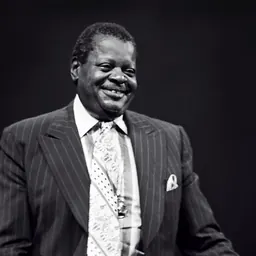
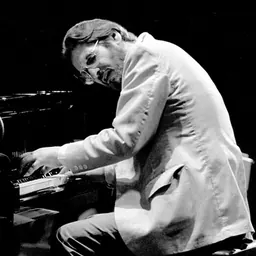



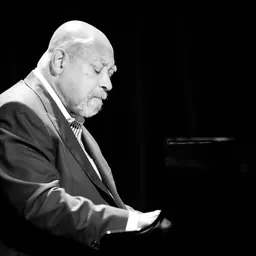
Contemporaries
People whose lives overlapped Elmo Hope's

Frequently asked questions
Who was Elmo Hope?
American jazz pianist, composer, and arranger (1923-1967)
When was Elmo Hope born?
Elmo Hope was born on 27 June 1923 in New York City.
When did Elmo Hope die?
Elmo Hope died on 19 May 1967 in New York City.
What was Elmo Hope's occupation?
Elmo Hope was a jazz pianist, composer, music arranger, jazz musician and pianist.
What nationality was Elmo Hope?
Elmo Hope was American.
Sources & further reading
Cite this page
APA: Biography.guide. (2026). Elmo Hope. https://biography.guide/elmo-hope/
MLA: "Elmo Hope." Biography.guide, https://biography.guide/elmo-hope/.
Chicago: "Elmo Hope." Biography.guide. https://biography.guide/elmo-hope/.
Data last updated: 2026-09-20 · Spot an error? Report a correction.
Page generated 2026-09-27 05:29 UTC