
About Ahmad Jamal
Lived 1930 – 2023 (aged 92). Ahmad Jamal was an American jazz pianist, recording artist, television actor, jazz musician, music arranger and composer.
Ahmad Jamal (born Frederick Russell Jones; July 2, 1930 – April 16, 2023) was an American jazz pianist, composer, bandleader, and educator. For six decades, he was one of the most successful small-group leaders in jazz. He was a National Endowment for the Arts (NEA) Jazz Master and won a Lifetime Achievement Grammy for his contributions to music history.
Biography Early life Jamal was born Frederick Russell Jones in Pittsburgh, Pennsylvania, on July 2, 1930. He began playing piano at the age of three, when his uncle Lawrence challenged him to duplicate what he was playing. Jamal began formal piano training at the age of seven with Mary Cardwell Dawson, who he said greatly influenced him. Although Jamal is famous for his restrained playing style, he possessed an enormous piano technique from an early age and was playing Liszt etudes in competition as young as 11 years old. His Pittsburgh roots remained an important part of his identity ("Pittsburgh meant everything to me and it still does," he said in 2001), and it was there that he was immersed in the influence of jazz artists such as Earl Hines, Billy Strayhorn, Mary Lou Williams, and Erroll Garner. Jamal studied with pianist James Miller and began playing piano professionally at the age of fourteen, at which point he was recognized as a "coming great" by the pianist Art Tatum. When asked about his practice habits by a critic from The New York Times, Jamal commented that, "I used to practice and practice with the door open, hoping someone would come by and discover me. I was never the practitioner in the sense of twelve hours a day, but I always thought about music. I think about music all the time." audio2 = Eric in The Evening; Ahmad Jamal, interview, January 18, 1989, Open Vault at WGBH video1 = Ahmad Jamal – Interview – "American Classical Music", April 27, 2010, underyourskindvd
Jamal began touring with George Hudson's Orchestra after graduating from George Westinghouse High School in 1948. He then joined touring group The Four Strings, that disbanded when violinist Joe Kennedy Jr. left. and solo at the Palm Tavern, occasionally joined by drummer Ike Day.
Born to Baptist parents, Jamal became interested in Islam and Islamic culture in Detroit, where there was a sizeable Muslim community in the 1940s and 1950s. Shortly after his conversion to Islam, he explained to The New York Times that he "says Muslim prayers five times a day and arises in time to say his first prayers at 5 am. He says them in Arabic in keeping with the Muslim tradition." (which would later also be called the Ahmad Jamal Trio, although Jamal himself avoided using the term "trio"): the other members were guitarist Ray Crawford and a bassist, at different times Eddie Calhoun (1950–52), Richard Davis (1953–54), and Israel Crosby (1954–62). The Three Strings arranged an extended engagement at Chicago's Blue Note, but leapt to fame after performing at the Embers in New York City where John Hammond saw the band play and signed them to Okeh Records. Hammond, a record producer who discovered the talents and enhanced the fame of musicians like Benny Goodman, Billie Holiday, and Count Basie, helped Jamal's trio attract critical acclaim. He recorded his first album with a drummer, Walter Perkins, in 1956: Count 'Em 88, which includes the influential revival of the song "On Green Dolphin Street".
At the Pershing: But Not for Me
The trio's sound changed significantly when Crawford was replaced with a drummer, and Vernel Fournier assumed this position in 1957. The group worked as the "house trio" at Chicago's Pershing Hotel. The trio released the live album At the Pershing: But Not for Me, which stayed on the Ten Best-selling charts for 108 weeks. Jamal's well-known live recording of the Nat Simon song "Poinciana", which Jamal had first recorded on The Piano Scene of Ahmad Jamal, was released on this album.
Perhaps Jamal's most famous recording, At the Pershing: But Not for Me, was recorded at the Pershing Hotel in Chicago in 1958; it brought him an unusual level of popularity for a jazz pianist in the late 1950s and the early 1960s. The set list included various jazz standards, such as "The Surrey with the Fringe on Top" from the Richard Rodgers musical Oklahoma! and Karl Suessdorf's "Moonlight in Vermont". Jamal's trio, especially through its influence on Miles Davis, would come to be recognized as a seminal force in the history of jazz. Particularly evident were Jamal's unusually minimalist and restrained style and his extended use of vamps, according to reviewer John Morthland. The New York Times contributor Ben Ratliff said, in a review of the album, "If you're looking for an argument that pleasurable mainstream art can assume radical status at the same time, Jamal is your guide."
He attracted media coverage for his investment decisions pertaining to his "rising fortune".
In 1962, the classic Jamal/Crosby/Fournier trio made its final recording, Ahmad Jamal at the Blackhawk. Although Crosby and Fournier had started to play with George Shearing, the definitive end of the trio came with Crosby's death from a heart attack in August 1962. Jamal recorded Macanudo with a full orchestra in late 1962. He then took a brief hiatus from performing and recording.
Return to music and The Awakening In 1964, Jamal resumed performing after moving to New York and started a residency at the Village Gate nightclub. That year, he began recording a series of new trio albums with bassist Jamil S. Nasser, starting with Naked City Theme. Jamal and Nasser continued to play together until 1972. He also joined forces with Fournier (again, 1965–1966) and drummer Frank Gant (1966–77), among others. Until 1970, he played only acoustic piano. The final album on which, for a time, he played exclusively acoustic piano in the regular sequence was The Awakening. In the 1970s, he played electric piano as well, as on the instrumental recording of "Suicide is Painless," theme song from the 1970 film M*A*S*H, which was released on a 1973 reissue of the film's soundtrack album, replacing the original vocal version of the song by The Mash. Apparently, the Rhodes piano he used was a gift from someone in Switzerland. He continued to play and record throughout the 1970s and 1980s, mostly in trios with piano, bass and drums, and occasionally expanded the group to include a guitarist or a percussionist. One of his most long-standing gigs was as the band for the New Year's Eve celebrations at Blues Alley in Washington, D.C., from 1979 through the 1990s. Jamal also reimagined his hit song "Poinciana" several times, notably on Ahmad Jamal at the Top: Poinciana Revisited (1968) and Digital Works (1985).
In 1986, Jamal sued critic Leonard Feather for using his former name in a publication.
Later career In his 80s, Jamal continued to make numerous tours and recordings, including albums such as Saturday Morning (2013), Jamal was the main mentor of jazz piano virtuosos Hiromi Uehara, known as Hiromi,
Personal life and death Jamal was married and divorced three times. As a teenager, he married Virginia 'Maryam' Wilkins; they had one daughter, who pre-deceased him. In the early 1960s, he married Sharifah Frazier, with whom he had one daughter; they divorced in 1982. That year, he married his manager, Laura Hess-Hay. They divorced two years later but she represented him for the rest of his life.
On April 16, 2023, Jamal died from complications of prostate cancer at home in Ashley Falls, Massachusetts. He was 92.
Style and influence
Trained in both traditional jazz ("American classical music", as he preferred to call it) These (at the time) unconventional techniques that Jamal gleaned from both traditional classical and contemporary jazz musicians helped pave the way for later jazz greats like Bill Evans, Cedar Walton, McCoy Tyner, Herbie Hancock, Monty Alexander, Fred Hersch, Bill Charlap, Vijay Iyer, and Ethan Iverson.
Music critic Ben Waltzer argued that Jamal's most significant innovation was his reconception of the piano trio as an orchestrated ensemble rather than a piano accompanied by a rhythm section. Drawing on what Jamal described as "big-band concepts", he incorporated recurring riffs, vamps, and ostinatos into the improvisational structure itself and elevated the bass and drums from supporting roles to equal participants in the musical conversation. Waltzer wrote that by blurring the distinction between foreground and background voices within the trio, Jamal created a flexible, multilayered ensemble sound that influenced subsequent generations of jazz musicians. Jamal's contrasts (crafting melodies that included strong and mild tones, and fast and slow rhythms) were what impressed Miles.
Jamal, speaking about his own work, said, "I like doing ballads. They're hard to play. It takes years of living, really, to read them properly."
In his later years, Jamal embraced the electronic influences affecting the genre of jazz. He also occasionally expanded his usual small ensemble of three to include a tenor saxophone (George Coleman) and a violin. A jazz fan interviewed by Down Beat magazine about Jamal in 2010 described his development as "more aggressive and improvisational these days. The word I used to use is avant garde; that might not be right. Whatever you call it, the way he plays is the essence of what jazz is."
Saxophonist Ted Nash described his experience with Jamal's style in an interview with Down Beat magazine: "The way he comped wasn't the generic way that lots of pianists play with chords in the middle of the keyboard, just filling things up. He gave lots of single line responses. He'd come back and throw things out at you, directly from what you played. It was really interesting because it made you stop, and allowed him to respond, and then you felt like playing something else – that's something I don't feel with a lot of piano players. It's really quite engaging. I guess that's another reason people focus in on him. He makes them hone in."
Jamal recorded with the voices of the Howard A. Roberts Chorale on The Bright, the Blue and the Beautiful and Cry Young; with brass, reeds, and strings celebrating his hometown of Pittsburgh; and with tenor saxophonist George Coleman on the album The Essence Part One.
Awards and honors 1959: Entertainment Award, Pittsburgh Junior Chamber of Commerce Players 1980: Distinguished Service Award, City of Washington D.C., Anacostia Community Museum, Smithsonian Institution 1981: Nominee for Best R&B Instrumental Performance ("You're Welcome", "Stop on By"), 24th Annual Grammy Awards 1986: Mellon Jazz Festival Salutes Ahmad Jamal, Pittsburgh. 1987: Honorary Membership, Philippines Jazz Foundation 2003: Inductee, American Jazz Hall of Fame, New Jersey Jazz Society 2003: Gold Medallion, Steinway & Sons 150 Years Celebration (1853–2003) 2007: Living Jazz Legend, Kennedy Center for the Performing Arts 2007: Ordre des Arts et des Lettres, Government of France 2011: Down Beat Hall of Fame, 76th Readers Poll 2015: Honorary Doctorate of Music, The New England Conservatory 2017: Lifetime Achievement Award, 59th Annual Grammy Awards, The Recording Academy
Discography Year recorded Title Label
Don’t just read it —
keep it.
Full-length biographies made to live with: read them, listen on the way to work, watch them tonight.
- E-book
- Audio
- Video
Instant download · yours to keep · every purchase keeps this site free
Important facts
People in Ahmad Jamal's life
Named in this biography and alive at the same time






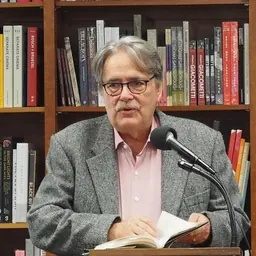
Related people
Same field, nearest in time
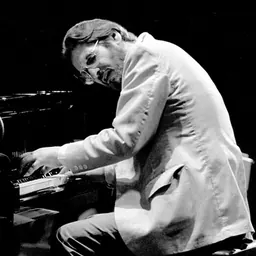

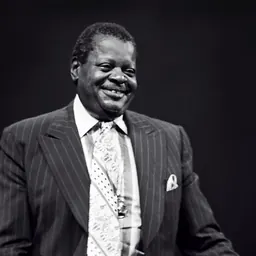
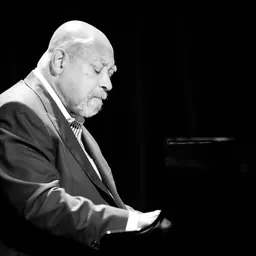


Contemporaries
People whose lives overlapped Ahmad Jamal's
Frequently asked questions
Who was Ahmad Jamal?
American jazz pianist (1930-2023)
When was Ahmad Jamal born?
Ahmad Jamal was born on 2 July 1930 in Pittsburgh.
When did Ahmad Jamal die?
Ahmad Jamal died on 16 April 2023 in Sheffield.
What was Ahmad Jamal's occupation?
Ahmad Jamal was a jazz pianist, recording artist, television actor, jazz musician, music arranger and composer.
What nationality was Ahmad Jamal?
Ahmad Jamal was American.
Sources & further reading
Cite this page
APA: Biography.guide. (2026). Ahmad Jamal. https://biography.guide/ahmad-jamal/
MLA: "Ahmad Jamal." Biography.guide, https://biography.guide/ahmad-jamal/.
Chicago: "Ahmad Jamal." Biography.guide. https://biography.guide/ahmad-jamal/.
Data last updated: 2026-09-20 · Spot an error? Report a correction.
Page generated 2026-09-27 05:32 UTC