
Elly Gotz
Holocaust survivor
About Elly Gotz
Born 1928. Elly Gotz is a Lithuanian and Russian.
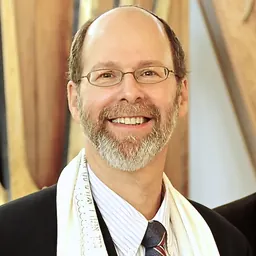
Elly (Lasar) Gotz C.M. OC BSc (born March 8, 1928) is a Lithuanian-born Holocaust survivor, engineer, entrepreneur, businessperson, pilot, author, educator, and public speaker. When Nazi Germany invaded Lithuania during the Second World War, he and his family were confined to the Kovno ghetto in Kaunas before being deported to Germany. In 1944, Gotz was sent to Dachau concentration camp, where he was subjected to forced labor until his liberation by American forces on April 29, 1945. After the war, he lived in several countries before immigrating to Canada in 1964. Since 1996, Gotz has shared his Holocaust experiences around the world through Holocaust education and remembrance initiatives, including in high schools, universities, and speaking to groups participating in the March of the Living and the March of Remembrance and Hope. In December 2025, at the age of 97, Elly Gotz was appointed a member of the Order of Canada. He has three children, six grandchildren, and three great-grandchildren.
Early life
Elly Gotz was born in Kaunas, Lithuania in 1928 to Sonja and Judel Gotz. His mother Sonja, worked as a surgical nurse and his father Judel sas a bookkeeper. Gotz was an only child and attended a Yiddish school in Lithuania. An Azrieli Foundation education exhibit about Gotz describes him as a child who loved learning, and includes a memoir excerpt about a favourite children's book (in Yiddish, with colourful illustrations) that his father gave him before 1939. There are limited records that place Gotz and his family on vacation in Kulautuva in the mid-1930s. A later account of his story notes that in 1941, at age 13, he had just received a new school uniform and was excited to start the next grade, when the German occupation closed all Jewish schools.
World War II
Gotz and his parents were imprisoned in the Kaunas ghetto after the German occupation, where he and approximately 30,000 Jews were locked up for almost three years. Gotz described life in the ghetto as systematic dehumanization, including the confiscation of property, forced labor, overcrowding, hunger, and the constant threat of violence.
Gotz volunteered to die first, explaining later, “I [didn't] want to see my family die.” While Gotz and his parents avoided discovery at that time, they were later deported by cattle car to concentration camps.
Liberation American forces liberated Dachau on April 29, 1945, shortly after Gotz's 17th birthday. Upon hearing the news, his father appeared to already have lost the will to live. Later during speaking engagements, Gotz illustrated how powerful starvation affects the mind and spirit. Standing in line waiting for his ration of soup and bread for him and his father, Gotz learned that American troops had entered the camp to liberate it. In an interview with the March of the Living Digital Archive Project, Gotz described their moment of liberation: “So, four o’clock, on the 29th of April, I'm in line. I pick up the soup for myself and I say, this is for him, and they gave me another bowl of soup for my father and another piece of bread. And I'm going to him, and he takes the soup, and at that moment, prisoners are shouting, ‘The Americans are here, we are free!’ I told my father, ‘Father, the Americans are here, we are free! The war is over!’ So, he looks at me with that faraway look, and he says, ‘That's good. Have you got the bread?’ That was my moment of liberation.”
Speaking to Western University students, Gotz emphasized that survival depended on a combination of factors, including chance, physical endurance, and having skills that could be exploited by the camp authorities. Gotz described how prisoners who lost the will to survive often died quickly, while those who maintained a sense of purpose or usefulness stood a greater chance of enduring the conditions. Gotz highlighted the psychological impact of imprisonment, mentioning a constant presence of violence, arbitrary punishment, and the knowledge that prisoners were considered disposable. He characterized the Dachau system as an environment designed not only to extract labor but to systematically strip inmates of dignity and humanity, making survival an ongoing struggle rather than a passive condition.
Post-war After WWII, the Gotz family first lived in Germany before emigrating to Norway in 1947. Later that year, the family moved to Zimbabwe (then Southern Rhodesia) to join relatives where Gotz continued his studies and graduated with a Bachelor of Science in engineering from the University of the Witwatersrand in Johannesburg, South Africa. While living there, he founded businesses in the entertainment and sound/recording sectors and later worked in the leather and plastics industries.
He married Esme Cohen in 1958, and in 1964 the couple, with their three children, immigrated to Toronto, Canada where he worked as an entrepreneur, he managed factories, and educator.
In 1985 Esme Gotz founded a private vocational school for individuals who dropped out or did not complete school and were looking to learn job skills. in 1979, she started a school for people with learning challenges, to teach basic life skills called, The Springfield School for Girls. Later, Esme Gotz owned a franchise of the Toronto School of Business, opening a campus in Oshawa, and later Pickering and Coburg.
Gotz became a frequent speaker on Holocaust history and antisemitism and did educational trips to Auschwitz for students over many years. Participant feedback has often identified his testimony as a significant component of these programs.
He has also commented publicly on contemporary antisemitism, stating, “I've never seen anything like it,” in reference to recent trends in Canada during 2025.
In his speaking, Gotz has emphasized the consequences of hatred. “It's one of the failures of humanity that we hate,” he said. “As an engineer, I'm so conscious of all the achievements of humanity. But when we hate, we produce nothing.”
Aviation and skydiving He became a private pilot, instrument-rated pilot, and glider pilot. Gotz developed an interest in aviation, and in 1971 Gotz and purchased a single-engine Piper Comanche. He had resumed his flight training in 1968 and received his first Pilot license in 1969. in 1975 he earned his Instrument Rating, allowing him to fly through cloud coverage at night, flew his family to Florida, and was able to fly himself between Canada and the United States on business trips. Later, after selling his plane, he took up flying gliders
Public speaking
Gotz has spoken frequently in schools and universities (in-person and online via Zoom) about his experience with the Holocaust and his post-war life, and his memoir, "Flights of Spirits" is a permanent written form of that testimony, published by the Azrieli Foundation's Holocaust Survival Memoirs Program in 2018. He has also provided video testimony several times in the last four decades. Gotz is known as a powerful speaker, as mentioned by Eli Rubenstein in his lecture, Ten Universal Lessons of the Holocaust.
In a talk delivered to university students during the March of Remembrance and Hope study trip to Germany and Poland, Gotz shared an experience from the 1960s in which a German business associate admitted having voluntarily joined the Hitler Youth despite his father's objections. Gotz used the encounter to illustrate how young people can be drawn into destructive movements through charisma and idealism, emphasizing the importance of critical thinking, ethical responsibility, and caution toward political leaders who claim absolute authority.
March of the Living & March of Remembrance and Hope Gotz spoke to students in advance of their participation in the March of the Living, an annual trip bringing students to Poland and Israel, where Holocaust Survivors share their experiences with the students. Gotz was interviewed by the March of the Living Digital Archive Project and appears in the March of the Living publication, Witness: Passing the Torch of Holocaust Memory to New Generations. In 2013, Gotz shared his liberation story, giving testimony to the March of the Living about he and his father's experience as liberation day approached. He said, "I felt sad because I knew the war is over, or the war will be over very soon - either they will kills us or we will be free'd." Gotz also illustrated the attitude of Nazi guards by mentioning that when Gotz was feeling hopeful of the war concluding, the Commandant assured him that they (the Nazis) saved the last bullet for "you" (meaning the remaining Jews).
Gotz has also participated on the March of Remembrance and Hope (MRH) student program to Germany and Poland in 2016, 2018, and 2019. In 2016, participants created a photo book where they commented on their appreciation of his involvement, sharing his experiences by saying, "You've helped us understand that hope is eternal. How despite such terrible and cold darkness, you were still able to see light during your time in Dachau."
Messages to Young People On The Current, Gotz, now in his late 90s, shared how he is amazed by the variety of experiences in his life. In the last 22 years, he estimates he has spoken to over 250,000 people; he hopes that at least some will carry forward his lessons and help create a more humane world. As of 2026, Gotz disclosed speaking for 70 engagements per year. Gotz aims his messages to young people struggling, and stresses that how one starts in life doesn't determine where one ends up. He describes his survival as largely an accident of fate, with only about 3% of Lithuanian Jews surviving. He stated his efforts are to "share lifelong learning and hope," knowing that the world comes with its challenges, Gotz was quoted that day saying, “What is it with the world? We are so smart… but we can't live with each other. That's the problem. That is why I work so hard to talk to people, to young people, to give it up.”
During the interview, Gotz emphasized that his educational work is not focused on recounting his personal suffering but on explaining the destructive effects of hatred. He described how hatred fueled the Holocaust and argued that similar patterns of dehumanization persist in modern society. He frequently shares a parable about two wolves, one representing love and compassion, the other hatred and bitterness, to illustrate the idea that individuals shape their moral character through their choices.
Gotz reflected on his postwar journey, including his decision to renounce hatred after realizing it prevented him from rebuilding his life. He explained that abandoning hatred allowed him to pursue education, ultimately becoming an engineer despite limited formal schooling, and later to write his autobiography, Gotz maintained that hatred is pointless because it harms the person who holds it, obstructs personal growth, and perpetuates cycles of violence, whereas compassion and understanding make survival, recovery, and a meaningful life possible.
Don’t just read it —
keep it.
Full-length biographies made to live with: read them, listen on the way to work, watch them tonight.
- E-book
- Audio
- Video
Instant download · yours to keep · every purchase keeps this site free
Important facts
People in Elly Gotz's life
Named in this biography and alive at the same time
Contemporaries
People whose lives overlapped Elly Gotz's



Frequently asked questions
Who is Elly Gotz?
Holocaust survivor
When was Elly Gotz born?
Elly Gotz was born on 8 March 1928 in Kaunas.
What nationality is Elly Gotz?
Elly Gotz is Lithuanian and Russian.
Sources & further reading
Cite this page
APA: Biography.guide. (2026). Elly Gotz. https://biography.guide/elly-gotz/
MLA: "Elly Gotz." Biography.guide, https://biography.guide/elly-gotz/.
Chicago: "Elly Gotz." Biography.guide. https://biography.guide/elly-gotz/.
Data last updated: 2026-09-20 · Spot an error? Report a correction.
Page generated 2026-09-27 05:06 UTC