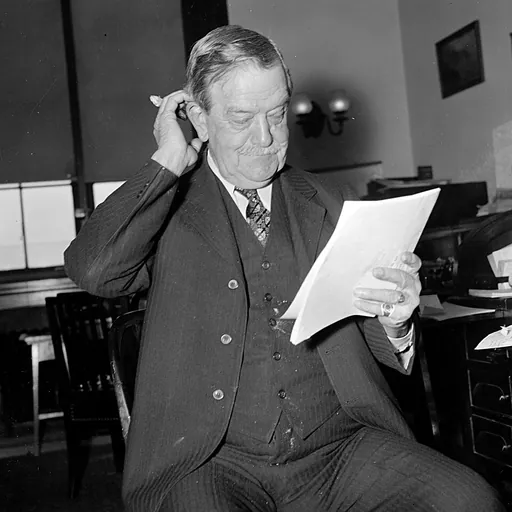
About Ellison D. Smith
Lived 1864 – 1944 (aged 80). Ellison D. Smith was an American politician.
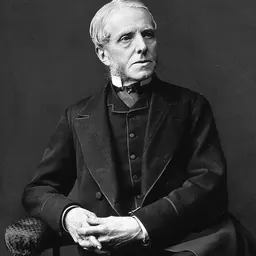
Ellison DuRant Smith (August 1, 1864 – November 17, 1944) was an American cotton planter, lobbyist, and Democratic Party politician who represented South Carolina in the United States Senate from 1909 until 1944.
Smith was widely known for his virulently racist and segregationist views, his advocacy of white supremacy, and his support for the Southern cotton industry, earning him the nickname "Cotton Ed".
Early life
Smith was born near Lynchburg, South Carolina, the youngest child of William Hankin Smith and Mary Isabella Smith (née McLeod), at his ancestral home, Tanglewood Plantation (formerly Smith's Grove). Throughout his life, he would reside in Tanglewood. and graduated from Wofford College in 1889.
Smith served in the South Carolina House of Representatives from 1896 to 1900. He was unsuccessful in his bid to become a member of the U.S. House of Representatives in 1900. In 1901, Smith helped organize the Farmer's Protective Association Smith received the nickname "Cotton Ed" after he declared: "Cotton is king and white is supreme."
Election to the U.S. Senate Smith was elected to the United States Senate in 1908. He was re-elected five times, although from 1920 until 1944, he had four close elections, with three of them leading to run-off elections because he failed to capture a majority. Smith never won more than 61 percent in Democratic Party primaries during that time. During his time in Congress, he had a goal to "keep the Negroes down and the price of cotton up." He also developed a reputation for having a violent temper while speaking in Congress and would at times stand on his feet and try to get the floor speaker's attention by repeatedly hacking his armchair with a penknife whenever the speaker angered him. Smith was not fond of his fellow Senators and liked to describe the Senate Chamber as "the Cave of the Winds." During this time Smith's policies were "a curious mixture of conservatism and liberalism". He was a loyal supporter of President Woodrow Wilson and his New Freedom agenda especially regarding agriculture supporting the Smith–Lever Act of 1914, Smith–Hughes Act, the Warehouse Act of 1916, Federal Farm Loan Act, and Federal Aid Road Act of 1916. He also supported the Clayton Act, the Federal Trade Commission, the Underwood tariff, and the Adamson Act. He opposed the Keating–Owen Act which prohibited child labor.
Smith, reflecting the xenophobic views of constituents, sponsored numerous bills restricting immigration culminating in the Immigration Act of 1917 that passed over President Wilson's veto.
During the First World War he supported most of the war time actions of President Wilson but prevented attempts by the President to impose price controls on cotton. After the war he supported the League of Nations and the Treaty of Versailles.
In the 1930s, Smith became Chairman of the Senate Committee on Agriculture and Forestry and would imperiously summon the fellow Senators on the committee by sayingblockquote|Tell those butt-heads we will assemble tomorrow morning. (When he spoke, Smith would usually chew tobacco and keep a spittoon next to him.) Smith stormed into the office of the author of the directive, Alger Hiss, and shouted: "Young fella, you can't do this to my niggers, paying checks to them. They don't know what to do with the money. The money should come to me. I'll take care of them". Shepard's response to the incident was to say "it was just a sign the good brother needs more prayer."
Smith opposed a Federal minimum wage; he filibustered it in the 1938 Fair Labor Standards Act, saying "South Carolinians are willing to work for less than 50 cents/hour." In common with other Southern senators, Smith was vigorously opposed to the Fair Labor Standards Act, believing that a national minimum wage of 40 cents/per hour would undermine the Southern economy, which was based upon having lower wages than could be found anywhere else in the nation. During a campaign speech, Roosevelt announced that "no man can live on 50 cents a day" and appealed to the people of South Carolina to replace Smith with Johnston. Smith called Roosevelt a "Yankee carpetbagger" and ran a campaign depicting himself as the defender of traditional Southern values. Standing under a statue of the Confederate general Wade Hampton, Smith declared "No man dares to come into South Carolina and try to dictate to the sons of those men who held high the hands of Lee and Hampton". Byrnes, however, despised Smith and only endorsed him because he was opposed to Johnston's strong support for Roosevelt's new push for vast labor reform, which was evident in the Fair Labor Standards Act.
While the 1938 election would mark the first time since 1914 where "Cotton Ed" faced no runoff, it was also believed that the vast majority of the people in South Carolina at this point in time were fed up with Smith, who would probably have easily lost the primary if Roosevelt had not interfered.
During World War II, Smith opposed the national war mobilization efforts, During this time, the aged senator would violently criticize Americans for supporting both the war effort and the New Deal, and even supported Republican Thomas E. Dewey in the 1944 presidential election. thumb Governor Olin D. Johnston, a supporter of Franklin D. Roosevelt's labor reforms, unseated Smith in 1944 shortly before Smith's death in office.
1944 election defeat
In 1944, Olin D. Johnston again challenged Smith in the Democratic primary. During the campaign, Johnston, once again governor of South Carolina, was strongly supportive of Roosevelt's foreign policy, Johnston would go on to win the primary with over 55 percent of the vote, thus achieving the majority needed to avoid a run-off, and Smith would only receive just over 35 percent of the vote. After hearing word of his defeat on his 2,500-acre farm near Lynchburg,
In 1906, Ellison married Annie Brunson Farley (1882–1958). Her uncle, Henry Farley, is widely credited with firing the first shot in the Confederate bombardment of Fort Sumter, initiating the American Civil War. He later served under J. E. B. Stuart, and died fighting in the Civil War. Ellison and Annie had four children of their own, two boys and two girls:
Their eldest daughter, Anna, was married to L.L. Smith, vice president of Kohler Plumbing Co. of Wisconsin. Isobel Smith Lawton moved to Florence, South Carolina, when she married. Ellison DuRant, Jr. married Vivian Manning, daughter of Governor John Lawrence Manning. Charles Saxon Farley, a past member of the South Carolina legislature from Lee County, married Laura Douglas. Laura was the daughter of Oscar Douglas (co-founder of the F.W. Woolworth empire).
On November 17, 1944, a month and a half before the end of his term, Smith died at Tanglewood Plantation in the same bed in which he was born. He is buried at St. Luke's Cemetery near Wisacky in Lee County.
Don’t just read it —
keep it.
Full-length biographies made to live with: read them, listen on the way to work, watch them tonight.
- E-book
- Audio
- Video
Instant download · yours to keep · every purchase keeps this site free
Important facts
People in Ellison D. Smith's life
Named in this biography and alive at the same time






Related people
Same field, nearest in time





Contemporaries
People whose lives overlapped Ellison D. Smith's



Frequently asked questions
Who was Ellison D. Smith?
American politician (1864–1944)
When was Ellison D. Smith born?
Ellison D. Smith was born on 1 August 1864 in Lynchburg.
When did Ellison D. Smith die?
Ellison D. Smith died on 17 November 1944 in Lynchburg.
What was Ellison D. Smith's occupation?
Ellison D. Smith was a politician.
What nationality was Ellison D. Smith?
Ellison D. Smith was American.
Sources & further reading
Cite this page
APA: Biography.guide. (2026). Ellison D. Smith. https://biography.guide/ellison-d-smith/
MLA: "Ellison D. Smith." Biography.guide, https://biography.guide/ellison-d-smith/.
Chicago: "Ellison D. Smith." Biography.guide. https://biography.guide/ellison-d-smith/.
Data last updated: 2026-09-20 · Spot an error? Report a correction.
Portrait: Wikimedia Commons · author & licence
Page generated 2026-09-27 04:58 UTC