
Ellis Wayne Felker
American murderer
About Ellis Wayne Felker
Lived 1948 – 1996 (aged 48).
Ellis Wayne Felker (June 1, 1948 – November 15, 1996) was an American criminal who was executed in 1996 in Georgia for the 1981 murder of Evelyn Joy Ludlam, a young woman who was working as a waitress while she attended college.
Felker, who had a prior conviction for beating, raping, and sodomizing a woman, maintained his innocence, and there was considerable controversy about the case. Supporters said that his conviction was based largely on circumstantial evidence.
Felker's defense filed numerous appeals after his trial. Lower courts upheld his conviction, including the US Appeals Court of the 11th Circuit in May 1996. The US Supreme Court denied certiorari in 1985 and 1996. Felker's appeal in May 1996 to the US Supreme Court was considered a test of the new Antiterrorism and Effective Death Penalty Act (AEDPA), which had been signed in April 1996. Using a key provision of the law, the US Supreme Court rejected his petition for habeas corpus in June 1996 by saying that he had not established new evidence to be considered in his second habeas corpus appeal.
History Ellis Wayne Felker was born in Georgia in 1948. He attended local schools. In 1977, he was convicted of aggravated sodomy after sexually assaulting a woman, who was able to escape to call the police, in October 1976. The victim's underwear had been ripped, her jewelry was removed, and her breasts were injured. At his murder trial, Felker later insisted that he did not rape the victim and that the sex in that incident had been consensual. Felker was sentenced to 12 years' imprisonment and was paroled in December 1980.
According to the police, Felker invited Ludlam to meet with him under the pretense of a job at his leather shop. Joy Ludlam hoped to change jobs because serving as a cocktail waitress did not agree with her religious beliefs. Felker was put under police surveillance for two weeks. Meanwhile, Ludlam's body was found in a creek. She had been raped and murdered by asphyxiation, or strangling. Parts of her body, such as the breasts, were cut.
Trial and controversy An autopsy performed for the police initially determined that Ludlam had been dead for five days when found. That finding would eliminate Felker as a suspect because of the police surveillance of him. However, the medical examiner, Dr. Whitaker, later testified at trial and changed the state's findings of time of death. He said that the air temperature, the state of decomposition of the body, the fact that Ludlam had been found wearing the same clothes as when she had last been seen, and the fact that missing and murdered persons are frequently killed soon after they disappear all led him to conclude that Ludlam had died two weeks before her body was found. (That was before Felker was under surveillance.)
The prosecution based its case largely on circumstantial evidence pointing to Felker having met with Ludlam. They said that the case was similar to the sexual crime for which Felker had been convicted in 1977. The strongest physical evidence was hair found on Ludlam's clothes. The State Crime Laboratory said it might have been Felker's, according to microscopic examination of Felker's hair. Similarly, the state held that hair found at Felker's house matched Ludlam's, as did hair in his car. (However, that highly subjective test of microscopic examination of hair is no longer considered scientifically reliable. Improvements in forensic testing have led most states to drop the use of such hair evidence in favor of DNA analysis.) and the US Supreme Court denied certiorari on the decision in 1996. The US Supreme Court heard his habeas corpus appeal, as a test of the new Antiterrorism and Effective Death Penalty Act (AEDPA), enacted on April 24, 1996. "The act cracked down on Death Row inmates and other state prisoners who file numerous appeals in federal court after losing initial appeals. In June, the court upheld a key part of the law and rejected Felker's appeal."
The US Supreme Court held that Felker's petitions for habeas corpus did not satisfy "the requirements of the relevant provisions of the Act, let alone the requirement that there be "exceptional circumstances' justifying the issuance of the writ." It dismissed the petition for writ of certiorari "for want of jurisdiction." The petition for an original writ of habeas corpus was denied, as the court said that there was not enough new evidence.
Felker was executed on November 15, 1996, at the age of 48. He was electrocuted in Georgia's electric chair at the Georgia Diagnostic and Classification Center in Jackson, Georgia.
Post-execution DNA testing and exoneration attempt In July 2000, the Atlanta Journal-Constitution, Boston Globe, Macon Globe, and CBS News announced that they would pay for DNA testing in the Felker case to try to determine if he was innocent. The Chicago Tribune had run a series on inequities in application of the death penalty in Illinois. Concerned that several convicted men had been exonerated, Illinois Governor George Ryan declared a moratorium on executions in the state in 2000 and said that there appeared to be too many inequities in how the penalty was sentenced and administered.
The results were ruled as inconclusive. The court ruled that the finding alone would not have been enough to grant a new trial to Felker or to result in his exoneration and release.
Don’t just read it —
keep it.
Full-length biographies made to live with: read them, listen on the way to work, watch them tonight.
- E-book
- Audio
- Video
Instant download · yours to keep · every purchase keeps this site free
Important facts
People in Ellis Wayne Felker's life
Named in this biography and alive at the same time
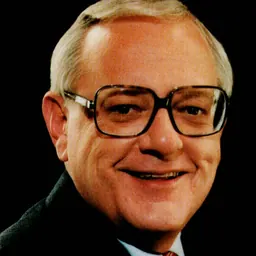
Contemporaries
People whose lives overlapped Ellis Wayne Felker's

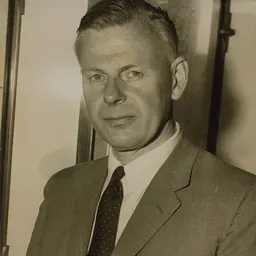

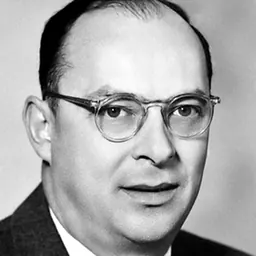
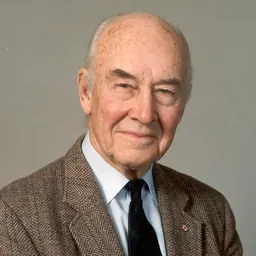

Frequently asked questions
Who was Ellis Wayne Felker?
American murderer (1948-1996)
When was Ellis Wayne Felker born?
Ellis Wayne Felker was born on 1 June 1948.
When did Ellis Wayne Felker die?
Ellis Wayne Felker died on 15 November 1996.
Sources & further reading
· Wikipedia: Ellis Wayne Felker
Cite this page
APA: Biography.guide. (2026). Ellis Wayne Felker. https://biography.guide/ellis-wayne-felker/
MLA: "Ellis Wayne Felker." Biography.guide, https://biography.guide/ellis-wayne-felker/.
Chicago: "Ellis Wayne Felker." Biography.guide. https://biography.guide/ellis-wayne-felker/.
Data last updated: 2026-09-20 · Spot an error? Report a correction.
Page generated 2026-09-27 05:19 UTC