
About Elliot Quincy Adams
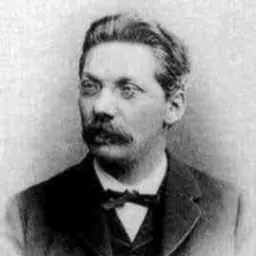
Lived 1888 – 1971 (aged 82). Elliot Quincy Adams was an American chemist.
Elliot Quincy Adams (September 13, 1888 – March 12, 1971) was an American scientist. Chemist Gilbert N. Lewis remarked that "the two most profound scientific minds, among the people he had known, were those of E[lliot] Q Adams and Albert Einstein."
Adams was the son of Edward Perkins and Etta Medora (Elliot) Adams, and a descendant of John Adams, circa 1650 from Cambridge, Massachusetts. He graduated from Medford High School in Medford, Massachusetts, and attended the Massachusetts Institute of Technology, studying chemical engineering under Gilbert N. Lewis (1875–1946), and in 1909 earned his bachelor's degree in chemical engineering. After graduation, Adams took a position with the General Electric Research Laboratory in Schenectady, New York, where he worked with Irving Langmuir on problems dealing with heat transfer. In 1912 Adams supplied the simple mathematical formula that is used to describe the conduction-convection loss from an incandescent filament operated in a gaseous atmosphere, and in the same year moved to Berkeley, California, for doctoral studies at the University of California. In 1914 he earned his Ph.D.under the direction of Gilbert N. Lewis.
In 1917, Adams moved to Washington, D. C., to perform research in the Color Laboratory in the U.S. Department of Agriculture. From 1921-1949, when he retired, he worked for General Electric at Nela Park, East Cleveland, Ohio. He made a seminal contribution to color science in his 1942 paper, "X-Z planes in the 1931 I.C.I. system of colorimetry." In this paper, he provides two models for perceptually uniform color spaces. One, which he termed "chromatic value," was the precursor of the modern CIELAB uniform color space; the other, which he termed "chromatic valence," was the direct ancestor of the Hunter Lab color space, and provided the elements of today's CIELUV. This paper showed how relatively simple transformations from XYZ of Munsell colors can have relatively uniform spacing of hue and chroma.
Adams was a Fellow of the American Association for the Advancement of Science, American Physical Society, Mineralogical Society of America, and the Illuminating Engineering Society. In 1941, he was presented the Silver Beaver Award by the Boy Scouts of America. Perhaps his best recognized effort was the book, coauthored with W. E. Forsythe, titled Fluorescent and Other Gaseous Discharge Lamps.
Don’t just read it —
keep it.
Full-length biographies made to live with: read them, listen on the way to work, watch them tonight.
- E-book
- Audio
- Video
Instant download · yours to keep · every purchase keeps this site free
Important facts
People in Elliot Quincy Adams's life
Named in this biography and alive at the same time


Related people
Same field, nearest in time




Contemporaries
People whose lives overlapped Elliot Quincy Adams's



Frequently asked questions
Who was Elliot Quincy Adams?
scientist
When was Elliot Quincy Adams born?
Elliot Quincy Adams was born on 13 September 1888.
When did Elliot Quincy Adams die?
Elliot Quincy Adams died on 12 March 1971.
What was Elliot Quincy Adams's occupation?
Elliot Quincy Adams was a chemist.
What nationality was Elliot Quincy Adams?
Elliot Quincy Adams was American.
Sources & further reading
· Wikipedia: Elliot Quincy Adams
· DBpedia: Elliot Quincy Adams
Cite this page
APA: Biography.guide. (2026). Elliot Quincy Adams. https://biography.guide/elliot-quincy-adams/
MLA: "Elliot Quincy Adams." Biography.guide, https://biography.guide/elliot-quincy-adams/.
Chicago: "Elliot Quincy Adams." Biography.guide. https://biography.guide/elliot-quincy-adams/.
Data last updated: 2026-09-20 · Spot an error? Report a correction.
Page generated 2026-09-27 05:32 UTC