
About Ellen Bialystok
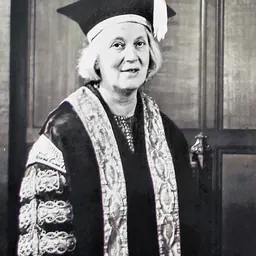
Born 1949. Ellen Bialystok is a Canadian psychologist, linguist and researcher.
Ellen Bialystok, OC, FRSC (born 1948) is a Canadian psychologist and professor. She carries the rank of Distinguished Research Professor at York University in Toronto, Ontario where she is director of the Lifespan Cognition and Development Lab. She is also an associate scientist at the Rotman Research Institute of the Baycrest Centre for Geriatric Care.
Current research Much of Bialystok's current research concentrates on bilingualism from childhood through older adulthood and aging, and its effects on cognitive processes over the lifespan. She has also studied aspects of language acquisition in children, both in written and verbal forms, and how bilingualism might affect these processes.
Bilingualism and cognitive development in children Bilingualism has been shown through various studies to have a significant effect on certain aspects of cognitive development, especially in comparison to that of monolingual individuals. Bialystok has investigated this idea further, attempting to figure out what parts of cognitive development, specifically, are affected by bilingualism. Children are of particular interest to this realm of research, as she studies the developmental progression of bilingual children as opposed to that of monolingual children.
Executive control While bilingualism has repeatedly been shown to affect cognitive development, research has been less focused on which aspects of cognitive development, in particular, are affected. Bialystok and Barac, in a study about the generality of bilingual effects on development, compared three groups of bilinguals to one group of monolinguals in a series of linguistic tasks and one nonlinguistic, executive control task involving task-switching. The three bilingual groups differed according to three factors: similarity between languages spoken, cultural background, and language of educational experience. All three bilingual groups outperformed the monolingual group on the task-switching executive control task, however, even in excluding the monolingual group, neither of the three differentiating factors had a significant effect on the performance of the executive control task. These results suggest that bilingualism itself provides an advantage in the nonverbal, executive control aspect of cognitive development.
Beyond this general advantage to cognitive development seen in bilinguals, there is remarkable evidence for an advantage regarding executive control in particular – specifically in cases where multiple components of this executive control is required for perform a task.
Children's progress in their development of both English and French linguistic and metalinguistic skills were examined to assess how accurately their developing abilities matched those of fully bilingual children (those who had learned their second language at home), and whether or not the intensive French immersion was impeding their English language development. While the analysis of tasks concerning linguistic and metalinguistic abilities in both French and English found a variety of different patterns, many of those patterns matched that of the fully bilingual children. Thus, these children participating in this immersion program are not only able to truly become bilingual, but gain the advantages that come with bilingualism as well. Continued exposure to French as well as instruction in the formal structures of the language should only improve upon these children's developing linguistic skills.
Results demonstrated two different types of processing. Phonological awareness, which was strongly correlated across the two languages, suggests a common cognitive basis regardless of the language being learned. Word identification, in contrast, did not relate across the two languages, suggesting a specific ability governed by each individual language and its particular demands. In the case of bilingual children learning to read two different writing systems, phonological awareness appears to be a more generalized ability that can be transferred easily across languages, while word identification (and therefore reading) must be developed separately for each language.
In the response inhibition condition, both the monolinguals and bilinguals activated the same neural network and performed the task in the same amount of time. However, in the interference suppression trials, bilinguals activated different neural regions than monolinguals and also performed the task more quickly. The distinction in neural response between monolinguals and bilinguals indicates not only that interference suppression and response inhibition are cognitively distinct from one another, but also supports the idea that bilingualism provides an advantage in the cognitive control of inhibition concerning conscious attention (manual key pressing), but doesn't not seem to have a significant effect regarding the control of more instantaneous motor responses (inhibition of eye movements).
Further work was done with groups of younger and older monolingual and bilingual adults in three consecutive studies investigating the persistence of the bilingual advantage into adulthood, as well as the notion that bilingualism provides a defense against the deterioration that aging brings on executive control. Bialystok, Craik, Klein, and Viswanathan found that results indicated a continuation of the bilingual advantage into adulthood, and a pattern that suggests a slowing of age-related decline in executive processes for older bilingual adults along with other positive effects in cognitive functioning, suggesting widespread benefits of bilingualism beyond what was originally hypothesized.
Bilingualism and the onset of dementia The natural process of aging has a deteriorating effect on the brain, and commonly leads to detrimental conditions such as dementia or more specifically, Alzheimer's disease. With the bilingual advantage that appears to persist throughout a person's lifespan, it is plausible that symptoms of these conditions could be offset or further delayed by the lifelong advantages brought about by bilingualism.
White matter and brain reserve As people grow older, it has been shown that white matter integrity in the brain generally decreases as the natural process of aging takes its course, resulting in a decline of cognitive functioning and control. Because previous work has demonstrated a greater cognitive ability in older bilingual adults, however, it is thought that lifelong bilingualism may mitigate this cognitive decline, resulting in a higher level of white matter integrity and connectivity in these individuals, and therefore greater cognitive ability over that of their monolingual counterparts.
Bialystok, Luk, Craik, and Grady, using diffusion tensor imaging (DTI), measured the amount of white matter integrity in both monolingual and bilingual older adults. The results were consistent with the prediction and demonstrate a strong correlation between lifelong bilingualism and preserved white matter integrity, which might ultimately contribute to the higher level of brain reserve found in these bilingual individuals. A possible explanation holds that continued experience in the maintenance and management of two competing languages enhances and strengthens certain structural pathways in the brain, resulting in a widespread network of white matter connectivity, which then helps protect against natural cognitive decline.
Bialystok, Craik, Fischer, Ware, and Schweizer analyzed and measured brain atrophy in both monolingual and bilingual patients diagnosed with AD using computed tomography (CT) scans with the logic that bilingual patients, when matched with monolingual patients on level of disease severity, should exhibit more atrophy in areas typically used to discriminate between AD patients and healthy ones, as their enhanced cognitive reserve brought about by bilingualism would allow a higher level of functioning than would usually be associated with that level of disease. Results supported this notion and found that the bilingual patients with AD did, in fact, show a greater level of brain atrophy in relevant areas. Even with this increased level of atrophy, however, the bilingual group still performed at the same cognitive level as their monolingual counterparts. These results support the hypothesis maintaining that bilingualism works as a contributor to cognitive reserve and acts as a modifier to behavioral expression that underlies brain atrophy associated with Alzheimer's disease.
Further research supports the above hypothesis, and extends it claiming that bilingualism can postpone the onset of the symptoms of AD by as much as 4–5 years. Bialystok, Craik, and Freedman collected data from bilingual and monolingual patients diagnosed with probable Alzheimer's disease regarding, most importantly, age of onset of cognitive impairment and language history and abilities. A 4.3 year delay in diagnosis and a 5.1 year delay in the reported onset of symptoms was found for the bilinguals in comparison to the monolinguals. Not only do these data support the notion of bilingualism contributing to cognitive reserve, thereby compensating for higher levels of brain atrophy, but also that bilingualism might even postpone the onset of AD symptoms by a dramatic 4–5 years. Canadian Society for Brain Behavior and Cognitive Science Hebb Award (2011) Killam Prize for the Social Sciences (2010) York University President's Research Award of Merit (2009) Donald T. Stuss Award for Research Excellence at the Baycrest Geriatric Centre (2005) Fellow of the Royal Society of Canada (2003) Dean's Award for Outstanding Research (2002) Killam Research Fellowship (2001) Walter Gordon Research Fellowship (1999)
Don’t just read it —
keep it.
Full-length biographies made to live with: read them, listen on the way to work, watch them tonight.
- E-book
- Audio
- Video
Instant download · yours to keep · every purchase keeps this site free
Important facts
People in Ellen Bialystok's life
Named in this biography and alive at the same time

Related people
Same field, nearest in time






Contemporaries
People whose lives overlapped Ellen Bialystok's





Frequently asked questions
Who is Ellen Bialystok?
Canadian psychologist
When was Ellen Bialystok born?
Ellen Bialystok was born in 1949.
What is Ellen Bialystok's occupation?
Ellen Bialystok is a psychologist, linguist and researcher.
What nationality is Ellen Bialystok?
Ellen Bialystok is Canadian.
Sources & further reading
Cite this page
APA: Biography.guide. (2026). Ellen Bialystok. https://biography.guide/ellen-bialystok/
MLA: "Ellen Bialystok." Biography.guide, https://biography.guide/ellen-bialystok/.
Chicago: "Ellen Bialystok." Biography.guide. https://biography.guide/ellen-bialystok/.
Data last updated: 2026-09-20 · Spot an error? Report a correction.
Page generated 2026-09-27 05:27 UTC