
About Ellen Beach Yaw
Lived 1869 – 1947 (aged 77). Ellen Beach Yaw was an American actor, opera singer, stage actor and singer.
Ellen Beach Yaw (September 14, 1869 – September 9, 1947) was an American coloratura soprano, best known for her concert career and extraordinary vocal range, and for originating the title role in Arthur Sullivan's comic opera The Rose of Persia.
After she undertook American and European concert tours in 1894 and 1895, Yaw was heard by Sullivan at a private concert in London and arranged for her to be cast as the lead in The Rose of Persia. Yaw received mixed reviews in the role, and Helen Carte dismissed her after less than two weeks. After further vocal studies, Yaw made her grand opera debut as Ophelia in Ambroise Thomas's Hamlet in Nice, France, in 1903 or 1904. She eventually performed about 18 leading opera roles. In 1908, she gave a single performance of the title role in Lucia di Lammermoor at the Metropolitan Opera House in New York, her only appearance there. She continued to perform on concert tours and at charitable benefits for the next several decades.
Early life and career Yaw was born on September 14, 1869, in the small town of Boston, south of Buffalo, New York. She was the youngest child of Ambrose Spencer Yaw, who manufactured cow and sheep bells, and Mary Jane Yaw ( Beach), both of whom had some musical ability. Her father died when she was young, and the family moved west, first to Minnesota, and eventually to California.
Yaw began to sing at an early age, but her early musical education was intermittent. She was taught first by her mother, and then by a succession of teachers in New York, Massachusetts, and Minnesota, with whom she could afford only brief lessons, which she paid for partly by singing and partly by working as a secretary. As she recalled in an interview in 1899, "I was very poor, and could only afford to take quite a few lessons at a time. Then I had to sing so as to make enough money to pay for the next course, and so on." In the early 1890s she moved to back to New York to study with Hervor Anna Sofia Torpadie, the wife of tenor Theodore Bjorksten, and in 1893 she traveled with Torpadie to Paris, where she took lessons from and , and subsequently from Alberto Randegger in London. At this point she began to perform more regularly, with American and European concert tours in 1894 and 1895 and appearances at Carnegie Hall in New York in January 1896. During the 1890s her manager, Victor Thrane, began to promote her as the singer with the highest range in history,
The Rose of Persia
In 1898 and 1899, Yaw was singing in private concerts in London, and at one of these, at the home of Mrs. Fanny Ronalds, Sir Arthur Sullivan heard her and arranged for her to be cast as the leading role, Sultana Zubedyah, in his comic opera The Rose of Persia, which opened on November 29, 1899, at the Savoy Theatre in London. Sullivan wrote a special cadenza for her song "'Neath My Lattice" that was so high that only she could sing it. Yaw had difficulty in the role the first two nights of the production, though the reviews were mixed, and both the music director, Francois Cellier, and Mrs. Carte advocated for her replacement.
Sullivan wrote in his diary on December 2, 1898, "I told [Cellier] I was afraid [that Yaw] would not improve, that she hadn’t got it in her", but noted, "I don’t quite see what it’s all about – Miss Yaw is not keeping people out of the theatre as Cellier and the Cartes imply." By December 10, however, he wrote in his diary that Yaw was "improving rapidly" and "sang the song really superbly: brilliant. So I wrote again to Mrs. Carte saying that I thought if we let Miss Yaw go it would be another mistake." Yaw later spoke of Meux as her "fairy godmother", and in 1908 there were rumors in the press that Meux was contemplating making Yaw her heir. According to some later reports, she did in fact inherit a substantial sum from Meux, which she invested in real estate and citrus groves near her retirement home in Covina, California. or 1904. In July of the same year she sang the role of Gilda in two performances of Verdi's Rigoletto at the Waldorf Theatre in London. In one of his greatest coups, Hammerstein had secured a contract with soprano Luisa Tetrazzini, then at the peak of her fame and coming off a series of performances at Covent Garden in London, where she had been rapturously greeted as "the voice of the century". Tetrazzini made her New York debut with the Manhattan Opera Company on January 21, 1908, and appeared in 21 further performances during the season. Her association with his crosstown rival was particularly galling to Metropolitan director Heinrich Conried, who had tried to obtain Tetrazzini's services as early as 1904, but had failed when their negotiations devolved into recriminations and lawsuits. When he heard that she had signed with Hammerstein, he sued again, unsuccessfully, to prevent her from performing. It was at this point that Conried offered Ellen Beach Yaw, whose reputation as a vocal prodigy had already garnered great attention from the press, a chance to put on "a Tetrazzini-like show" at the Metropolitan. The role was Lucia in Lucia di Lammermoor, which Tetrazzini was performing at the same time with Hammerstein's company.
Yaw's Metropolitan debut was by all accounts a popular success, but it received mixed reviews from critics, some of which specifically alluded to the celebrity war between the two opera companies. The New York Press reportedly wrote: Miss Yaw's coloratura is more perfect than Mme Tetrazzini's, her scales are lighter and more fluent, her trills are much more flexible, precise, and speedy. She performed the difficult cadenza in the "Mad Scene" with all the fioritura heard so often from Mme. Tetrazzini, and the final E flat with exceeding ease and accuracy, and much charm. Technically it was a more finished achievement than the other soprano's.
Whatever the hopes or expectations of either party, this was Yaw's only appearance at the Metropolitan Opera. She later claimed that Conried had called and offered her a three-year contract, describing her as "the world's greatest coloratura soprano", but that she had turned down the offer because of prior commitments, Thomas Edison reportedly said of her voice, "I can see no defects of any kind in this voice. Sweet on lower notes, and mellow. Best high tones yet for the disc machine." Her final recordings were "O légère hirondelle" from Gounod's Mireille and "Spring's Invitation" (another of her own compositions), privately recorded in 1937 and later released on the Herrold label; and a version of Ophelia's mad scene from Hamlet, made for the Co-Art Company on June 16, 1941, when she was 71 years old. She was known locally as "Lark Ellen", a nickname given to her in the 1890s by Harrison Gray Otis, the publisher of the Los Angeles Times.
Aside from her concert tours, Yaw performed frequently at public events throughout the Los Angeles area during the 1910s and 1920s, among them the opening of the Los Angeles Aqueduct on November 5, 1913, where she sang a composition of her own entitled "California, Hail the Waters!" Much of her work was in aid of charitable causes, and under the auspices of the Lark Ellen League she give concerts in hospitals, homes, and jails. She was especially supportive of organizations that helped poor or homeless children, such as the Day Nursery of the Daughters of the King in Los Angeles, which provided day care for children of working single mothers. The charity with which she was most closely associated was the Los Angeles Newsboys' Home, which was established in 1890 as a residence for indigent and homeless boys, and which in 1894 was formally renamed the Lark Ellen News and Working Boys' Home (later simply the Lark Ellen Home for Boys). She continued to support the home with annual benefit concerts and other assistance for the rest of her life. Lark Ellen Towers, a high-rise apartment building and sometime nursing home, was demolished in 1997 and replaced by Lark Ellen Village, an affordable housing and retirement complex.
Private life In later life, Yaw was a Republican and a Christian Scientist. She was married twice, first in 1907 to Vere Goldthwaite, a Nebraska-born Boston lawyer, who died in 1912; then, in 1920, to Franklin D. Cannon, a pianist and music teacher, who accompanied on her concert tours in the 1920s. They divorced in 1935.
Yaw died of jaundice on September 9, 1947, just shy of her 78th birthday. She was buried at Rose Hills Memorial Park near Whittier, California. After her death, her memoirs, entitled The Song of the Lark, were reportedly in the hands of her student Altamirano, who was preparing them for publication, but they were not published and have not been found; he died in 1986.
Don’t just read it —
keep it.
Full-length biographies made to live with: read them, listen on the way to work, watch them tonight.
- E-book
- Audio
- Video
Instant download · yours to keep · every purchase keeps this site free
Important facts
People in Ellen Beach Yaw's life
Named in this biography and alive at the same time

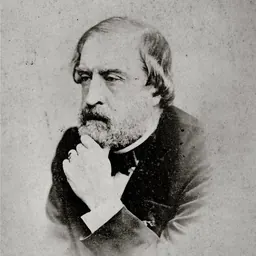
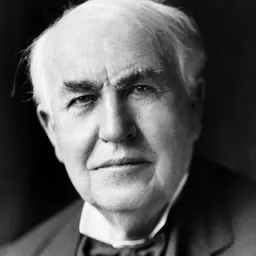

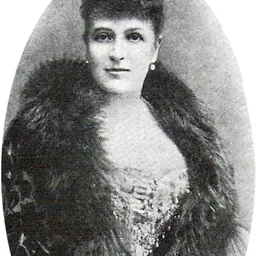


Related people
Same field, nearest in time

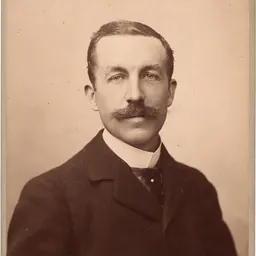
Contemporaries
People whose lives overlapped Ellen Beach Yaw's





Frequently asked questions
Who was Ellen Beach Yaw?
American coloratura soprano (1869-1947)
When was Ellen Beach Yaw born?
Ellen Beach Yaw was born on 14 September 1869 in Boston.
When did Ellen Beach Yaw die?
Ellen Beach Yaw died on 9 September 1947 in Covina.
What was Ellen Beach Yaw's occupation?
Ellen Beach Yaw was an actor, opera singer, stage actor and singer.
What nationality was Ellen Beach Yaw?
Ellen Beach Yaw was American.
Sources & further reading
Cite this page
APA: Biography.guide. (2026). Ellen Beach Yaw. https://biography.guide/ellen-beach-yaw/
MLA: "Ellen Beach Yaw." Biography.guide, https://biography.guide/ellen-beach-yaw/.
Chicago: "Ellen Beach Yaw." Biography.guide. https://biography.guide/ellen-beach-yaw/.
Data last updated: 2026-09-26 · Spot an error? Report a correction.
Page generated 2026-09-27 05:15 UTC