
Elizabeth Gould
English artist, illustrator and lithographer
About Elizabeth Gould
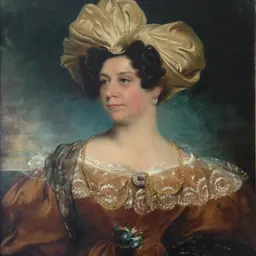
Lived 1804 – 1841 (aged 37). Elizabeth Gould was a British illustrator, scientific illustrator, naturalist and painter.
Elizabeth Gould (; 18 July 1804 – 15 August 1841) was a British artist and illustrator at the forefront of the natural history movement. Elizabeth traveled and worked alongside her husband, naturalist and author John Gould. She produced illustrations and lithographs for ornithological works, including plates in Darwin's The Zoology of the Voyage of H.M.S. Beagle and the Goulds' seminal work, The Birds of Australia. In total, Elizabeth is credited with at least 650 works.
Life and artistic career
Elizabeth was born on 18 July 1804 in Ramsgate, England to a military family. Little is known of her early life, however it is likely that Elizabeth underwent training in drawing and botany from a young age. In Victorian England, botany and natural history were part of the education of girls in middle-class English families. As Ann Moyal stated, "Cultivated women drew, walked, observed, collected specimens, arranged and painted."
When aged twenty-two, Elizabeth was employed as a governess, and lived in James Street, London. It is known that she met John Gould through her brother, Charles Coxen, who was a fellow taxidermist. John encouraged her to learn lithography and asked his collaborator Edward Lear to teach her. The extent of Lear's direct influence on the artist is uncertain, but they moved in a circle of artists and natural historians working on similar publications. Elizabeth's work entailed making designs, compositions, and detailed observations of depictions of exotic birds, so that the works could be made into lithographic reproductions. In addition to that, Elizabeth made watercolor paintings accompanied with color keys for colorists to copy.
Once proficient with the art form, she created illustrations from John's more rudimentary drawings. Elizabeth's knowledge of art and her skills were not handed to her by her husband. Their skills were complementary and the pair worked together to make significant advances in the world of natural history and ornithology. The Goulds skilfully emphasised the aesthetic value of nature, while educating those around them about new species, nurturing a need for the representations of birds and other species. In her eleven-year career (1830–1841), Elizabeth designed, lithographed and painted more than 650 plates, which appeared in:
A Century of Birds from the Himalaya Mountains (1831 and 1832). 80 plates. For this book, she worked with taxidermied birds. The Birds of Europe (1832–1837). 380 plates. For this book, live (caged) birds were available for her reference. This is when her signature style of ornate backgrounds and realistic shading were first realized. Lithography allowed for more realistic textures, such as feathers and fluff. A Monograph of the Ramphastidae, or Family of Toucans (1834). 24 plates. A Monograph of the Trogonidae, or family of trogons (1835–1838). Most of the 36 plates. The Zoology of the Voyage of H.M.S. Beagle, pt. III. Birds (1838). Gould created all 50 plates for this work but is uncredited. The Birds of Australia (1837–38). 84 plates, as well as an unspecified number of designs. This was the Gould's biggest and most ambitious project. Elizabeth sketched these subjects alive. Her most famous work is an image of the fairy wren (then known as the blue warbler). The Birds of Australia (1840–1848). Many of the 681 hand-coloured plates prepared by Gould have been digitised by the State Library of New South Wales. Icones avium, or, Figures and descriptions of new and interesting species of birds from various parts of the globe (1837–38). 20 plates.
Elizabeth's early illustrations have been described as stiff, but they improved with experience. They are quite formal compositions, due to their use in ornithological classification.
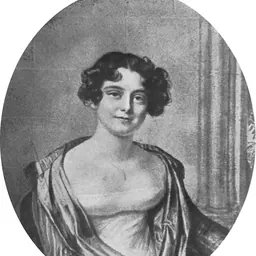
The Goulds and the oldest of their surviving four children travelled to Australia in 1838. Elizabeth spent much of her time in Hobart as a guest of British explorer Jane Franklin. John travelled extensively collecting specimens and Elizabeth drew and painted them. Her brother Charles Coxen also migrated to Australia, where he and his wife Elizabeth Coxen, who were also interested in natural history, became members of the Queensland Philosophical Society.
While in Australia, Elizabeth made hundreds of drawings from specimens for the publications Birds of Australia and A Monograph of the Macropodidæ, or Family of Kangaroos, as well as illustrations for the ornithology volume of Charles Darwin's Zoology of the Voyage of HMS Beagle.
She bore one son while living in Australia, and gave birth to their eighth child when they returned to England in 1840. Elizabeth did not live to see the completion of her research, dying of puerperal fever shortly after the birth of her last child.
Legacy and commemoration
A complete account of her life, The Story of Elizabeth Gould, was published by Alec Chisholm in 1944. Little was known about her until 1938, when a collection of her letters written from Australia was discovered, which were the basis for the book. Now housed in the Mitchell Library, the letters reveal Elizabeth as a charming, cultured, talented woman, both musically and artistically. A more recent book showcases hundreds of Gould's illustrations and documents her impressive yet short career as scientific illustrator. Mrs. Gould's sunbird was also named for Elizabeth, this time by Nicholas Vigors, a friend of the Gould's and contributor to John Gould's work.
Although the Goulds spent less than two years in Australia, The Birds of Australia remains the definitive work on the subject.
A copy of A Century of Birds from the Himalaya Mountains, illustrated by Gould, and the property of Sir Stephen Glynne by original subscription, held ever since by the Gladstone family of Hawarden Castle, was offered for auction by Chrisities estimate £20,000–30,000 in July 2023.
Attribution and contemporary scholarship There is a growing body of critical research exploring the attribution of Elizabeth's work to her husband. His own role in producing the lithographs has been questioned and examples of his style of drawing have been examined, which suggest that the actual drawing and coloring is likely to have been the sole work of Elizabeth.
Portrayals in popular media Elizabeth is the principal character in the 2016 novel, The Birdman's Wife, written by Melissa Ashley, which won the University of Queensland Fiction Book Award in the 2017 Queensland Literary Awards.
Gallery
Don’t just read it —
keep it.
Full-length biographies made to live with: read them, listen on the way to work, watch them tonight.
- E-book
- Audio
- Video
Instant download · yours to keep · every purchase keeps this site free
Important facts
more
E. GouldPeople in Elizabeth Gould's life
Named in this biography and alive at the same time


Related people
Same field, nearest in time



Contemporaries
People whose lives overlapped Elizabeth Gould's





Frequently asked questions
Who was Elizabeth Gould?
English artist, illustrator and lithographer (1804-1841)
When was Elizabeth Gould born?
Elizabeth Gould was born on 18 July 1804 in Ramsgate.
When did Elizabeth Gould die?
Elizabeth Gould died on 15 August 1841 in Greater London.
What was Elizabeth Gould's occupation?
Elizabeth Gould was an illustrator, scientific illustrator, naturalist and painter.
What nationality was Elizabeth Gould?
Elizabeth Gould was British.
Sources & further reading
· DBpedia: Elizabeth Gould (illustrator)
Cite this page
APA: Biography.guide. (2026). Elizabeth Gould. https://biography.guide/elizabeth-gould/
MLA: "Elizabeth Gould." Biography.guide, https://biography.guide/elizabeth-gould/.
Chicago: "Elizabeth Gould." Biography.guide. https://biography.guide/elizabeth-gould/.
Data last updated: 2026-09-20 · Spot an error? Report a correction.
Page generated 2026-09-27 05:30 UTC