
About Elizabeth Bartlett
Lived 1911 – 1994 (aged 83). Elizabeth Bartlett was an American poet and writer.
Elizabeth Bartlett (July 20, 1911 – August 12, 1994) was an American poet and writer noted for her lyrical and symbolic poetry, creation of the new twelve-tone form of poetry, founder of the international non-profit organization Literary Olympics, Inc., and known as an author of fiction, essays, reviews, translations, and as an editor.
Life Bartlett, Elizabeth Roberta Winters, was born in New York City. She was the daughter of Lewis Winters and his wife, Charlotte Field. A gifted child, Bartlett skipped a grade in elementary school, completed high school in three years, and, also in three years, her bachelor's degree from Teachers' College, 1931, and subsequently carried out postgraduate study at Columbia University, 1938–40.
In 1941, she met writer and artist Paul Alexander Bartlett in Guadalajara; they were married in 1943 in Sayula, Mexico. Her husband was an accomplished artist and author of many published novels, short stories, poems, and non-fiction works relating to the Mexican haciendas. They had one child, Steven James Bartlett (b. 1945), later to become a widely published author in the fields of psychology and philosophy. For many years Elizabeth Bartlett lived in numerous areas of Mexico while she dedicated herself to poetry and her husband undertook a lifelong extensive art and photographic study of more than 350 haciendas throughout the country.
Periodically they returned to the U.S. where Bartlett taught at Southern Methodist University (1947–49), San Jose State University (1960–61), the University of California, Santa Barbara (1961–64), San Diego State University (1979–81), and the University of San Diego (1981–82). She served as Director of the Creative Writers Association of the New School for Social Research (1955), as Consultant for Theatre Atlanta, as visiting poet at universities in Canada, California, Florida, and Texas, and as Poetry Editor for ETC: A Review of General Semantics and for Crosscurrents. After purchasing a house in Comala, Mexico, her husband's health failed in 1976 and they settled in San Diego where Bartlett continued to work, give poetry readings, and teach until her death in 1994.
Contributions to poetry
Called "the Emily Dickinson of the 20th Century" by Chad Walsh, distinguished poet and writer, in The Saturday Review, Elizabeth Bartlett's concise lyrics have been praised by Allen Tate, William Stafford, Ted Weiss, Maxine Kumin, Josephine Jacobsen, and Robert M. Hutchins, among others, and commended by musicians and composers. She has gained international attention for her many publications, the creation of a new form of poetry, the twelve-tone poem, and as founder of the international non-profit organization, Literary Olympics, Inc., which has sought to reinstate the role of literature in the Olympic Games as originally conceived by the Greeks.
Bartlett's poetry Bartlett's poetry is lyrical, disciplined in structure, expressing a heightened consciousness of word sounds and symbolism, and infused with "delicate nuance, a sort of reticent and abstracted reverie that could nevertheless, at its best, be extremely moving.... [Her poetry] bucked the trend in modern literature toward the precise and realistic description of detail and the confessional flavor...."
Twelve-tone poems Bartlett created and developed the twelve-tone form of poetry, adapting Arnold Schoenberg's musical system to the verbal, accented sounds of language. Twelve-Tone Poems, her first book that introduced this form, was published in 1968. In Bartlett's words: "The 12-tone poem is a new form.... It was inspired by Arnold Schoenberg's musical system. The poem consists of 12 lines, divided into couplets. Each couplet contains 12 syllables, using the natural cadence of speech. The accented sounds of the words are considered tones. Only 12 tones are used throughout the poem, repeated various times. As a result, the poem achieves a rare harmony that is purely lyrical, enriching its imagery and meaning."
About this work, Allen Tate wrote: "The new form is most interesting, the poems quite beautiful and distinguished." Of these poems, William Stafford wrote: "There is a trancelike progression in these poems, in which all unfolds quietly, with a steady holding of a certain pervasive tone." Robert M. Hutchins wrote: "I am much impressed. The poems seem to me what is called an important contribution, and a beautiful one." further establishing the diversity and versatility of ways in which Bartlett was able to make use of the new form. A fourth collection of twelve-tone poems was published in 1981, Memory Is No Stranger.
Literary Olympics In her mission to bring the work of leading poets to public awareness, Bartlett founded the international non-profit organization, Literary Olympics, Inc. Like Marianne Moore, "Bartlett ... [was] a member of that small group of men and women who, during this century, have furthered the art of others at no small cost to themselves in time, money and sleepless nights. People such as Harriet Monroe, whose small journal Poetry furthered the careers of Ezra Pound and T. S. Eliot; Sylvia Beach, owner of the Paris bookstore Shakespeare and Company, who championed James Joyce in the face of the most rabid censors; Edward Marsh, the much-pilloried editor of the Georgian Poetry anthologies; and others." To this end, she served as founder and CEO of Literary Olympics, Inc., an international non-profit project that brought together every four years in conjunction with the summer Olympic Games a published anthology containing the work of leading poets from many countries. She coordinated and directed the work of associate editors in Africa, Asia, Australia, New Zealand, Canada, East, North, and West Europe, Great Britain, Latin America, and the United States.
The first Literary Olympics poetry anthology was published in 1984 to coincide with the Games of the XXIII Olympiad held in Los Angeles, and included the work of poets from nine countries. The publication of the second anthology, to coincide with the 1988 Olympic Games held in Seoul, South Korea, grew to represent more than 30 nations. By 1992, coinciding with the 1992 Summer Olympics in Barcelona, Spain, the Literary Olympics anthology had grown to represent 132 poets from 65 countries and 55 languages. These anthologies shared the intent to recognize and to honor the creative work of the world's leading poets in a way that was true to the original spirit of the Greek Olympic Games. Each volume was published in a multi-language format, with non-English poems translated into English by well-qualified poetry translators.
Recognition and importance
Bartlett's poetry came to the attention of leading poets, writers, and critics as diverse as Marianne Moore, Wallace Stevens, Mark Van Doren, Conrad Aiken, Allen Tate, Alfred Kreymborg, Robert Hillyer, Louis Untermeyer, Rolfe Humphries, John Ciardi, Richard Eberhart, Richard Wilbur, Maxine Kumin, Robert M. Hutchins, Kenneth Rexroth, William Stafford, and others. Marianne Moore wrote: "I surely find good in the Poems of Yes and No.... The clearness of the book is certainly beautiful."
By 1961, Jonathan Williams was saying: "Your language is cultivated, employed consistently and lucidly. To my observation, it seems fair to say that you belong with the best of your generation, which I would say includes May Swenson, Denise Levertov, Garrigue, et al." Meanwhile, Bartlett had published more than 200 poems in literary reviews and anthologies, and felt encouraged to bring out a collection of her poetry. She sent the manuscript of the new work to Moore, who wrote: "You have here what is indeed a conspectus of experience, and I thank you for the book. It seems an anomaly that it is not in 'hard covers,' in shops where all might buy. This must be corrected. As I may have said before, you must not be acquiescent under neglect, nor deterred by polite evasion or any kind of inability to make headway." For the book cover, Marianne Moore offered this comment: "The poems are the result of a discipline that assuredly justifies the writer, and should console the right readers (if anything can)."
From the beginning, Richard Eberhart expressed his admiration for Bartlett's work: "You have a fresh, swift, lyrical impulse." Conrad Aiken wrote: "I like the poems; they think, and they mean what they say." and then recorded by the Fairhaven Radio Theatre in Bellingham, Washington.
In 1979, Dufour Editions, distinguished for its publication of leading British and European writers, published Bartlett's volume of poems, Address in Time. Bartlett was the first American author to be included on the Dufour list. For this book, Kenneth Rexroth provided the Introduction. In it, he wrote: "Elizabeth Bartlett's poems are good examples of the change, or one of the changes in poetry since World War II. They are poems of direct statement. They are poems of personal communication. They are overt judgments of life, of people, of value relations.... [As with the poems] of Francis Jammes, Verhaeren...Sandburg...Gertrude Stein, Laura Riding, or Reverdy...hese are the kinds of poetry coming back today, a poetry I value and find here in this book..., [poetry that is concerned with the] relationships of the self to nature, of self to self, of selves to the world.... She has said clearly, 'This is the way I handle life'—and does so, superbly."
Bartlett's book, A Zodiac of Poems, was also published in 1979.
In 1981, Ohio University Press published Bartlett's Memory Is No Stranger, Bartlett had showed the form to be adaptable for single lyrics, multi-part poems, narratives, group sequences, dramatic compositions, chorales, elegies, and odes.
Memory Is No Stranger was then followed by The Gemini Poems (1984) and Candles (1987, 1988), about which Josephine Jacobsen wrote: "I have been simply mesmerized by this beautiful book. There is a magic sort of unity and progress which refuses to release the reader. I have read and reread the poems with increasingly pleasure." William Stafford was equally impressed by the work: "I have read it page to page, gaining from its sequence, its natural forwarding, your attaining to continuity between poems and at the same time varying the way of going forward." Maxine Kumin commended the book with these words: "Elizabeth Bartlett enumerates the eternal questions that preoccupy us 'while we try to sleep / on the rough floor of our hearts.' In the strictest of forms [i.e., the twelve-tone form], she examines the human condition; the poetry is pitiless, yet redemptive." Similarly, Josephine Jacobsen praised this work: "Elizabeth Bartlett understands that the very large and the very small are siblings. Perceptive and emotionally vital, her poems ask all our own questions, poems in an original and lucid form." As a legacy to the future of poetry, Elizabeth Bartlett endowed a time-leveraged "Benjamin Franklin trust" for a period of one hundred years for the international benefit of poetry. At the end of the one hundred-year term, the initial funding will have grown by compounding to provide for a self-perpetuating endowment to make it possible to continue to honor outstanding international contributions to poetry.
Awards and honors Bartlett was awarded residential fellowships at: the Huntington Hartford Foundation (1959 and 1960) Villa Montalvo (1960 and 1961), now known as the Montalvo Arts Center Yaddo (1970) the MacDowell Colony (1970) the Dorland Mountain Arts Colony (1979) Ragdale (1983) Awards for her poetry and short stories: National Endowment for the Humanities award in poetry (1970) P. E. N. International award in poetry (1971) National Institute of Arts & Letters award in poetry (1971) Carnegie Foundation award in poetry (1971) P. E. N. Syndicated Fiction award in short story (1983) P. E. N. Syndicated Fiction award in short story, one of top 10 (1985) Louise M. Steele Trust Travel Grant (1985) N. E. A./COMBO award in poetry (1988) Featured Poet of the 1988 Laguna Winter Festival Literary Olympics honors: Guest of honor at the 1988 Olympics in Seoul, Korea: honored for her work in founding Literary Olympics by Park Seh-jik, President of the Seoul Olympics Organizing Committee, by Sook Hee Chun, President of the Korean P.E.N., and by leading Korean poet, Kim Nam Cho. Guest of honor at the 1992 Olympics in Barcelona, Spain; honored for her work on behalf of Literary Olympics.
Archives of Bartlett's work
Extensive permanent collections of Elizabeth Bartlett's papers, literary correspondence, publications, unpublished manuscripts, and art have been established, one as part of the Archive for New Poetry maintained by the Mandeville Department of Special Collections at the University of California, San Diego, and the second by the Rare Books Collection of the University of Louisville.
Selected works
Books
Poems of Yes and No, 1952. Available from Project Gutenberg. Behold This Dreamer, 1959. Available from Project Gutenberg. Poetry Concerto, 1961 It Takes Practice Not to Die, 1964. Available from Project Gutenberg. Threads, 1968 Twelve-tone Poems, 1968 Selected Poems, 1970 The House of Sleep, 1975. Available from Project Gutenberg. In Search of Identity, 1977 Dialogue of Dust (a one-act play in verse), 1977 A Zodiac of Poems, 1979 Address in Time, 1979 Memory Is No Stranger, 1981 The Gemini Poems, 1984 Candles, 1987, 1988 Around the Clock, 1989
Selected short stories "A Matter of Lineage," Stone Drum "A Special Place," Queen's Quarterly "A-B-C," The Artful Dodge "Analfabetismo," Arizona Quarterly "Gloria in Excelsis," Footwork "Guilt," New Story "Hickory, Dickory, Dock," South Carolina Review "Journey into Fear," Dreamworks "Making It," Northwest Magazine "Mister Brown," Facet "Nancy's House," Writer's Forum "Prima Donna," Footwork "Shipping Out," Short Story Digest "The Golden Gate," Accent "The Hairweb," Prospice "Virgin of the Bees," Crosscurrents "Who Needs 18 Toothbrushes?," Arizona Quarterly "World’s End," Kenyon Review
Selected collections of poetry edited by Bartlett
Literary Olympians: 1984. Westlake Village, CA: Crosscurrents, 1984. Literary Olympians II. Westlake Village, CA: Crosscurrents, 1987. Literary Olympians 1992: An International Anthology. Boston: Ford-Brown & Co., 1992. Literary Olympians 1992: An International Anthology. Second edition published by Harvard University Press, 2000. Leading Contemporary Poets: An International Anthology. Editing and publication posthumously completed by Dasha Čulić Nisula. A memorial volume dedicated to Elizabeth Bartlett. Kalamazoo, MI: Poetry International, 1997.
Selected anthologies containing Bartlett's poetry Source: Album American Literary Anthology #3 American Scene Aspen California Bicentennial Contemporary Woman Poets Encounters, 1988 Golden Quill Golden Year PSA Life and Literature Monitor Muse Anthology New Poems by American Poets 2 New Voices Parthenon Anthology Peace Is Our Profession Poets West Second Coming The Writing on the Wall Where Is Vietnam? Yearbook of American Poetry, 1981, 1984, 1985
Selected essays Source: "A Proposal to Support Creative Artists," Letters "Dante's Tenzone," Italica. Collaboration with Antonio Illiano "Introduction to Award Winners," Crosscurrents "Introduction to Award Winners II," Crosscurrents "Introduction to Literary Olympians I," Crosscurrents "Introduction to Literary Olympians II," Crosscurrents "Introduction to Literary Profiles," Crosscurrents "Introduction to Many Voices," Crosscurrents "Introduction," Literary Olympians 1992 "Letters of Flannery O'Connor," National Forum "Sor Juana de la Cruz," New Orleans Review "The Making of an Editor," Crosscurrents "The Mirror View," ETC: A Review of General Semantics "In Tribute to Jaroslav Seifert," Crosscurrents "Word Barriers," ETC: A Review of General Semantics "Word Bridges," ETC: A Review of General Semantics
Poetry-related art
Bartlett illustrated many of her published books of poetry. Her poetry-related illustrations were exhibited in museums, public libraries, and art festivals across the country, including New York City, Richmond, Atlanta, San Juan Capistrano, the Love Library of San Diego State University, the Carlsbad Library, the San Diego Central Library, the San Diego Museum of Art, the Athenaeum Library, San Jose Central Library, Grossmont College, and others. Collections of the original illustrations, as well as other fine art by Bartlett, are preserved in collections maintained by the University of California, San Diego and the University of Louisville.
Poetry recordings Master tapes of recordings of poetry readings given by Elizabeth Bartlett form part of her collections maintained by the University of California, San Diego and the University of Louisville. These recordings include the following readings: Readings of selections from her published books, including: Poems of Yes and No Behold this Dreamer Poetry Concerto It Takes Practice Not to Die Threads Twelve-Tone Poems Selected Poems The House of Sleep In Search of Identity Dialogue of Dust (performed by Radio Theatre, Fairhaven College, Bellingham, Washington) Address in Time with an Introduction by Kenneth Rexroth A Zodiac of Poems Memory is No Stranger The Gemini Poems Candles Around the Clock A complete reading of Hermann Hesse's novel, Magister Ludi "Early Poems for Son, age 4-8" "Christmas over the Years, a Family Story," written by Elizabeth Bartlett
Translations
Bartlett also translated poetry from other languages. Her translations appeared in Italica, Italian Quarterly, La Revue Moderne, Poésie Contemporaine, Poésie-USA, La Voix des Poètes, Poemas de Griselda Alvarez, etc.
Unpublished manuscripts
Bartlett's prolific output also includes as yet unpublished manuscripts of books, narrative and other poems, short stories, plays, ballet scripts, and essays. Copies of the original manuscripts are included in Bartlett's collected papers held by the University of California, San Diego. The book manuscripts include: Chili Con Blarney. An autobiographically based novel about Bartlett's early years in Mexico. Beatrice Portrait of Time: Sea Drift. An autobiographically based novel recounting Bartlett's childhood years Biography of a Summer (c. 1940) Novella, a collection of short stories Theme and Variations (1939) This Side the Fog With Love, Mom Country Wedding Bartlett's Mexico: Short Stories by Paul and Elizabeth Bartlett The City Those Lucid Moments Gourmet on a Budget
Don’t just read it —
keep it.
Full-length biographies made to live with: read them, listen on the way to work, watch them tonight.
- E-book
- Audio
- Video
Instant download · yours to keep · every purchase keeps this site free
Important facts
People in Elizabeth Bartlett's life
Named in this biography and alive at the same time


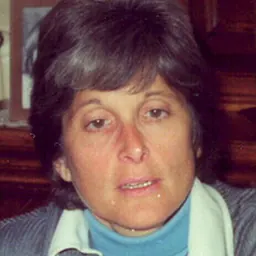



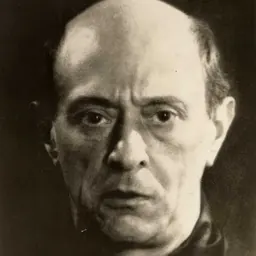
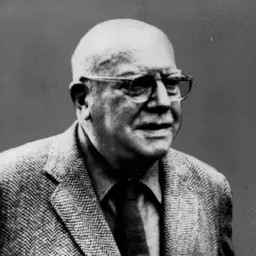
Related people
Same field, nearest in time

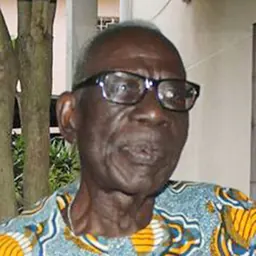
Contemporaries
People whose lives overlapped Elizabeth Bartlett's





Frequently asked questions
Who was Elizabeth Bartlett?
American poet (1911–1994)
When was Elizabeth Bartlett born?
Elizabeth Bartlett was born on 20 July 1911.
When did Elizabeth Bartlett die?
Elizabeth Bartlett died on 12 August 1994.
What was Elizabeth Bartlett's occupation?
Elizabeth Bartlett was a poet and writer.
What nationality was Elizabeth Bartlett?
Elizabeth Bartlett was American.
Sources & further reading
· Wikipedia: Elizabeth Bartlett
· DBpedia: Elizabeth Bartlett (American poet)
Cite this page
APA: Biography.guide. (2026). Elizabeth Bartlett. https://biography.guide/elizabeth-bartlett/
MLA: "Elizabeth Bartlett." Biography.guide, https://biography.guide/elizabeth-bartlett/.
Chicago: "Elizabeth Bartlett." Biography.guide. https://biography.guide/elizabeth-bartlett/.
Data last updated: 2026-09-20 · Spot an error? Report a correction.
Page generated 2026-09-27 05:16 UTC