
About Elisabeth Scott
Lived 1898 – 1972 (aged 73). Elisabeth Scott was a British architect.
Elisabeth Whitworth Scott (20 September 1898 – 19 June 1972) was a British architect who designed the Shakespeare Memorial Theatre at Stratford-upon-Avon, England. This was the first important public building in Britain to be designed by a female architect.
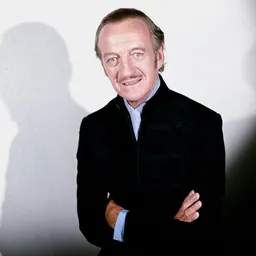
Career Scott's first position was with the architects David Niven and Herbert Wigglesworth, a practice specialising in the Scandinavian style. In turn she became an assistant to Louis de Soissons, a progressive architect producing buildings in the contemporary style for the new garden city of Welwyn, Hertfordshire (where she worked on the design for the Shredded Wheat Factory, now a listed building) and the modernist Oliver Hill.
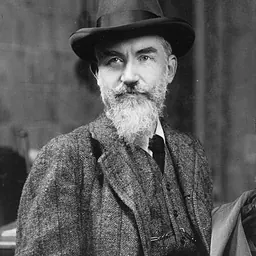
Shakespeare Memorial Theatre In 1927, a competition for a replacement to the burnt-out Shakespeare Memorial Theatre was announced and Scott entered, with a confidence in her own abilities taken from the sound theoretical grounding at the Architectural Association's school. At the time, she was working for Maurice Chesterton's practice at Hampstead, London, and Chesterton agreed to oversee her proposals for feasibility. (Maurice Chesterton was a cousin of the theatre's publicist A.K. Chesterton.) Maurice Chesterton's daughter Elizabeth Chesterton, herself an architect, claimed in a late interview that the competition entry had been falsely "submitted under Scott's name", suggesting that all research into the practical requirements of theatre function had been her father's. Maurice Chesterton himself "disclaimed any personal share whatever in the successful design". Scott was assisted by two fellow AA students: Alison Sleigh and John Chiene Shepherd. On winning the competition (against seventy-one other entries) the four formed a partnership to prepare the detailed plans and supervise the construction. The Times did not agree, observing how well the building "adapt[ed] itself to the lines of the river and landscape". On the other hand, dramatist George Bernard Shaw (a member of the SMT committee notwithstanding his earlier telegram of congratulations to its chairman on having the unsuitable old building burnt down) However, the building's lack of "meaningless decoration" was one of the features enthusiastically praised in the special June 1932 edition of the modernist Architectural Review. It was made a Grade II* listed building on 14 October 1980.
Later practice
Scott was joined in the partnership by John Breakwell and—as John Shepherd and Alison Sleigh had married—the practice became "Scott, Shepherd and Breakwell". None of their subsequent commissions had the prominence of the SMT, although their 1938 work on the Fawcett Building at Newnham College, Cambridge, is of note. In the Post-war period, Scott returned to Bournemouth, working with the practice of Ronald Phillips & Partners. but was identified with the progressive movement to overturn traditional assumptions about women and the professions. She was by nature more of a quiet and practical feminist, ensuring that women were represented on her design projects and working through the Fawcett Society to promote wider acceptance.
Family In 1936, she married George Richards. She died in Bournemouth on 19 June 1972.
UK passport In November 2015 it was announced Elisabeth Scott would be one of only two prominent British women (the other being Ada Lovelace) to be featured in the design of the new UK passport, to be used for the next 5 years.
Don’t just read it —
keep it.
Full-length biographies made to live with: read them, listen on the way to work, watch them tonight.
- E-book
- Audio
- Video
Instant download · yours to keep · every purchase keeps this site free
Important facts
People in Elisabeth Scott's life
Named in this biography and alive at the same time





Related people
Same field, nearest in time

Contemporaries
People whose lives overlapped Elisabeth Scott's


Frequently asked questions
Who was Elisabeth Scott?
British architect (1898-1972)
When was Elisabeth Scott born?
Elisabeth Scott was born on 20 September 1898 in Bournemouth.
When did Elisabeth Scott die?
Elisabeth Scott died on 19 June 1972 in Bournemouth.
What was Elisabeth Scott's occupation?
Elisabeth Scott was an architect.
What nationality was Elisabeth Scott?
Elisabeth Scott was British.
Sources & further reading
Cite this page
APA: Biography.guide. (2026). Elisabeth Scott. https://biography.guide/elisabeth-scott/
MLA: "Elisabeth Scott." Biography.guide, https://biography.guide/elisabeth-scott/.
Chicago: "Elisabeth Scott." Biography.guide. https://biography.guide/elisabeth-scott/.
Data last updated: 2026-09-24 · Spot an error? Report a correction.
Page generated 2026-09-27 05:01 UTC