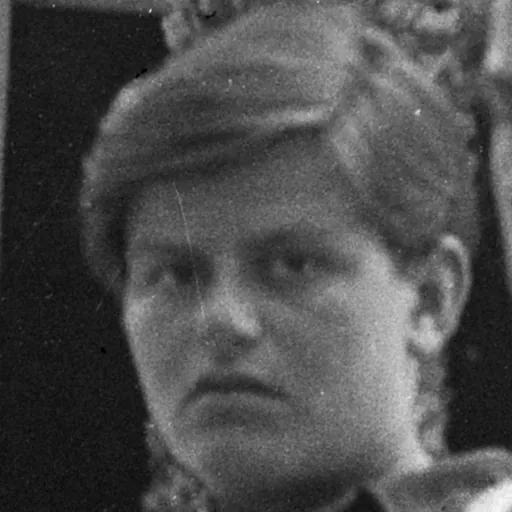
Elisabeth Mann Borgese
Canadian German-born expert in maritime law, ecologist
About Elisabeth Mann Borgese
Lived 1918 – 2002 (aged 83). Elisabeth Mann Borgese was a Canadian and German writer, ecologist, university teacher, political scientist and oceanographer.
Elisabeth Veronika Mann Borgese, (24 April 1918 – 8 February 2002) was an internationally recognized expert on maritime law and policy and the protection of the environment. Called "the mother of the oceans", she received the Order of Canada and awards from the governments of Austria, China, Colombia, Germany, the United Nations and the World Conservation Union. In 1970 she organized the first international conference on the law of the sea, "Pacem in Maribus" ("Peace in the Oceans") in Malta, and helped to establish the International Ocean Institute (IOI) at the Royal University of Malta. She was of Jewish descent from her mother's side. Due to her being the granddaughter of Júlia da Silva Bruhns, she was also of Portuguese-Indigenous Brazilian partial descent.
The Mann family left Germany after Adolf Hitler came to power, moving first to Switzerland. He began to explore the possibility of obtaining citizenship in Austria, Switzerland or Czechoslovakia. Nonetheless, her "rough and ready" translation was for many years one of the few versions available.
On 10 February 1938, Thomas Mann travelled to the United States on a lecture tour. Following the annexation of Austria on 12 March 1938, he expressed grave concern over the appeasement policy and sought to become a citizen of the United States. In 1941, Thomas Mann and other family members, including Elisabeth Mann Borgese, became citizens of the United States.
At the time of her death, Elisabeth Mann Borgese was the last living child of Thomas Mann. This came to prominence with the Emmy-winning docudrama TV mini-series Die Manns – Ein Jahrhundertroman (2001), in which she was shown in interviews with director Heinrich Breloer on different locations in Europe and the United States where her family once stayed. The Frankfurter Allgemeine Zeitung described her appearance in the interviews as "unpretentious, wise and with a winning sense of humor". It marked the first time that she talked extensively about her family, and she agreed that she was the only one of the six children of Mann who felt totally reconciled with the shadow of their father.
Marriage Elisabeth Mann married the anti-fascist Italian writer and professor of literature Giuseppe Antonio Borgese (1882–1952) in 1939. They had two daughters, Angelica (born 1940) and Dominica (born 1944).
Elisabeth lived with psychiatrist and writer Corrado Tumiati (1885–1967) in her home in Fiesole (Florence, Italy) from 1953 until his death in 1967.
In 1967, Mann Borgese met Arvid Pardo, the UN ambassador for Malta, who later became her partner.
University of Chicago Mann Borgese moved to Chicago with her husband, who taught at the University of Chicago. With Richard McKeon and Robert Hutchins, G. A. Borgese formed the interdisciplinary Committee to Frame a World Constitution, which published a Preliminary Draft of a World Constitution in 1948. The members of the Committee at the time of the publication of the Draft were, in addition to Hutchins and Borgese, Mortimer J. Adler, Stringfellow Barr, Albert Léon Guérard, Harold Innis, Erich Kahler, Wilber G. Katz, Charles Howard McIlwain, Robert Redfield, and Rexford Tugwell. Elisabeth was the secretary of the Committee and edited its journal, Common Cause, which was published by the University of Chicago Press from 1947–1951.
She experimented with writing science fiction, publishing several stories in 1959, which were collected in the anthology, To Whom It May Concern (1960). The pessimism of her speculative fiction is in strong contrast to her usual optimism. In 1963, Borgese published The Ascent of Woman, a sociological work suggesting that women were in the process of becoming "men's true equals". In 1967, she began to focus specifically on marine law, working with Wolfgang Friedmann and Arvid Pardo, then Malta's Ambassador to the United States. In 1968, she published The Ocean Regime, an early proposal for an international agency tasked with the care of ocean resources including the high seas and the continental shelf. By 1970, at the age of 52, Mann Borgese had established herself as an international expert on the oceans.
She was the initiator and organizer of the first international conference on the law of the sea, held at Malta in 1970, with the title of "Pacem in Maribus" ("Peace in the Oceans"). She also helped to establish the International Ocean Institute (IOI). and the editor of Ocean Frontiers (1992). She has also published short stories, children's books and a play. She was editor of Intercultural Publications from 1952 to 1964 and research associate and editor of Common Cause, at the University of Chicago (1946–52). She acted as an advisor to Ambassador Karl Wolf, who led the Austrian Delegation to UNCLOS III. Invited to remain, she became professor of political science at Dalhousie in 1980, and an adjunct professor of law in 1996. She taught maritime law and political science, Mann Borgese's tomb in the family grave at the cemetery of Kilchberg in the Swiss canton of Zurich. From 1987 to 1992 Mann Borgese served as chairperson of the International Centre for Ocean Development.
Death Elisabeth Mann Borgese died unexpectedly on 8 February 2002, at the age of 83, during a skiing holiday in St. Moritz, Switzerland.
"She really was a pioneer, a utopian in some ways, but she linked these aims with real politics, to policy and hard work. And she pushed that process ahead for 30 years. She lived a remarkable life."– Holger Pils, Lübecker Museen Her citation for this award read:
A true citizen of the world, she has been involved with a number of global issues and has been a trusted spokesperson and defender of the rights of Third World countries. Currently Associate Director of the Lester Pearson Institute for International Development and an advocate of international co-operation, she is recognized as an authority on the Law of the Sea and is respected for her undisputed knowledge, her outstanding leadership abilities and her commitment to a better future for all – Governor General of Canada 1996, Order of Merit of the Federal Republic of Germany 1999, Gold Medal Muenchen Leuchtet, City of Munich, Germany 1999, Caird Medal, National Maritime Museum, Greenwich, London, England 2001, Mann Borgese was nominated, with the International Ocean Institute, for a Nobel Peace Prize, but did not receive the award. 2002, Großes Bundesverdienstkreuz (Commander's Cross of the Order of Merit), Government of Germany 2018, issue of a stamp by Deutsche Post in honour of the 100th anniversary of her birth Medal of High Merit (Hohes Verdienstkreuz,
Archives The Elisabeth Mann Borgese fonds, MS-2-744, Dalhousie University Archives, Dalhousie University were acquired through five different accessions, from the Estate of Elisabeth Mann Borgese (2002–2003), from the International Ocean Institute (2009), and from Betsy B. Baker (2013). Digitization of the Elisabeth Mann Borgese fonds has been supported through donations from Nikolaus Gelpke.
An exhibition focusing on her life and work, "Elisabeth Mann Borgese and the Drama of the Oceans", was developed by the Lübecker Museen's Buddenbrookhaus in Lübeck, Germany, for display in 2012 and as a visiting exhibit in 2013 in Kiel and Berlin.
Published works Mann Borgese published extensively. In addition to works dealing with international relations, the law of the sea, the environment, and world development, she wrote children's books, plays, and a study of animal communication.
Research and other non-fiction
Fiction The Immortal Fish (1957) For Sale, Reasonable (1959) "True Self" (1959) Twin's Wail (1959) "To Whom it May Concern" (1960) "My Own Utopia" (1961) (epilogue from The Ascent of Woman)
Don’t just read it —
keep it.
Full-length biographies made to live with: read them, listen on the way to work, watch them tonight.
- E-book
- Audio
- Video
Instant download · yours to keep · every purchase keeps this site free
Important facts
People in Elisabeth Mann Borgese's life
Named in this biography and alive at the same time
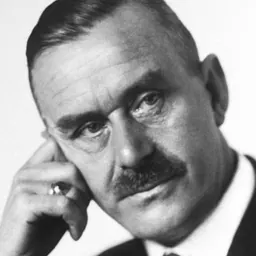
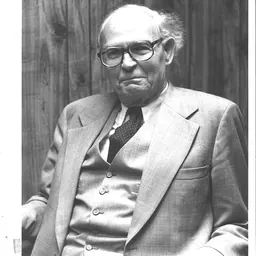





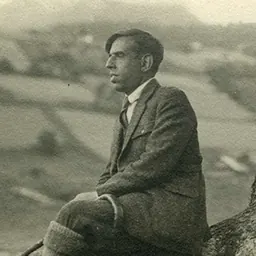
Related people
Same field, nearest in time




Contemporaries
People whose lives overlapped Elisabeth Mann Borgese's


Frequently asked questions
Who was Elisabeth Mann Borgese?
Canadian German-born expert in maritime law, ecologist
When was Elisabeth Mann Borgese born?
Elisabeth Mann Borgese was born on 24 April 1918 in Munich.
When did Elisabeth Mann Borgese die?
Elisabeth Mann Borgese died on 8 February 2002 in St. Moritz.
What was Elisabeth Mann Borgese's occupation?
Elisabeth Mann Borgese was a writer, ecologist, university teacher, political scientist and oceanographer.
What nationality was Elisabeth Mann Borgese?
Elisabeth Mann Borgese was Canadian and German.
Sources & further reading
· Wikipedia: Elisabeth Mann Borgese
· DBpedia: Elisabeth Mann Borgese
Cite this page
APA: Biography.guide. (2026). Elisabeth Mann Borgese. https://biography.guide/elisabeth-mann-borgese/
MLA: "Elisabeth Mann Borgese." Biography.guide, https://biography.guide/elisabeth-mann-borgese/.
Chicago: "Elisabeth Mann Borgese." Biography.guide. https://biography.guide/elisabeth-mann-borgese/.
Data last updated: 2026-09-21 · Spot an error? Report a correction.
Portrait: Wikimedia Commons · author & licence
Page generated 2026-09-27 05:00 UTC