
About Elisabeth Höngen
Lived 1906 – 1997 (aged 90). Elisabeth Höngen was a German opera singer.
Elisabeth Höngen (7 December 1906 – 7 August 1997) was a German operatic mezzo-soprano and singing-actress. She was particularly associated with Wagner and Strauss roles, and with Verdi's Lady Macbeth. From 1947 onward she was one of the Vienna State Opera's most prominent artists for nearly 30 years.
Career Höngen was born on 7 December 1906 in Gevelsberg.
In 1947 and 1959–60 Höngen performed at La Scala in Milan, the Royal Opera House in London, the Teatro Colón in Buenos Aires, the Grand Opéra in Paris, in Amsterdam, Zürich, Berlin und Munich. From 1951–52 she worked at the Metropolitan Opera in New York. She sang at the Edinburgh Festival, and performed as both Fricka and Waltraute in Wagner Der Ring des Nibelungen at the Bayreuth Festival in 1951, as well as the Maggio Musicale Fiorentino in Florence.
In 1957, she accepted a position as a professor at the Wiener Musikakademie while at the same time continuing her stage career. In 1965, she performed in Vienna, and at the Salzburger Festspiele. She left the Vienna State Opera in 1971.
Höngen died in Vienna on 7 August 1997 at the age of 90.
Performances and roles Höngen appeared at the Salzburg Festival and the Bayreuth Festival, quickly establishing herself in Wagner roles such as Venus in Tannhäuser, Ortrud in Lohengrin, Fricka in Die Walküre, Erda in Siegfried, Waltraute in Götterdämmerung, and Strauss roles such as Herodias in Salome, Klytemnestra in Elektra, Nurse in Die Frau ohne Schatten, and Clairon in Capriccio. She won considerable acclaim as Verdi Lady Macbeth, Eboli in Don Carlos, Amneris in Aida, and as Bizet's Carmen. She also performed the title role of Britten's The Rape of Lucretia, and Baba the Turk in Stravinsky's The Rake's Progress.
She made guest appearances at the Munich State Opera, the Royal Opera House in London, the Paris Opéra, La Scala in Milan, the Teatro Colón in Buenos Aires, and the Metropolitan Opera in New York.
Recognition Conductor Karl Böhm called her "the world's greatest tragedienne".
In 1964 she was awarded the Mozartmedaille by the Mozart community of Vienna.
Her voice has been described as "rich, beautifully formed, with dramatic delivery and strength and feeling for style exciting admiration" ("Umfangreiche, schön gebildete Stimme, deren dramatische Ausdruckskraft und deren Stilgefühl Bewunderung erregten").
Recordings 1943 – Macbeth – Mathieu Ahlersmeyer, Elisabeth Höngen, Josef Witt, Herbert Alsen – Vienna State Opera Chorus and Orchestra, Karl Böhm – Cantus Classic (sung in German) 1954 – Johannes Brahms, Alto Rhapsody, Ferdinand Leitner conducting the Berlin Philharmonic Orchestra (DGG 16105 LP) Electrola (9th Symphony by L.v. Beethoven), Philips DGG (Elektra, Lied cycle Frauenliebe und –leben by R. Schumann) Columbia (Lieder), Seraphim (Hänsel und Gretel), UORC (Frau ohne Schatten by R. Strauss) Urania (Macbeth by Verdi) Decca (Frau ohne Schatten) Bruno Walter Society (complete Der Ring des Nibelungen) Murray Hill (Erda in Siegfried, Fricka in Rheingold and Walküre), (Marcellina in Le Nozze di Figaro), Cetra Opera Live (Aida) Rococo (Elektra in the role of Klytämnestra) Melodram (F minor Mass by Bruckner, Verdi’s Requiem)
Don’t just read it —
keep it.
Full-length biographies made to live with: read them, listen on the way to work, watch them tonight.
- E-book
- Audio
- Video
Instant download · yours to keep · every purchase keeps this site free
Important facts
People in Elisabeth Höngen's life
Named in this biography and alive at the same time





Related people
Same field, nearest in time
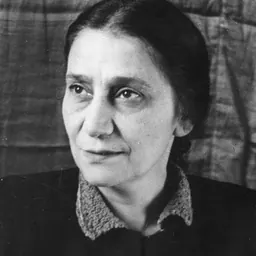



Contemporaries
People whose lives overlapped Elisabeth Höngen's

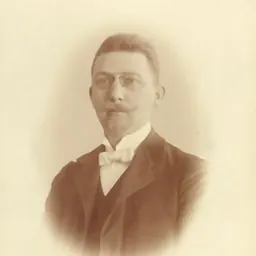
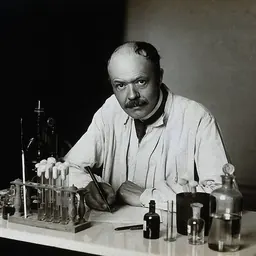
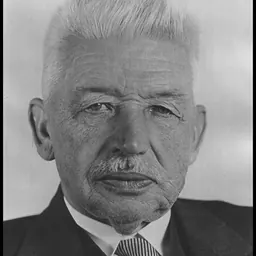

Frequently asked questions
Who was Elisabeth Höngen?
German singer (mezzo-soprano)
When was Elisabeth Höngen born?
Elisabeth Höngen was born on 7 December 1906 in Gevelsberg.
When did Elisabeth Höngen die?
Elisabeth Höngen died on 7 August 1997 in Vienna.
What was Elisabeth Höngen's occupation?
Elisabeth Höngen was an opera singer.
What nationality was Elisabeth Höngen?
Elisabeth Höngen was German.
Sources & further reading
Cite this page
APA: Biography.guide. (2026). Elisabeth Höngen. https://biography.guide/elisabeth-hongen/
MLA: "Elisabeth Höngen." Biography.guide, https://biography.guide/elisabeth-hongen/.
Chicago: "Elisabeth Höngen." Biography.guide. https://biography.guide/elisabeth-hongen/.
Data last updated: 2026-09-20 · Spot an error? Report a correction.
Page generated 2026-09-27 05:25 UTC