
About Elisabeth Geleerd
Lived 1909 – 1969 (aged 60). Elisabeth Geleerd was a Dutch and American psychiatrist and psychoanalyst.
Elisabeth Rozetta Geleerd Loewenstein (March 20, 1909 – May 25, 1969) was a Dutch-American psychoanalyst. Born to an upper-middle-class family in Rotterdam, Geleerd studied psychoanalysis in Vienna, then London, under Anna Freud. Building a career in the United States, she became one of the nation's major practitioners in child and adolescent psychoanalysis throughout the mid-20th century. Geleerd specialized in the psychoanalysis of psychosis, including schizophrenia, and was an influential writer on psychoanalysis in childhood schizophrenia. She was one of the first writers to consider the concept of borderline personality disorder in childhood.
Geleerd was married to fellow psychoanalyst Rudolph Loewenstein from 1946 until her death; they had one child. She developed a reputation as a particularly skilled and empathetic clinician, described as having a "sensitive, searching, and romantic" in an ethnically Jewish atheist family as the eldest of three children to Moses, a ship chandler, and Bertha ( Haas). Her father was a wealthy entrepreneur, and Geleerd grew up in an upper-middle-class background. Throughout Geleerd's childhood, her mother Bertha was chronically ill with tuberculosis and died from the disease when Geleerd was nine or ten; she and her brothers Yap and Benedictus were then placed in the custody of their aunt. This was a negative experience for her, and she returned to her father's house in early adolescence.
At the same time, her father and surviving brother moved to the South of France and to Switzerland respectively to flee increasing Nazi presence in the Netherlands, severing her remaining ties to her home country. Geleerd had a complex relationship with the Netherlands, finding it culturally stifling and feeling a stranger in her own home. During her time in London, Geleerd acted as a psychiatrist at the Maudsley Hospital in Denmark Hill and worked with French war refugees at the Tavistock Clinic in Swiss Cottage. In 1946, Geleerd relocated to New York City and married fellow psychoanalyst Rudolph Loewenstein; In the late 1940s or early 1950s, she spent six months at Mount Sinai Hospital helping to establish their child psychiatry department. Geleerd felt out of place at Mount Sinai and left the role earlier than expected. Her contemporaries in the field of child psychoanalysis also criticized the department, finding it of poor quality compared to the hospital's work in adult mental health.
Major contributions to child psychoanalysis Geleerd specialized in child and adolescent psychoanalysis. Due to her role with the New York Psychoanalytic Institute, she was one of the more influential psychoanalysts in the American practice of the discipline throughout the mid-20th century. In 1946, Geleerd published a paper on children with behavioral issues, who she considered to be likely to develop schizophrenia, saying that the behavioral issues were themselves signs of psychosis. She argued that the use of psychoanalysis would potentially help this population, saying that it "may have favorably influenced the course" for those who received it.
Geleerd was one of the first psychoanalysts to consider the possibility of borderline personality disorder in children. Writing in 1958, she expanded on Margaret Mahler's 1949 description of a three-pronged portrait of autistic, psychotic, and "third group" children, and cross-referenced the third group with borderline personality disorder as experienced in adulthood. Her research was expanded on in the 1960s by Sara Kut Rosenfeld, a member of the first cohort of students of the Anna Freud Centre, and in the 1970s by Fred Pine, director of child psychiatry at the Jacobi Medical Center and later professor of psychiatry at the Albert Einstein College of Medicine.
Geleerd was a member of the "Freudian" or "classical" school of child psychoanalysis and a critic of the "Kleinian" school helmed by Melanie Klein; she accepted some Kleinian contributions, such as a focus on the importance of the first year of life for psychological development, but disagreed with most. Geleerd was most sympathetic to Kleinianism regarding psychosis. She was particularly critical of the permissive Kleinian position of granting children "all possible freedom of observation", believing much stricter therapeutic methods were needed for treatment. Various reviews described the book as "an excellent portrait of classical child analysis", but lacking focus due to its status as a compilation of pre-existing papers; and as "admirably" defending itself against contemporary critiques of psychoanalysis as a field.
Through her clinical work, Geleerd cultivated a reputation as a skilled and empathetic psychoanalyst. Tartakoff described her as having "an unusual sensitivity and empathy for the young", She predeceased her husband, who died in 1976, and her teacher Anna Freud.
Selected works The Child Analyst at Work. New York: International Universities Press, 1967.
Don’t just read it —
keep it.
Full-length biographies made to live with: read them, listen on the way to work, watch them tonight.
- E-book
- Audio
- Video
Instant download · yours to keep · every purchase keeps this site free
Important facts
Family & relationships
People in Elisabeth Geleerd's life
Named in this biography and alive at the same time

Related people
Same field, nearest in time



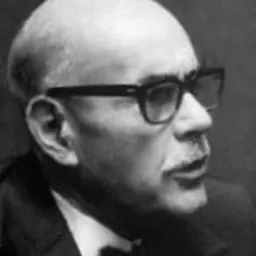
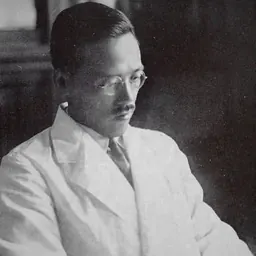
Contemporaries
People whose lives overlapped Elisabeth Geleerd's
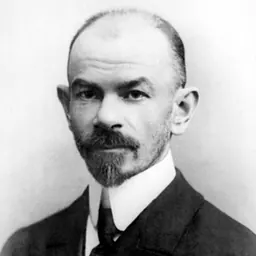



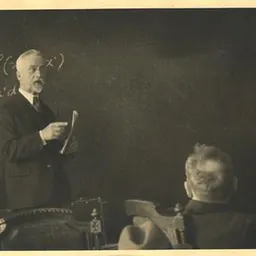
Frequently asked questions
Who was Elisabeth Geleerd?
American Dutch-born MD & psychoanalyst (1909-1969)
When was Elisabeth Geleerd born?
Elisabeth Geleerd was born on 20 March 1909 in Rotterdam.
When did Elisabeth Geleerd die?
Elisabeth Geleerd died on 25 May 1969 in New York City.
What was Elisabeth Geleerd's occupation?
Elisabeth Geleerd was a psychiatrist and psychoanalyst.
What nationality was Elisabeth Geleerd?
Elisabeth Geleerd was Dutch and American.
Sources & further reading
· Wikipedia: Elisabeth Geleerd
Cite this page
APA: Biography.guide. (2026). Elisabeth Geleerd. https://biography.guide/elisabeth-geleerd/
MLA: "Elisabeth Geleerd." Biography.guide, https://biography.guide/elisabeth-geleerd/.
Chicago: "Elisabeth Geleerd." Biography.guide. https://biography.guide/elisabeth-geleerd/.
Data last updated: 2026-09-22 · Spot an error? Report a correction.
Page generated 2026-09-27 05:22 UTC