
Margaret Mahler
Hungarian born American psychiatrist and psychoanalyst
About Margaret Mahler
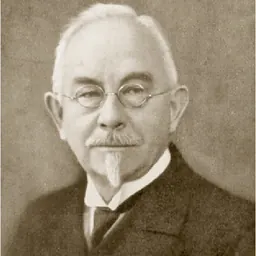
Lived 1897 – 1985 (aged 88). Margaret Mahler was a Hungarian, American and Austrian child psychiatrist, psychoanalyst, university teacher and pediatrician.
Margaret Schönberger Mahler (May 10, 1897 in Ödenburg, Austria-Hungary; October 2, 1985 in New York) was an Austrian-American psychiatrist, psychoanalyst, and pediatrician. She did pioneering work in the field of infant and young child research. On the basis of empirical studies, she developed a development model that became particularly influential in psychoanalysis and Object relations theory. Mahler developed the separation–individuation theory of child development.
Biography Born Margaret Schönberger on May 10, 1897, into a Jewish family in Ödenburg, a small town near Vienna to Gustav Schönberger, an Austrian physician and president of the Jewish community, one of the notables of Ödenburg, and Eugenia Schönberger, née Wiener. She met the influential Hungarian psychoanalyst Sándor Ferenczi, became fascinated by the concept of the unconscious, and was encouraged to read Sigmund Freud.
In September 1916, she began Art History studies at the University of Budapest, but in January 1917 switched to the Medical School. Three semesters later she began medical training at the Ludwig-Maximilians-Universität München, but was forced to leave because of Antisemitism. In spring 1920, she transferred to the University of Jena and it was there that she began to realize how important play and love were for infants in order for them to grow up mentally and physically healthy. After graduating cum laude in 1922, she left for Vienna in order to get her license to practice medicine. There she turned from pediatrics to psychiatry and, in 1926, started her training analysis with Helene Deutsch. Seven years later, she was accepted as an analyst. Working with children became her passion. She loved the way the children gave her their attention and showed their joy in cooperating with her.
In 1936 she married Paul Mahler. Following the Nazis' rise to power, the couple moved to Britain and then, in 1938, to the United States. After receiving a New York medical license, Margaret Mahler set up private practice in a basement and began to rebuild her clientele. She initially received a poor reception in New York, but found a welcoming analytic home in Philadelphia, invited to teach at the Philadelphia Psychoanalytic Institute in 1950. She eventually travelled between New York and Philadelphia on the weekends and become the chair of the Philadelphia Institute's child division. In 1939 she met Benjamin Spock and, after giving a child analysis seminar in 1940, she became senior teacher of child analysis. She joined the Institute of Human Development, the Educational Institute and the New York Psychoanalytic Society. In 1948 she worked on clinical studies on Benign and Malignant Cases of Childhood Psychosis.
Barnard College, at its 1980 commencement ceremonies, awarded her its highest honor, the Barnard Medal of Distinction.
Schönberger Mahler died on October 2, 1985.
Work Margaret Mahler worked as a psychoanalyst with young children.
In 1950 she and Manuel Furer founded the Masters Children's Centre in Manhattan (it was connected with Mount Sinai hospital). There she developed the Tripartite Treatment Model, in which the mother participated in the treatment of the child.
Symbiotic child psychosis struck her. The symptomatology she saw as a derailment of the normal processes whereby self-representations (the representation of one's self) and object-representations (the representation of a familiar person) become distinct.
Selected works On human symbiosis and the vicissitudes of individuation, 1969. The psychological birth of the human infant: symbiosis and individuation, 1975. Infantile psychosis and early contributions Rapprochement - critical subphase, separation - individuation Separation - individuation
Don’t just read it —
keep it.
Full-length biographies made to live with: read them, listen on the way to work, watch them tonight.
- E-book
- Audio
- Video
Instant download · yours to keep · every purchase keeps this site free
Important facts
People in Margaret Mahler's life
Named in this biography and alive at the same time

Related people
Same field, nearest in time





Contemporaries
People whose lives overlapped Margaret Mahler's



Frequently asked questions
Who was Margaret Mahler?
Hungarian born American psychiatrist and psychoanalyst (1897-1985)
When was Margaret Mahler born?
Margaret Mahler was born on 10 May 1897 in Sopron.
When did Margaret Mahler die?
Margaret Mahler died on 2 October 1985 in New York City.
What was Margaret Mahler's occupation?
Margaret Mahler was a child psychiatrist, psychoanalyst, university teacher and pediatrician.
What nationality was Margaret Mahler?
Margaret Mahler was Hungarian, American and Austrian.
Sources & further reading
Cite this page
APA: Biography.guide. (2026). Margaret Mahler. https://biography.guide/margaret-mahler/
MLA: "Margaret Mahler." Biography.guide, https://biography.guide/margaret-mahler/.
Chicago: "Margaret Mahler." Biography.guide. https://biography.guide/margaret-mahler/.
Data last updated: 2026-09-25 · Spot an error? Report a correction.
Page generated 2026-09-27 05:12 UTC