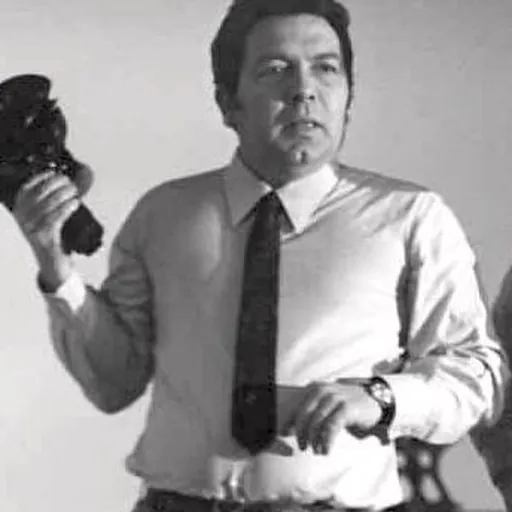
About Elio Petri
Lived 1929 – 1982 (aged 53). Elio Petri was an Italian film director, film screenwriter, film critic, screenwriter and stage director.
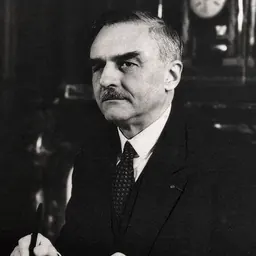
Eraclio Petri (29 January 1929 – 10 November 1982), commonly known as Elio Petri, was an Italian film and theatre director, screenwriter and film critic. The Museum of Modern Art described him as "one of the preeminent political and social satirists of 1960s and early 1970s Italian cinema". His film Investigation of a Citizen Above Suspicion won the 1971 Academy Award for Best Foreign-Language Film, and his subsequent film The Working Class Goes to Heaven received the Palme d'Or at the 1972 Cannes Film Festival.
Other noted films by Petri include The 10th Victim (1965), the prize-winning We Still Kill the Old Way (1967) and A Quiet Place in the Country (1968), and the controversially received Todo modo (1976).
Biography Early years Petri was born in Rome on 29 January 1929. In 1944, he joined the youth organization of the Italian Communist Party (PCI). He later left the Communist Party after the Hungarian Revolution of 1956.
Career as director Petri made his feature film debut as a director with The Assassin (also titled The Lady Killer of Rome, 1961), "The protagonist of Bicycle Thieves today must face not only the society he lives in but also his own consciousness", Petri stated in an interview the following year. working under a pseudonym. The film marked the beginning of Petri's collaboration with screenwriter Ugo Pirro, which was to last until 1973, and was the first of four feature films by Petri to star Gian Maria Volontè. A Quiet Place in the Country (1968), a giallo thriller about an artist's deterioration into madness, won a Silver Bear award at the 19th Berlin International Film Festival,
The "trilogy of neurosis" With Investigation of a Citizen Above Suspicion (1970), which, among other accolades, received the Academy Award for Best Foreign-Language Film and two prizes at the 1970 Cannes Film Festival, Petri presented one of his most successful films. In the same year, Petri participated in the political documentary films Documenti su Giuseppe Pinelli (also titled Dedicato a Pinelli), about the unresolved death of anarchist Giuseppe Pinelli, and 12 Dicembre. neurosis of power, neurosis of work and neurosis of money.
Later works Todo modo (1976) was again adapted from a novel by Leonardo Sciascia. The film, a barely concealed satirical portrayal of Italy's then ruling Christian Democratic party and prime minister Aldo Moro, was received controversially upon its release and withdrawn from circulation after Moro's assassination two years later. Petri himself saw the film as a break with what he saw as "popular" political cinema, radical political films (both his and by other directors) produced within Italy's mainstream film industry. In 1981, Petri directed Arthur Miller's new play The American Clock at Genoa's Teatro Duse, with Lino Capolicchio playing the lead role.
Death Petri died of cancer on 10 November 1982 in Rome, 53 years old.
Filmography Director All films were also written or co-written by Petri, except where noted
1954: Nasce un campione (short film) 1957: I sette contadini (short film, dir. only) 1961: The Assassin 1962: His Days Are Numbered 1963: The Teacher from Vigevano 1964: High Infidelity (segment "Peccato nel pomeriggio") 1964: Nudi per vivere (segment, dir. only) 1965: The 10th Victim 1967: We Still Kill the Old Way 1968: A Quiet Place in the Country 1970: Investigation of a Citizen Above Suspicion 1970: Documenti su Giuseppe Pinelli (segment "Ipotesi sulla morte di Giuseppe Pinelli", dir. only) 1970: 12 dicembre (segment, dir. only) 1971: The Working Class Goes to Heaven 1973: Property Is No Longer a Theft 1976: Todo modo 1978: Le mani sporche (TV miniseries) 1979: Good News
Screenplay only
1953: A Husband for Anna 1954: Angels of Darkness 1954: Days of Love 1955: Sunset in Naples 1956: The Wolves 1958: Piece of the Sky 1958: The Road a Year Long 1959: Train Without a Timetable 1959: The Employee 1959: Vento del sud 1959: Le notti dei teddy boys 1960: La garçonnière 1963: I mostri
Awards (selected)
His Days Are Numbered 1962 Nastro d'Argento for Best Original Story 1962 Mar del Plata International Film Festival Astor de Oro for Best Film We Still Kill the Old Way 1967 Cannes Film Festival Award for Best Screenplay 1968 Nastro d'Argento for Best Director and Best Screenplay A Quiet Place in the Country 1969 Berlin International Film Festival Silver Bear Investigation of a Citizen Above Suspicion 1970 Cannes Film Festival Special Prize of the Jury and FIPRESCI Prize 1970 David di Donatello for Best Film 1971 Academy Award for Best Foreign-Language Film 1971 Nastro d'Argento for Best Director 1971 Edgar Award for Best Motion Picture Screenplay The Working Class Goes to Heaven 1972 Cannes Film Festival Palme d'Or 1972 David di Donatello for Best Film
Don’t just read it —
keep it.
Full-length biographies made to live with: read them, listen on the way to work, watch them tonight.
- E-book
- Audio
- Video
Instant download · yours to keep · every purchase keeps this site free
Important facts
People in Elio Petri's life
Named in this biography and alive at the same time





Related people
Same field, nearest in time


Contemporaries
People whose lives overlapped Elio Petri's



Frequently asked questions
Who was Elio Petri?
Italian filmmaker (1929–1982)
When was Elio Petri born?
Elio Petri was born on 29 January 1929 in Rome.
When did Elio Petri die?
Elio Petri died on 10 November 1982 in Rome.
What was Elio Petri's occupation?
Elio Petri was a film director, film screenwriter, film critic, screenwriter and stage director.
What nationality was Elio Petri?
Elio Petri was Italian.
Sources & further reading
Cite this page
APA: Biography.guide. (2026). Elio Petri. https://biography.guide/elio-petri/
MLA: "Elio Petri." Biography.guide, https://biography.guide/elio-petri/.
Chicago: "Elio Petri." Biography.guide. https://biography.guide/elio-petri/.
Data last updated: 2026-09-22 · Spot an error? Report a correction.
Portrait: Wikimedia Commons · author & licence
Page generated 2026-09-27 05:27 UTC