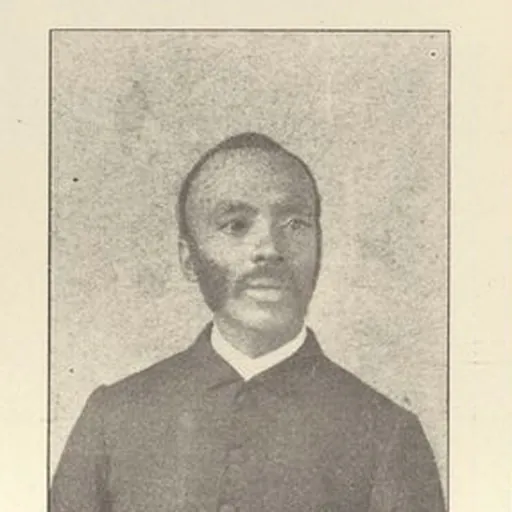
About Elijah P. Marrs
Lived 1840 – 1910 (aged 69–70). Elijah P. Marrs was an American soldier, teacher, christian minister, educator and minister (Christianity).
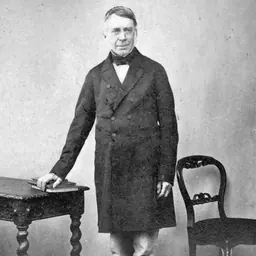
Elijah P. Marrs (January 1840 – August 30, 1910) was a minister and educator in Louisville, Kentucky. He was a sergeant in the 12th Regiment Heavy Artillery U.S. Colored Troops during the American Civil War (1861–1865). After the war he taught in various schools and helped organize Loyal Leagues to defend blacks from attacks by the Ku Klux Klan. Together with his brother, Henry, he helped found what became Simmons College of Kentucky in Louisville in 1879.
Early life Elijah P. Marrs was born a slave in January 1840 in Shelby County, Kentucky to Andrews and Frances Marrs. His father, Andrew, had been granted his freedom by his master before Elijah was born, but his mother was still a slave, and with her sons was owned by a man named Jesse Robinson. His parents were born in Culpeper County, Virginia. He had one brother, Henry C. Marrs. He converted to the Baptist religion at the age of eleven by Rev. Charles Wells Marrs picked up on Graves' ability to teach and began teaching fellow slaves how to read as well. This passion for teaching and helping others continued even when the American Civil War (1861–1865) started, Marrs read newspapers to other slaves, keeping people informed about the wars progress.
Civil War On September 25, 1864, Marrs organized a company of 27 men, armed with clubs, and Marrs armed himself with a broken pistol, and they marched 22 miles to Louisville and enlisted in the United States army. Soon after, he was made sergeant of Company L of the 12th Regiment Heavy Artillery U.S. Colored Troops. in company C of the 5th United States Colored Cavalry. His regiment trained at Camp Nelson, Kentucky and took part in minor engagements at Glasgow and at Big Springs in Kentucky in 1865. With the permission of his captain, Marrs and another soldier, Swift Johnson, led prayer meetings in the barracks while the regiment was stationed in Bowling Green. While serving at Camp Nelson, Marrs started a relationship with a woman named Emma, who later died in a refugee camp. He was discharged on April 24, 1866. In September 1866, Marrs was hired as the first African American to teach at a school in Simpsonville. His efforts in creating Simpsonville history did not end there, he also established the first colored agriculture and mechanical fair in Simpsonville and the surrounding Logan counties. He played a role in various Loyal Leagues organized for protection of blacks against attacks by the Ku Klux Klan and himself fended off numerous attacks. When he wasn't stopping present physical attacks, he was working to halt racist bills from reaching ratification in his community, such as the 'whipping post bill", which would have seen the return of a whipping post as a punishment for African Americans. He was secretary of the Loyal League in Lagrange organized by W. L. Yancey in 1869. While at New Castle in 1871, Marrs helped organize a Henry County Loyal League. In his autobiography, Marrs states that he "slept with a pistol under my head, an Enfield rifle at my side, and a corn knife at the door".
Marrs also joined the Baptist clergy. On June 16, 1873, he was licensed to preach at the New Castle Baptist Church and he was ordained August 22, 1875.
In 1879, he and Henry co-founded Simmons College of Kentucky.
Later in his career, he continued to be involved in statewide and national organizations. He was a member of the State Convention of Colored Men in Lexington in 1882 and of the National Convention of Colored Men in Louisville in 1883. He was also a member of a large education convention in Frankfort, Kentucky in 1884. He was a member of the executive board and treasurer of the General Association of Colored Baptists for six years. He was member and secretary of the executive board of the Central District Association.
On March 16, 1880, he became pastor of the Beargrass Baptist Church which he helped found. In 1881 he served as pastor of St. John Baptist Church in Louisville, and served there as well as at Beargrass until his death.
Marrs died on August 30, 1910. He was buried in Greenwood Cemetery.
Don’t just read it —
keep it.
Full-length biographies made to live with: read them, listen on the way to work, watch them tonight.
- E-book
- Audio
- Video
Instant download · yours to keep · every purchase keeps this site free
Important facts
People in Elijah P. Marrs's life
Named in this biography and alive at the same time

Related people
Same field, nearest in time


Contemporaries
People whose lives overlapped Elijah P. Marrs's

Frequently asked questions
Who was Elijah P. Marrs?
1840 - 1910
When was Elijah P. Marrs born?
Elijah P. Marrs was born in 1840 in Shelby County.
When did Elijah P. Marrs die?
Elijah P. Marrs died on 30 August 1910 in Louisville.
What was Elijah P. Marrs's occupation?
Elijah P. Marrs was a soldier, teacher, christian minister, educator and minister (Christianity).
What nationality was Elijah P. Marrs?
Elijah P. Marrs was American.
Sources & further reading
Cite this page
APA: Biography.guide. (2026). Elijah P. Marrs. https://biography.guide/elijah-p-marrs/
MLA: "Elijah P. Marrs." Biography.guide, https://biography.guide/elijah-p-marrs/.
Chicago: "Elijah P. Marrs." Biography.guide. https://biography.guide/elijah-p-marrs/.
Data last updated: 2026-09-24 · Spot an error? Report a correction.
Portrait: Wikimedia Commons · author & licence
Page generated 2026-09-27 05:08 UTC