
About Elie Kedourie
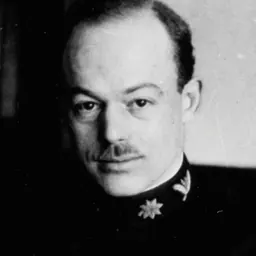
Lived 1926 – 1992 (aged 66). Elie Kedourie was a British historian, university teacher, political scientist and middle East.
Elie Kedourie (25 January 1926 – 29 June 1992) was a British-Iraqi historian of the Middle East. He wrote from a perspective that dissented from many points of view taken as orthodox in the field. From 1953 to 1990, he taught at the London School of Economics, where he became Professor of Politics. Kedourie was famous for his rejection of what he called the "Chatham House version" of history, which viewed the story of the modern Middle East as one of continuous victimisation at the hands of the West, and instead castigated left-wing Western intellectuals for what he regarded as a naively romantic view of Islam.
Early life Kedourie was born on 25 January 1926 in Baghdad, Mandatory Iraq to an Iraqi-Jewish family and grew up in the Jewish quarter of Baghdad. Kedourie was educated at the Collège A.D. Sassoon run by the Alliance Israélite Universelle.
Kedourie studied at the London School of Economics, where he received his undergraduate degree, and at St Antony's College, Oxford, where he worked towards a DPhil.
Scholarship and controversy Doctoral thesis Kedourie's doctoral thesis (afterwards published as England and the Middle East) was critical of Britain's interwar role in Iraq. It was refused a University of Oxford DPhil, but was published in 1956. It castigated British policy makers for their encouragement of Arab nationalism and contained a very negative view of T. E. Lawrence. Kedourie attacked British policy-makers for first creating in 1921 the Kingdom of Iraq out of the former Ottoman vilayets (provinces) of Mosul, Baghdad, and Basra and then imposing "a militantly Arab nationalist regime upon a diverse society". Given the prestige of a DPhil at Oxford, Kedourie, in the words of the American historian Martin Kramer, displayed "much courage" in refusing to change his thesis.
Subsequent career Michael Oakeshott brought Kedourie back to the LSE in 1953. In 1964, Kedourie was founder and editor of the academic journal, Middle Eastern Studies.
His 1960 book Nationalism provoked replies, in Thought and Change (1964) and Nations and Nationalism (1983), by his LSE colleague Ernest Gellner, who contested Kedourie's theories on the potential eliminability of nationalist thought. Kedourie was critical of Marxist interpretations of history and nationalism. Kedourie claimed that nationalism had turned the Middle East into "a wilderness of tigers". Kedourie also documented and criticised what he saw as the British Empire's debilitation by excessive self-criticism.
In 1970, he attacked another British celebrity, Arnold J. Toynbee, in the essay The Chatham House Version, and held him partly responsible for the British abdication of responsibility for the state of the Middle East. Kedourie attacked Toynbee for his criticism of the British Empire, arguing that contra Toynbee that the British Empire had been a positive institution whose decline had brought disaster to its former colonies, most notably in the Middle East. The Israeli historian Major Efraim Karsh criticised Kedourie for his thesis that the era of the Ottoman Empire was one of peaceful co-existence of peoples who did not have national identities, citing the Wahhabi raids; the wars of independence in Greece, Serbia, and Bulgaria; the anti-Christian pogroms and massacres in the Levant in 1859–60; and the Hamidian massacres of Armenians, to demonstrate the limits of Kedourie's "peaceful co-existence" thesis. Kedourie attacked Horne for claiming that it was the French who were responsible for the fact that most of the Algerian Muslims lived in conditions of dire poverty, though he acknowledged that Horne was correct that the racial barriers between the pied-noir and Muslim communities were a source of tension. Kedourie argued that Charles de Gaulle was the "master of the situation" by 1960 and could have ensured that the Algerian Muslims would have equal rights with the pieds-noirs, but instead blinded by other ideas of French greatness chose to grant Algeria independence." Kedourie charged that de Gaulle had cynically sacrificed the colons and the harkis as Kedourie charged that de Gaulle had chosen to disregard his constitutional oath as president to protect all the French to ensure that "the French withdrew and handed over power to the only organized body of armed men who were on the scene – a civilized government thus acting for all the world like the votary of some Mao or Ho, in the barbarous belief that legitimacy comes from the power of the gun". He again denounced de Gaulle for granting Algeria independence, writing that the Algerians "were cruelly abandoned to the mercies of the FLN, a handful of purs et durs, spurred on by nationalism, that curse of the modern world to seize power and rule for their own benefit. Their Arabizing policies, however, had opened up the country to the influence of fundamentalist movements like the Muslim Brotherhood in the Middle East, so that Islam came to provide the growing opposition with not only a political idiom, but also a revolutionary cause stigmatized by the same conspiratorial violence once shown by the FLN. Caught between the monsters of the FLN and those of the FIS or Islamic Salvation Front, the Algerian people are sure to pay the price". The couple had two sons and one daughter.
On 29 June 1992 Kedourie died in Washington, D.C., aged 66.
Books England and the Middle East: The Vital Years 1914–1921 (1956); later as England and the Middle East: the destruction of the Ottoman Empire 1914–1921 Nationalism (1960); revised edition 1993 Afghani and 'Abduh: An essay on religious unbelief and political activism in modern Islam (1966) The Chatham House Version: And Other Middle Eastern Studies (1970) Nationalism in Asia and Africa (1970) editor Arabic Political Memoirs and Other Studies (1974) In the Anglo-Arab Labyrinth: The McMahon-Husayn Correspondence and its Interpretations 1914–1939 (1976) Middle Eastern Economy: Studies in Economics and Economic History (1976) The Jewish World: Revelation, Prophecy and History (1979) editor; as The Jewish World: History and Culture of the Jewish World (US) Islam in the Modern World and Other Studies (1980) Towards a Modern Iran; Studies in Thought, Politics and Society (1980) editor with Sylvia G. Haim Modern Egypt: Studies in Politics and Society (1980) editor Zionism and Arabism in Palestine and Israel (1982) editor with Sylvia G. Haim The Crossman Confessions and Other Essays in Politics, History and Religion (1984) Diamonds into Glass: The Government and the Universities (1988) Essays on the Economic History of the Middle East (1988) editor with Sylvia G. Haim Democracy and Arab Political Culture (1992) Politics in the Middle East (1992) Spain and the Jews: The Sephardi Experience, 1492 and after (1992) Hegel & Marx: Introductory Lectures (1995)
Don’t just read it —
keep it.
Full-length biographies made to live with: read them, listen on the way to work, watch them tonight.
- E-book
- Audio
- Video
Instant download · yours to keep · every purchase keeps this site free
Important facts
Family & relationships
People in Elie Kedourie's life
Named in this biography and alive at the same time

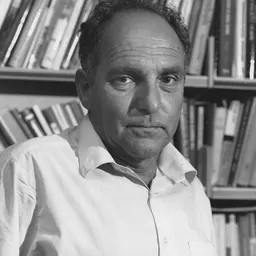


Related people
Same field, nearest in time

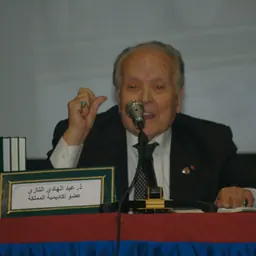



Contemporaries
People whose lives overlapped Elie Kedourie's
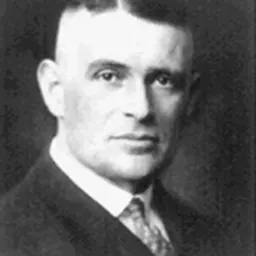
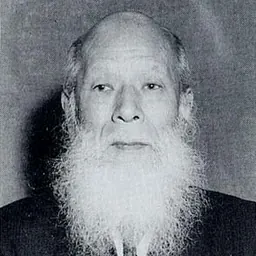
Frequently asked questions
Who was Elie Kedourie?
British historian (1926–1992)
When was Elie Kedourie born?
Elie Kedourie was born on 25 January 1926 in Baghdad.
When did Elie Kedourie die?
Elie Kedourie died on 29 June 1992 in Washington, D.C..
What was Elie Kedourie's occupation?
Elie Kedourie was a historian, university teacher, political scientist and middle East.
What nationality was Elie Kedourie?
Elie Kedourie was British.
Sources & further reading
Cite this page
APA: Biography.guide. (2026). Elie Kedourie. https://biography.guide/elie-kedourie/
MLA: "Elie Kedourie." Biography.guide, https://biography.guide/elie-kedourie/.
Chicago: "Elie Kedourie." Biography.guide. https://biography.guide/elie-kedourie/.
Data last updated: 2026-09-22 · Spot an error? Report a correction.
Page generated 2026-09-27 05:31 UTC