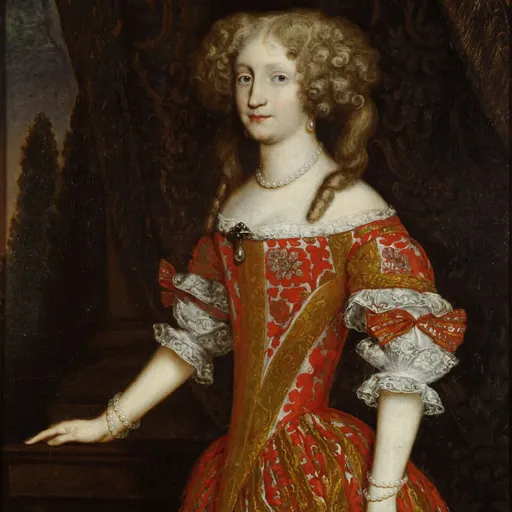
Eleonor Magdalene of Neuburg
Holy Roman Empress, German Queen, Archduchess of Austria, Queen of Hungary and Bohemia as the third and last wife of Leopold
About Eleonor Magdalene of Neuburg
Lived 1655 – 1720 (aged 65). Eleonor Magdalene of Neuburg was a queen regnant.
Eleonore Magdalene of Neuburg (Eleonore Magdalene Therese; 6 January 1655 – 19 January 1720) was Holy Roman Empress, German Queen, Archduchess of Austria, Queen of Hungary and Bohemia as the third and final wife of Leopold I, Holy Roman Emperor. Before her marriage and during her widowhood, she led an ascetic and monastic life, translating the Bible from Latin to German and defended the Order of the Discalced Carmelites. Reputed to be one of the most educated and virtuous women of her time, Eleonore took part in the political affairs during the reign of her husband and sons, especially regarding court revenue and foreign relationships. She served as regent for a few months in 1711, period in which she signed the Treaty of Szatmár, which recognized the rights of her descendants to the Hungarian throne.
Childhood Eleonore was born in Düsseldorf, Holy Roman Empire, on the night of 6 January 1655. She was the oldest of 17 children born from Philip William, Count Palatine of Neuburg and Duke of Jülich-Berg and his second wife, Landgravine Elisabeth Amalie of Hesse-Darmstadt. On her father's side her grandparents were Wolfgang Wilhelm, Count Palatine of Neuburg and his first wife, Magdalene of Bavaria. On her mother's side, her grandparents were George II, Landgrave of Hesse-Darmstadt and Sophia Eleonore of Saxony.
Immediately after birth, she was baptized Eleonore Magdalene Therese by the abbot of Altenburg Abbey. To celebrate her birth, the court chaplain and poet Jesuit Jakob Balde composed a Latin poem in hexameters called the "Song of Eleonore's Nativity" , which he partially translated into German in subsequent poems dedicated to her. He subsequently became her spiritual mentor until his death. In August, her parents moved with her from Düsseldorf to Neuburg. On 11 September 1661 at the Neuburg Hofkirche, she was anointed by Marquard II Schenk von Castell, Prince-bishop of Eichstätt.
Eleonore was raised in a pious environment and received an excellent education. She was well versed in finances, literature, theology, and became fluent in Latin, German, French and Italian. She was fond of the arts and hunting, though her true passion was reading and translating religious texts to German. Since September 1672, she lived at Schloss Benrath, where she began her training in etiquette under the guidance of a maid of honour.
From her early childhood, Eleonore displayed a pious nature and a fervent adherence to Catholicism. At the age of four years old, she saw a very explicit Crucifixion scene and burst into tears in sympathy with Jesus. Since then, she participated in religious activities and visited the poor, weak, needy and sick every day. These events influenced her depression which soon turned into self-destructive behaviour. She was drawn to the penitential side of Catholicism: as an example, she used bracelets with small spikes on the inside to torment the flesh. When court protocol demanded her to visit the opera, she reportedly took a prayer book with her to distract her from the play. Thanks to the intense diplomatic efforts of Eleonore's father, he gained to his side , Papal nuncio in Vienna, and King Charles II of Spain. The opponents of the Count Palatine of Neuburg in the Imperial court spread rumours that she suffered from poor health and was physically unattractive. However, these rumours didn't stop the emperor, who needed an heir and knew about her family's reputed fertility. In addition, the Count Palatine showed Leopold I a portrait of his daughter, made especially for this purpose. In total, she gave birth to ten children, of whom six survived to adulthood: She accompanied her husband on his travels (for example, at the Diet of Augsburg in 1689) and supervised the education of her children personally.
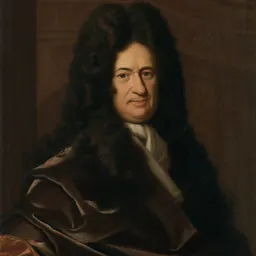
As empress, Eleonore took control over the economy of the imperial court and managed to reduce its expenses through more effective organization. She had always paid great attention to matters of charity, but her patronage towards people in need still had some boundaries. The imperial revenue became vast enough to not only order the building of hospitals, orphanages, and Carmelite convents in Graz and Vienna, but support numerous brotherhoods, churches and monasteries. She arranged the marriages of both her sons, but deeply disliked the private life of her oldest son Joseph, scolding him for his infidelities and placing his procurers in prison. She congratulated the successful diplomat Alexander Károlyi by appointing him as general. There was a fear among the ministers that she would use her position to defend the rights of her brother, the Elector Palatine, to the Upper Palatinate in a time when the interests of Austria would be better benefited by sacrificing his lands to Bavaria, which claimed it. This secret pact was only known to Leopold I, his sons and Count Johann Friedrich von Seilern und Aspang. Neither Eleonore or her daughters-in-law knew for certain that the document existed, but they had heard of it, but both were very active in establishing the truth and pressuring Charles to establish a public succession order, which would be necessary for court protocol. In 1712, Wilhelmine Amalia managed to persuade Count Seilern to give her the document, which she sent to the head of her family George Louis, Elector, who sent Gottfried Wilhelm Leibniz, to help her to negotiate with Charles VI her daughters' rights. When Charles VI presented the original version of the Pactum Mutuae Successionis on 21 April 1713, Wilhelmine Amalia had triumphed in making him recognize the secret succession order of 1703. It was at a dinner with Eleonore, in the presence of the numerous archduchesses, that Seilern informed them of this. However, the success of Wilhelmine Amalia was short-lived: only a few days before, on 19 April, Charles VI already announced his wish to amend the Pact in order to give his own future daughters precedence over his nieces in a secret session of the council.
In 1719, Charles VI was diplomatically forced to arrest his maternal aunt and first cousin, Hedwig Elisabeth, Princess Sobieski and Maria Clementina Sobieska, to stop the marriage between the latter and the Jacobite pretender James Francis Edward Stuart in Rome. However, the Empress Mother managed to delay the transmission of the warrant for quite some time during their travel through Austrian lands before her relatives were placed under arrest in Innsbrück. Eleonore continued to use her connections to prevent Charles from marrying Maria Clementina to someone else, such as the Duke of Modena, and eventually assisted in her niece's escape from Austria to Italy.
Last years
During her last years, Eleonore lived as a nun. In her will, she instructed to her servants, who had witnessed her ascetic life, never to tell anyone about this. On 1 January 1720, in preparation for the sacrament of confession, the Empress Mother suffered a stroke, which led her being paralyzed on the right side of her body. She received the Anointing of the Sick and gave her maternal blessings to her children and grandchildren, who reunited at her deathbed. During her final days, Eleonore was constantly nursed by her two daughters-in-law Wilhelmine Amalia (with whom she now had a close relationship) and Elisabeth Christine.
Eleonore Magdalene died on 19 January 1720, at the age of 65. Four months later, on 24 May, she was buried at the Imperial Crypt in Vienna. In her memory, a temporary wooden church was built at the imperial court, named the "sorrow castle" . According to her last will, her remains were placed in an ordinary wooden coffin, which was placed at the foot of Leopold I's tomb. Her heart was put in an urn and placed in the Herzgruft at the Augustinian Church. In the year of her death, were published six epitaphs, among them poet Johann Christian Günther (who described her as a paragon of virtue and faith). The current lead Baroque coffin which contains Eleonore's remains was a work of Balthasar Ferdinand Moll and was made in August 1755 following the orders of her granddaughter, Empress Maria Theresa, because the old wooden coffin had considerably deteriorated.
Don’t just read it —
keep it.
Full-length biographies made to live with: read them, listen on the way to work, watch them tonight.
- E-book
- Audio
- Video
Instant download · yours to keep · every purchase keeps this site free
Important facts
Family & relationships
People in Eleonor Magdalene of Neuburg's life
Named in this biography and alive at the same time

Related people
Same field, nearest in time
Contemporaries
People whose lives overlapped Eleonor Magdalene of Neuburg's

Frequently asked questions
Who was Eleonor Magdalene of Neuburg?
Holy Roman Empress, German Queen, Archduchess of Austria, Queen of Hungary and Bohemia as the third and last wife of Leopold
When was Eleonor Magdalene of Neuburg born?
Eleonor Magdalene of Neuburg was born on 6 January 1655 in Düsseldorf.
When did Eleonor Magdalene of Neuburg die?
Eleonor Magdalene of Neuburg died on 19 January 1720 in Vienna.
What was Eleonor Magdalene of Neuburg's occupation?
Eleonor Magdalene of Neuburg was a queen regnant.
What nationality was Eleonor Magdalene of Neuburg?
Eleonor Magdalene of Neuburg's recorded nationality: Electoral Palatinate.
Sources & further reading
· Wikipedia: Eleonor Magdalene of Neuburg
· DBpedia: Eleonore Magdalene of Neuburg
Cite this page
APA: Biography.guide. (2026). Eleonor Magdalene of Neuburg. https://biography.guide/eleonor-magdalene-of-neuburg/
MLA: "Eleonor Magdalene of Neuburg." Biography.guide, https://biography.guide/eleonor-magdalene-of-neuburg/.
Chicago: "Eleonor Magdalene of Neuburg." Biography.guide. https://biography.guide/eleonor-magdalene-of-neuburg/.
Data last updated: 2026-09-27 · Spot an error? Report a correction.
Portrait: Wikimedia Commons · author & licence
Page generated 2026-10-04 11:56 UTC