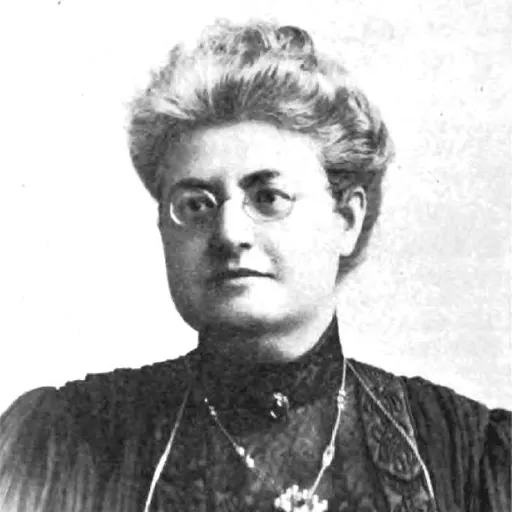
Eleanor Sophia Smith
American composer and music educator
About Eleanor Sophia Smith
Lived 1858 – 1942 (aged 84). Eleanor Sophia Smith was an American composer, music educator and music publisher, known for Hull House Music School.
Eleanor Sophia Smith (June 15, 1858 – June 30, 1942) was an American composer and music educator. She was one of the founders of Chicago's Hull House Music School, and headed its music department from 1893 to 1936.
Born into a musical family, Smith taught herself to play the piano and later became a classically trained musician. Earning a teaching degree, she began publishing music compositions for children using the philosophy of Friedrich Fröbel, advocating for less memorization and drilling and more attention to intuitive appreciation of music. Studying composition and voice in Germany, she also toured the country observing choirs and their teaching techniques.
Returning to the United States in 1890, Smith began working at the settlement house, Hull House, as a music instructor. Within three years she had co-founded the Hull House Music School, a school which followed her progressive teaching ideas, cross-training students in vocal music as well as instruments. Simultaneously, she worked in several institutions in the Chicago area which trained music educators.
Smith published numerous compilations of songs, including two six-volume textbook series, which were widely used throughout the United States. Most of her writings were focused on children's voices and contained short songs written with attention paid to the limited range and short attention span of children. Many of her compositions were still being used in music education programs in the latter part of the 20th century.
Early years and education Born in Atlanta, Illinois, in 1858, Eleanor was the daughter of Willard Newton and Matilda (Jaspersen) Smith. She came from a musical family, as her father was a noted bass in the First Presbyterian Church Choir in Chicago between 1860 and 1871. In an interview she gave in 1908, Smith claimed that both sides of her family were musical, noting that a paternal great-grandfather composed hymns and that her maternal line was a musical mix of Danish, French, German, and Jewish ancestry. Smith taught herself to play the piano and did not begin any formal training for voice or composition until she was eighteen years old. She had very poor vision, which limited her ability to use her eyes for long periods of time. She studied at the Hershey School of Musical Art and published her first cantata, "The Golden Asp", while still a student there. She later graduated from Cook County Normal School, but continued to study music privately as a pupil of Frances A. Root (voice) and Frederick Grant Gleason (composition).
Career After completing her schooling, Smith commenced teaching at the Cook County Normal School for a few years before moving to Germany to continue her studies. She went to Berlin in 1887, where she studied with Moritz Moszkowski (composition), Julius Hey (voice), and Ludwig Bussler for three years. While she was in Germany, she traveled through the country observing choirs where she could obtain permission to do so. In some instances, she was not allowed to observe or be seen, as her presence was deemed improper in groups composed of only male performers or students. While in Berlin, she and friends discussed the benefits of teaching where students were cross-trained in both piano and voice, which would be advantageous to both. Such study would prevent pianists from losing the melodic focus and being overly technical; additionally, singers would gain technique rather than focusing solely on performance. As early as 1885, she was publishing songs and collaborating with poets for lyrics, including such works as "Cradle Song", "A Million Little Diamonds", "Only Thine Own Mine Art", "The Quest" and "She Kisses with her Eyes". Smith gained a reputation as a songwriter by the early 1890s and many of her works were translated into German during this period. She also wrote hymns, though they may have remained in manuscript. Other works Smith authored include: "Song Pictures"; "Twelve Songs for Twelve Boys"; "The Golden Asp" (cantata); "Wedding Music" (No. 1 and No. 2); "Trolls' Holiday" (operetta); and "Twelve Songs". Her works continued to be popular into the 1980s, attesting to the quality of their composition.
Teaching
Smith arrived at Hull House in the autumn of 1890 and, shortly after her first visit, began to give voice and piano lessons to both children and adults. Initially, free concerts were given on Sunday, both to uplift the community and to highlight the talents of the settlement house teachers and musicians. Between November 1891 and April 1892, there were 22 Sunday concerts held at Hull House before the music school was officially founded. Smith was one of the founders of Hull House Music School the following year, which became the first settlement music school in the United States. She invited one of her friends from Germany, Amalie Hannig, who had been teaching piano at the Klindworth Conservatory to help her with the school. Hannig taught both piano and voice at the school until 1898. Mary Rozet Smith, one of the benefactors of Hull House, provided the funding to establish the school.
In the late 1890s, Jane Addams and Smith had a disagreement over Hull House's Sunday concerts. Smith, a classically trained musician, felt that the purpose of the events should be to present educationally challenging programs. Addams, however, felt that the programs should feature more popular music to promote Hull House and recruit broad audiences to experience the environment which the settlement house offered. They finally reached a compromise at the turn of the decade, with Sunday concerts featuring music with popular appeal and weekday evening programs focusing on more challenging material. However, the disagreement over content ultimately lead to Smith's resignation in 1901. Though Addams did not relent on the Sunday content, she was able to persuade Smith to remain otherwise.
Smith's singing class at Hull House in 1929. Pictured seated at the piano. Smith's teaching style differed from conventional music instruction at the time in that she required instrumental students to study voice. Piano, organ and violin instruction was offered by 1907. Gertrude Madeira Smith, Eleanor's sister, gave organ instruction and Charles Moerenhout of the Chicago Orchestra taught violin. Five assistants also helped the teachers. Smith felt that adding vocal training gave a level of experience that was neglected by singular focus on memorization of scales and structural drills usually prevalent for those learning instruments. She also incorporated songs from the students' homelands as a way to intermingle their old cultures with their new lives and made efforts to involve their parents in the development of the curricula. As a progressive reformer, Smith advocated that inclusive diversity was a means of building a cosmopolitan citizenry united by pursuit of music excellence. She also encouraged students to compose music from their earliest instruction and to recover songs from their cultural backgrounds.
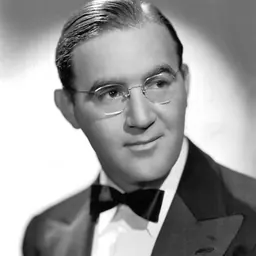
As well as teaching music at Hull House, Smith served as its choral director. She also composed songs and arranged music specifically for her students to perform. She initiated an annual Christmas concert which also included a dramatic presentation and was eagerly anticipated by the neighborhood for its holiday pageantry. Under her direction of the music school, the Hull House Boy's Band developed, which included immigrant boys from the neighborhood who would later become noted jazz performers. Jazz pianist Art Hodes recalled that one of the first jam sessions he ever had occurred when a young clarinetist named Benny Goodman joined the Boy's Band. James Petrillo, who later led the American Federation of Musicians, a musician's union, was also a member of the group.
In addition to her work at Hull House, Smith was involved in public education. Francis Wayland Parker invited her to head the vocal music department at the Chicago Normal School in 1897 and John Dewey asked her to teach at the University of Chicago as the head of the Department of Music, School of Education from 1901 to 1910. She not only trained teachers for Dewey but assisted him in developing a revised curriculum for the music education program. Smith also instructed courses at the Chicago Kindergarten College and at the Froebel Kindergarten College, both training colleges for teachers of very young children.
Personal life Smith favored women's suffrage and was an Episcopalian by religion. She was a member of the Chicago Woman's Club, Chickaming Country Club, North Side Branch Equal Suffrage League, and the Audubon Society. In 1897, she moved into the settlement house and lived there until 1924. At that time, she lived in the home of Mary Rozet Smith, where she remained until around 1934. Then, Smith returned to Hull House as a resident until she retired in 1936 and her sister Gertrude succeeded her. Thereafter, for health reasons, Smith moved to Midland, Michigan, where she resided with a niece until her death on June 30, 1942, in Midland. She was buried in Annapolis, Maryland.
Posthumously, Smith's papers were donated to the University of Illinois at Chicago to preserve what Jane Addams described as "one of the most finely creative minds" which "fulfilled the highest mission of music".
Selected works
Don’t just read it —
keep it.
Full-length biographies made to live with: read them, listen on the way to work, watch them tonight.
- E-book
- Audio
- Video
Instant download · yours to keep · every purchase keeps this site free
Important facts
People in Eleanor Sophia Smith's life
Named in this biography and alive at the same time

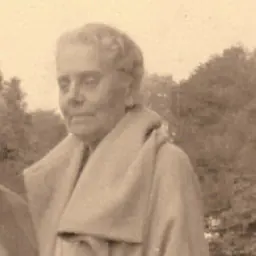

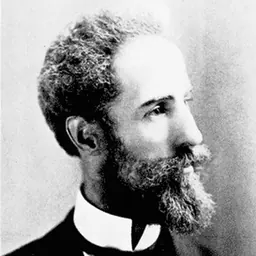

Related people
Same field, nearest in time
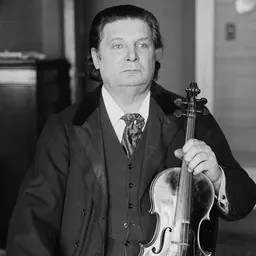

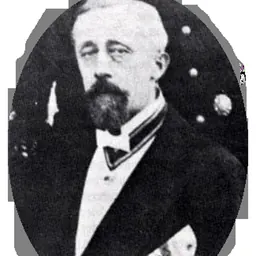


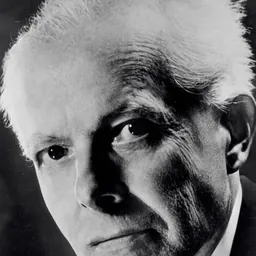
Contemporaries
People whose lives overlapped Eleanor Sophia Smith's
Frequently asked questions
Who was Eleanor Sophia Smith?
American composer and music educator (1858-1942)
When was Eleanor Sophia Smith born?
Eleanor Sophia Smith was born on 15 June 1858 in Atlanta.
When did Eleanor Sophia Smith die?
Eleanor Sophia Smith died on 30 June 1942 in Midland.
What was Eleanor Sophia Smith's occupation?
Eleanor Sophia Smith was a composer, music educator and music publisher.
What was Eleanor Sophia Smith known for?
Eleanor Sophia Smith was known for Hull House Music School.
What nationality was Eleanor Sophia Smith?
Eleanor Sophia Smith was American.
Sources & further reading
· Wikipedia: Eleanor Sophia Smith
· DBpedia: Eleanor Sophia Smith
Cite this page
APA: Biography.guide. (2026). Eleanor Sophia Smith. https://biography.guide/eleanor-sophia-smith/
MLA: "Eleanor Sophia Smith." Biography.guide, https://biography.guide/eleanor-sophia-smith/.
Chicago: "Eleanor Sophia Smith." Biography.guide. https://biography.guide/eleanor-sophia-smith/.
Data last updated: 2026-09-22 · Spot an error? Report a correction.
Page generated 2026-09-27 05:09 UTC