
About Elbert Tuttle
Lived 1897 – 1996 (aged 98). Elbert Tuttle was an American judge and jurist.
Elbert Parr Tuttle (July 17, 1897 – June 23, 1996) was the chief judge of the United States Court of Appeals for the Fifth Circuit from 1960 to 1967, when that court became known for a series of decisions crucial in advancing the civil rights of African Americans during the civil rights movement. A Republican from Georgia, he was among the judges that became known as the "Fifth Circuit Four". At that time, the Fifth Circuit included not only Louisiana, Mississippi, and Texas (its jurisdiction ), but also Alabama, Georgia, Florida, and the Panama Canal Zone.
Education and early career Tuttle was born in Pasadena, California, on July 17, 1897. In 1906, his family moved to Hawaii where he attended Punahou School. In October 1910, he and his brother Malcolm built and flew the first glider in Hawaii.
Tuttle graduated from Cornell University in Ithaca, New York, in 1918 with a Bachelor of Arts degree. Tuttle was the editor-in-chief of The Cornell Daily Sun. He was also the founder of the Beta Theta chapter of Pi Kappa Alpha Fraternity at Cornell and was a member of the Sphinx Head Society. He then fought in World War I in the United States Army Air Service from 1918 to 1919.
Tuttle received a Bachelor of Laws from Cornell Law School, where he served as editor-in-chief of the Cornell Law Quarterly, in 1923. He was a reporter for the New York Evening World for several years while attending law school.
Later career After graduating from law school, he moved to Atlanta, Georgia, to practice law with the law firm of Sutherland, Tuttle & Brennan from 1923 to 1953 (the firm is now Eversheds Sutherland). Tuttle worked on tax litigation and also did pro bono work, including with the American Civil Liberties Union, and took on numerous civil rights cases.
Tuttle served as a colonel in the United States Army from 1941 to 1946, in World War II, declining a desk job. He was severely injured after engaging in hand-to-hand combat in Okinawa on the island of Ie Shima. He was awarded numerous medals for his service including the Purple Heart with Oak Leaf Cluster, the Legion of Merit, the Bronze Star, and the Bronze Service Arrowhead. Tuttle retired as a brigadier general and was often called "The General" by those who worked closely with him. After the War, Tuttle became more involved in politics, working with the Republican Party because of his opposition to segregation, which he associated mostly with southern Democrats. He was a general counsel for the United States Department of the Treasury from 1953 to 1954.
Federal judicial service Tuttle was nominated by President Dwight D. Eisenhower on July 7, 1954, to the United States Court of Appeals for the Fifth Circuit, to a new seat authorized by 68 Stat. 8. He was confirmed by the United States Senate on August 3, 1954, and received his commission the next day. He served as Chief Judge from 1960 to 1967 and was a member of the Judicial Conference of the United States from 1961 to 1967. He assumed senior status on June 1, 1968. He was reassigned by operation of law to the United States Court of Appeals for the Eleventh Circuit on October 1, 1981, pursuant to 94 Stat. 1994. His service terminated on June 23, 1996, due to his death in Atlanta. The two leading liberal justices, William O. Douglas and Abe Fortas, had argued against legislative selection of the governor, but the court majority, led this time by Hugo Black took the strict constructionist line and cleared the path for Maddox's ultimate election.
Honors The Elbert P. Tuttle U.S. Court of Appeals Building was named in his honor in 1990. For his work in civil rights cases in the South, Tuttle received the Presidential Medal of Freedom in 1980. He has a star on Atlanta's International Civil Rights Walk of Fame.
Don’t just read it —
keep it.
Full-length biographies made to live with: read them, listen on the way to work, watch them tonight.
- E-book
- Audio
- Video
Instant download · yours to keep · every purchase keeps this site free
Important facts
People in Elbert Tuttle's life
Named in this biography and alive at the same time
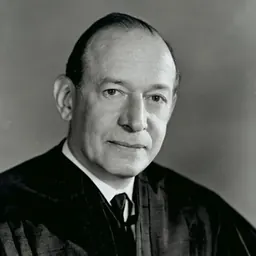
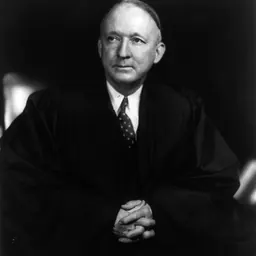


Related people
Same field, nearest in time
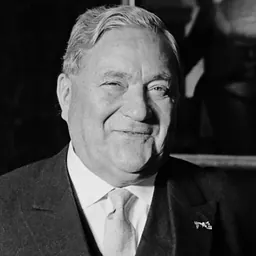
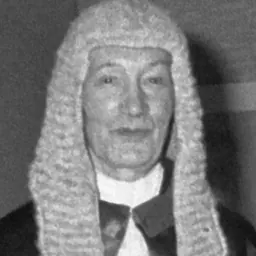



Contemporaries
People whose lives overlapped Elbert Tuttle's


Frequently asked questions
Who was Elbert Tuttle?
American judge and Purple Heart medal recipient
When was Elbert Tuttle born?
Elbert Tuttle was born on 17 July 1897 in Pasadena.
When did Elbert Tuttle die?
Elbert Tuttle died on 23 June 1996 in Atlanta.
What was Elbert Tuttle's occupation?
Elbert Tuttle was a judge and jurist.
What nationality was Elbert Tuttle?
Elbert Tuttle was American.
Sources & further reading
Cite this page
APA: Biography.guide. (2026). Elbert Tuttle. https://biography.guide/elbert-tuttle/
MLA: "Elbert Tuttle." Biography.guide, https://biography.guide/elbert-tuttle/.
Chicago: "Elbert Tuttle." Biography.guide. https://biography.guide/elbert-tuttle/.
Data last updated: 2026-09-25 · Spot an error? Report a correction.
Page generated 2026-09-27 05:09 UTC