
About Elâru Mevhibe Başkadınefendi
Lived 1835 – 1936 (aged 100). Elâru Mevhibe Başkadınefendi was a Turkish aristocrat.
Elaru Mevhibe Kadın (; "talent" or "gift"; 6 August 1835 – 21 February 1936) was the First consort and BaşKadin of Sultan Murad V of the Ottoman Empire.
Early life Mevhibe Kadın was born on 6 August 1835 in Tbilisi, Georgia. She was the daughter of Tarkanişvili Ahmed Bey. In 1839/1840,
Gürcü Hayreddin Pasha, the then governor of Trebizond Eyalet, presented her in the imperial harem. Here her name was changed to Elâru, according to the custom of the Ottoman court. She was brought to the Ottoman court when she was very young, and grew up among the daughters of Sultan Abdülmejid I, father of Murad V. She was twenty-two years old, she was given the title of "Senior Kadın". Although Filitzen Hanim, the youngest of Murad V's consorts, thought it very unusual for a childless consort to be granted this title, in reality numerous Senior Consort (or Chief Consort, Senior Kadın or BaşKadin) had filled the role without having children, including Servetseza Kadın, Chief Consort of Abdülmejid I, father of Murad himself. It is therefore likely that Filitzen simply did not know the Ottoman harem custom so well.
Mevhibe has been described as tall, and extremely beautiful, with dark hazel eyes. It has been perceived that she was highly intelligent and perceptive, and that anyone who met her or spoke with her could not help but fall under her bewitching spell.
She was BaşKadin for 93 days, the shortest term in Ottoman history. After reigning for three months, Murad was deposed on 30 August 1876, due to mental instability and was imprisoned in the Çırağan Palace. Mevhibe also followed Murad into confinement. Throughout their imprisonment, she remained completely loyal to her husband. During the nearly twenty years of confinement Mevhibe behaved with great dignity, without ever showing any yielding. It was she who took care of communications with the outside world. He regularly wrote to Sultan Abdülhamid II, sometimes asking for a little something, and he never forgot to thank when he sent small luxuries such as tobacco or exotic fruit. Her apartments were located on the Istanbul side of the palace. At times Murad would move into her apartments. She was also skilled in making clothes that she could have been considered an expert seamstress. Several times she even made clothes for Murad. After Şevkefza Kadın's death in 1889, authority over the harem devolved to Mevhibe, a position appointed by Murad for life.
She was widowed at Murad's death in 1904, after which her ordeal in the Çırağan Palace came to an end. It was she who wrote to Abdülhamid II to communicate the death of his half-brother Murad. Upon his death, Mevhibe stated in her petition written addressing Sultan Abdul Hamid II that despite the doctors' examinations for days and nights for twenty-eight years thanks to Abdul Hamid's protection, mercy and affection, her husband died a natural death.
Later years and death After Murad's death, Mevhibe settled in the Tarlabaşı Palace. This palace once belonged to Zekiye Sultan, the eldest daughter of Sultan Abdul Hamid II. After the proclamation of the second constitution in 1908, she purchased a home in Şişli, and retreated there to live a life of seclusion, rarely going out. When the British occupied Istanbul she decided never to leave her home again and spent his last years looking after the garden. In 1924 the Ottoman dynasty was exiled, but Mevhibe, as the childless consort of a deceased sultan, was allowed to remain in Istanbul. She died on 21 February 1936, and was buried in a cemetery in Ortaköy. She was 100 years old at the time of her death, and was the longest-lived member of the Ottoman dynasty in history.
In literature Mevhibe is a character in Ayşe Osmanoğlu's historical novel The Gilded Cage on the Bosphorus (2020).
Don’t just read it —
keep it.
Full-length biographies made to live with: read them, listen on the way to work, watch them tonight.
- E-book
- Audio
- Video
Instant download · yours to keep · every purchase keeps this site free
Important facts
Family & relationships
People in Elâru Mevhibe Başkadınefendi's life
Named in this biography and alive at the same time


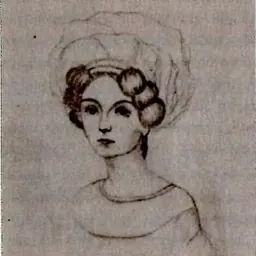
Related people
Same field, nearest in time
Contemporaries
People whose lives overlapped Elâru Mevhibe Başkadınefendi's



Frequently asked questions
Who was Elâru Mevhibe Başkadınefendi?
Ottoman noble; consort of Ottoman sultan Murad V (1835–1936)
When was Elâru Mevhibe Başkadınefendi born?
Elâru Mevhibe Başkadınefendi was born on 6 August 1835 in Tbilisi.
When did Elâru Mevhibe Başkadınefendi die?
Elâru Mevhibe Başkadınefendi died on 21 February 1936 in Istanbul.
What was Elâru Mevhibe Başkadınefendi's occupation?
Elâru Mevhibe Başkadınefendi was an aristocrat.
What nationality was Elâru Mevhibe Başkadınefendi?
Elâru Mevhibe Başkadınefendi was Turkish.
Sources & further reading
· Wikipedia: Elâru Mevhibe Başkadınefendi
Cite this page
APA: Biography.guide. (2026). Elâru Mevhibe Başkadınefendi. https://biography.guide/elaru-mevhibe-baskadinefendi/
MLA: "Elâru Mevhibe Başkadınefendi." Biography.guide, https://biography.guide/elaru-mevhibe-baskadinefendi/.
Chicago: "Elâru Mevhibe Başkadınefendi." Biography.guide. https://biography.guide/elaru-mevhibe-baskadinefendi/.
Data last updated: 2026-09-20 · Spot an error? Report a correction.
Page generated 2026-09-27 05:33 UTC