
El Viti
Spanish torero
About El Viti
Born 1938. El Viti is a Spanish bullfighter.
Career as a matador El Viti took his alternativa in Madrid on 13 May 1961, during the Feria de San Isidro ("Saint Isidore's Fair" — a yearly event at Las Ventas), with Toledo's Gregorio Sánchez standing as "godfather", while Diego Puerta bore witness. The bulls were laid on by the Alipio Pérez-Tabernero ranch. El Viti himself was borne shoulder-high all the way to his hotel. A poster advertising the event can be seen at right.
In 1963, El Viti fought at 73 engagements, and the next year, at 77. Although a bullfight in Pamplona on 10 July 1964 ended in great triumph and he was awarded the bull's tail, he rejected it, along with Diego Puerta and Paco Camino. In 1966, he found himself at 68 bullfighting engagements, but at one of them, held in Bogotá, he suffered yet another serious goring. He saw 64 engagements the following year, but the woundings kept on coming; there were three, in Barcelona and Málaga in his homeland, and at the Plaza de toros de Acho in Lima over in Peru.
He was also a favourite bullfighter among the demanding public at the plaza de toros de la Real Maestranza de Caballería de Sevilla, even though he was not Andalusian. Greatly influenced as he was by Juan Belmonte's aesthetic, he for years represented the seriousness and neoclassical tradition in tauromachy, being considered by critics to be one of history's best-skilled bullfighters with the muleta.
Furthermore, he was acclaimed for the faena at the Plaza México on 4 January 1970 with the bull Aventurero ("Adventurer"), from the Tequisquiapan ranch (Alfredo Leal reaped two ears — but also a serious goring; Solórzano hijo rounded out the bill).
On 17 April 1969 at the Maestranza in Seville, El Viti had a triumphant afternoon alternating with Palomo Linares and Ángel Teruel as they fought and slew bulls from the Lisardo Sánchez ranch. He reaped two ears. 13 May 1961, after being awarded one ear from each of his two bulls that afternoon, both from the Alipio Pérez-Tabernero Sanchón (the day's first) and Escudero Calvo (the day's sixth) ranches; this was his first time through the Great Gate after his alternativa — and indeed, it came on the very day of his alternativa.
Later life The 1979 bullfighting season was El Viti's last. He saw great success at the Maestranza in Seville on the afternoon of 24 April, before Curro Romero and Tomás Campuzano (who was taking his alternativa), and was awarded the Maestranza Trophy for the fair's best muleta work. His penultimate appearance took place on 14 September on home ground, in Salamanca, sharing the billing with Niño de la Capea and Julio Robles as all three fought bulls from the Atanasio Fernández ranch. He cut two ears. He retired from the bullrings in Valladolid, at the end of the bullfighting season on 16 September 1979. It all ended rather sadly; he was not successful, and he even got abuse from the crowd on his last bull. El Viti had fought in more than 800 corridas.
A statue in El Viti's honour stands in Salamanca on the bullring's esplanade. It is a bronze, life-size figure standing on a granite pedestal and holding a muleta with the left hand, hanging down and behind the figure somewhat, and holding a montera up with the right hand. The whole is 2.30 m tall. The sculptor who created it was Narcisa Vicente Rodríguez, from Salamanca, and her work was unveiled on 8 September 2000. The plaque – also bronze – simply reads "SALAMANCA A S.M. 'EL VITI' SEPTIEMBRE 2000" ("a" simply means "to").
Another statue in El Viti's honour stands at a square bearing his name in the little town where he was born, Vitigudino. It was unveiled by El Viti himself on 18 June 2011.
On 1 July 2022, El Viti's wife, Mari Carmen García Cobaleda, whom he had wed on 28 November 1968, died after a long illness. She was a bull-rancher's daughter from Castraz, and was El Viti's inseparable companion.
Some people, (like writer Gonzalo I. Bienvenida) consider this bullfighter to be a prime example of the "Castilian school" of bullfighting, as well as pure bullfighting elegance.
In popular culture Plaque commemorating the 40th anniversary of El Viti's début at Las Ventas. Francisco Almagro wrote the lyrics to S.M. El Viti; pasodoble torero, whose music was written by Manuel Villacañas and published by the Unión Musical Española in 1965. Also worth mentioning is the pasodoble Aquí está El Viti ("Here is El Viti") by the author Felipe Blanco Aguirre.
As for the world of jazz, in 1960, Duke Ellington recorded the arrangement for piano of El Viti, a song by jazz composer and musician Gerald Wilson. In 1966, jazz pianist Jack Wilson did a version of this on the trumpet called The Matador in El Viti's honour, which was the only song that he recorded with Duke Ellington's orchestra. Paul Gonsalves, another jazzman, recorded a further version of this song with Duke Ellington's orchestra in 1962, this time with the title El Matador: El Viti, which was published on the big band record Jazz Masters (100 Ans de Jazz).
In legend Bullfighting writer Paco Cañamero has argued that El Viti's legendary status rests on more than statistics: the 14 rides on shoulders through Las Ventas' Great Gate (plus two as a novillero). Instead, it rests on the mark he left on tauromachy as a bullfighter and as a person. Cañamero described him as a pillar of the 1960s, a decade when numerous bullfighters competed for top billing, and, alongside Diego Puerta and Paco Camino, part of what Cañamero called the "holiest trinity" of the bullfighting world.
Distinctions In 1997, El Viti received the Medalla de Oro de las Bellas Artes (Gold Medal of the Fine Arts), awarded by Spain's Ministry of Culture.
On 8 October 2015 in Valladolid, he received the Premio Tauromaquia de Castilla y León 2015 ("Castile and León Bullfighting Prize"), created by the Junta of Castile and León this same year, from Juan Vicente Herrera, who was then the junta's president.
Don’t just read it —
keep it.
Full-length biographies made to live with: read them, listen on the way to work, watch them tonight.
- E-book
- Audio
- Video
Instant download · yours to keep · every purchase keeps this site free
Important facts
People in El Viti's life
Named in this biography and alive at the same time




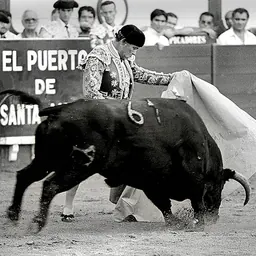


Related people
Same field, nearest in time


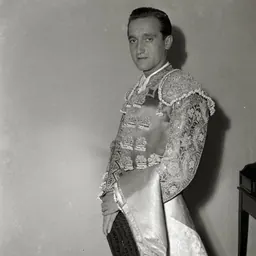
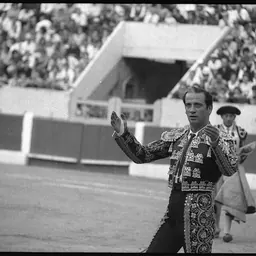
Contemporaries
People whose lives overlapped El Viti's




Frequently asked questions
Who is El Viti?
Spanish torero
When was El Viti born?
El Viti was born on 18 July 1938 in Vitigudino.
What is El Viti's occupation?
El Viti is a bullfighter.
What nationality is El Viti?
El Viti is Spanish.
Sources & further reading
Cite this page
APA: Biography.guide. (2026). El Viti. https://biography.guide/el-viti/
MLA: "El Viti." Biography.guide, https://biography.guide/el-viti/.
Chicago: "El Viti." Biography.guide. https://biography.guide/el-viti/.
Data last updated: 2026-09-25 · Spot an error? Report a correction.
Page generated 2026-09-27 05:12 UTC