
About Eison
Lived 1201 – 1290 (aged 88–89). Eison was a Japanese buddhist monk and monk.
Eison (; courtesy name: Shien 思円; posthumous title: Kōshō Bosatsu 興正菩薩; 1201–1290) was a Japanese Buddhist monk active in the mid-Kamakura period. He founded the Shingon Risshu (Shingon Vinaya school). Eison was born in Mikata village, Soejō District, Yamato Province (present-day Yamatokōriyama, Nara), the son of the scholar-monk Keigen of Kōfuku-ji. He is regarded as one of the representative figures of Kamakura Buddhism, known for reviving the neglected Buddhist precepts and restoring the declining Saidai-ji in Nara.
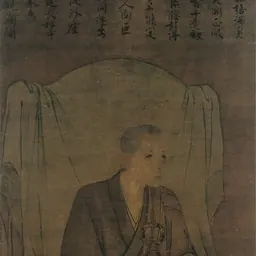
Biography Eison entered religious training at age eleven, studying initially at Daigo-ji and later at Kongōbu-ji. 1238 (Ryaku'nin 1) – Returned to Saidai-ji, began its restoration, and reestablished ritual boundaries. 1240–1246 – Conducted Mañjuśrī services, lectured on the Brahmajāla Sūtra, and administered precepts to laypeople, prisoners, and outcasts. 1247 – Commissioned sculptor Zen’en to create an image of Ācala. 1249 – Commissioned sculptor Zenkei to carve a Shakyamuni image for Saidai-ji. 1254 – Wrote the Shōtoku Taishi kōshiki and initiated annual rites for Prince Shōtoku. 1260–1262 – Invited to Kamakura by Hōjō Tokiyori, ordained many, and lectured on the Vinaya. His disciple Shōkai recorded this journey in the Kantō Ōkan-ki. 1264 onward – Introduced the Kōmyō Shingon; expanded charitable work. 1268–1274 – Oversaw the reconstruction of Hannya-ji, and performed state-protection esoteric rites during the Mongol invasions. 1279–1286 – Ordained emperors, aristocrats, and commoners; commissioned his own portrait statue (designated a National Treasure in 2016). 1284–1286 – Directed the rebuilding of Uji Bridge, banned killing in the river, and provided alternative work for fishermen. 1290 (Shōō 3) – Died at Saidai-ji on September 29, 1290. In 1300, Emperor Fushimi granted him the posthumous title Kōshō Bosatsu.
At age 60, he traveled to Kamakura, where he conferred precepts widely and reopened the ordination of nuns. Later, he was asked by the imperial court to assume leadership at Shitennō-ji due to his neutrality.
Eison also became associated with the origin of the Ōchamori tea rite, an oversized tea ceremony tradition of Saidai-ji. In 1281, during the Mongol invasion crisis, he conducted rituals invoking Aizen Myōō. Following Japan’s deliverance, he made a tea offering at the Hachiman Shrine using a giant tea bowl to serve the gathered crowds—an act that became the Saidai-ji Ōchamori rite.
While often celebrated for reviving the Vinaya, his true goal was reforming Shingon monasticism. He accepted certain privileges to support his charitable missions, which led to criticism from rivals such as Nichiren, who called him a “Vinaya traitor” (律国賊).
Legacy Eison transmitted the Dharmaguptaka Vinaya (Shibunritsu), following Ganjin and Kakujō. His disciple Ninshō expanded the movement in eastern Japan with a strong emphasis on charity. At its height, Saidai-ji’s branch temples numbered over 1,500 nationwide.
Don’t just read it —
keep it.
Full-length biographies made to live with: read them, listen on the way to work, watch them tonight.
- E-book
- Audio
- Video
Instant download · yours to keep · every purchase keeps this site free
Important facts
People in Eison's life
Named in this biography and alive at the same time


Related people
Same field, nearest in time

Contemporaries
People whose lives overlapped Eison's





Frequently asked questions
Who was Eison?
Japanese Buddhist monk
When was Eison born?
Eison was born in 1201 in Soekami district.
When did Eison die?
Eison died on 29 September 1290.
What was Eison's occupation?
Eison was a buddhist monk and monk.
What nationality was Eison?
Eison was Japanese.
Sources & further reading
Cite this page
APA: Biography.guide. (2026). Eison. https://biography.guide/eison/
MLA: "Eison." Biography.guide, https://biography.guide/eison/.
Chicago: "Eison." Biography.guide. https://biography.guide/eison/.
Data last updated: 2026-09-25 · Spot an error? Report a correction.
Page generated 2026-09-27 05:12 UTC