
About Eilert Sundt
Lived 1817 – 1875 (aged 57). Eilert Sundt was a Norwegian theologian, sociologist and parson.
Eilert Lund Sundt (8 August 1817 – 13 June 1875) was a Norwegian theologist and sociologist, known for his work on morality, marriage and other subjects among the working class. He was an early pioneer of the field of sociology in Norway.
Early and personal life He was born in Farsund as a son of Lars Mortensen Sundt (1762–1850) and Karen Bing Drejer (1777–1865). He was a distant descendant of Peter Drejer. He was a third cousin of Christian Sundt, uncle of Lauritz and Karen Sundt, granduncle of Vigleik, Halfdan and Harald Sundt, and great-granduncle of Leif Sundt Rode.
His father was a ship captain, and he was born into a large family of 13 children. All the children worked to help make ends meet. Farsund at that time had many seamen, small fishermen and chandlers. This provided his initial exposure to the ideas which he came to examine extensively later in his life: poverty, overpopulation and the work issues associated with the transition from an older farm culture to 19th century business and industry.
In February 1859 he married Nicoline Conradine Hansen (1822–81), a daughter of Maurits Christopher Hansen. They had the son Einar Sundt, a publisher.
Career In 1835 he began his studies in Kristiania, but came back to Farsund in 1838 and became a teacher. He resumed his studies in Kristiania in 1841. There he met and became close friends with Henrik Wergeland, who was also born and raised in Agder. When Henrik Wergeland was buried in 1845, Eilert Sundt led the student contingent and spoke at the funeral on their behalf.
His interests in sociology were broad. He studied prison conditions, customs and treatment of Gypsies, causes of death, the evils of married life in Norway, conditions of prostitutes, suicide, fishery and forestry workers' living and working conditions, building customs, shipping practices, household cleanliness and administration of poverty laws. A man of his times, he also was interested in ethnography, ethnology, vernacular architecture, demography, and linguistics (with special emphasis on the dialects of Norwegian).
From 1857 to 1866 Eilert Sundt was editor for Folkevennen ("Friend of the People"), for which he wrote a number of the more important articles. His work served to inform many of the authors of Norwegian literature in their transition to a socially aware realism at the close of the 19th century.
Eilert Sundt served as the parish priest at Eidsvoll Church from 1869, and he died there in 1875.
Two of his works were selected for the Norwegian Sociology Canon in 2009–2011.
Don’t just read it —
keep it.
Full-length biographies made to live with: read them, listen on the way to work, watch them tonight.
- E-book
- Audio
- Video
Instant download · yours to keep · every purchase keeps this site free
Important facts
People in Eilert Sundt's life
Named in this biography and alive at the same time
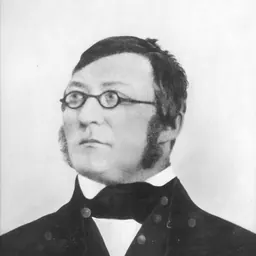
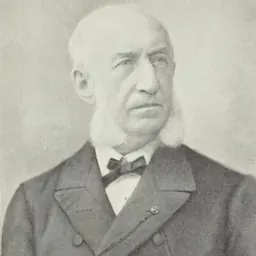
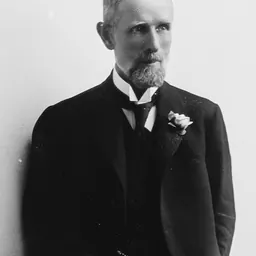


Related people
Same field, nearest in time
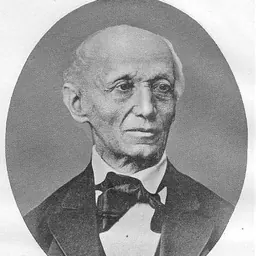


Contemporaries
People whose lives overlapped Eilert Sundt's




Frequently asked questions
Who was Eilert Sundt?
Norwegian theologian and sociologist (1817–1875)
When was Eilert Sundt born?
Eilert Sundt was born on 8 August 1817 in Farsund Municipality.
When did Eilert Sundt die?
Eilert Sundt died on 13 June 1875 in Eidsvoll Municipality.
What was Eilert Sundt's occupation?
Eilert Sundt was a theologian, sociologist and parson.
What nationality was Eilert Sundt?
Eilert Sundt was Norwegian.
Sources & further reading
Cite this page
APA: Biography.guide. (2026). Eilert Sundt. https://biography.guide/eilert-sundt/
MLA: "Eilert Sundt." Biography.guide, https://biography.guide/eilert-sundt/.
Chicago: "Eilert Sundt." Biography.guide. https://biography.guide/eilert-sundt/.
Data last updated: 2026-09-20 · Spot an error? Report a correction.
Page generated 2026-09-27 05:17 UTC