
Eigil Knuth
Danish explorer, archaeologist, sculptor and writer
About Eigil Knuth
Lived 1903 – 1996 (aged 92). Eigil Knuth was a Danish explorer, anthropologist, archaeologist, prehistorian and sculptor, known for Explorer.
Count Eigil Knuth (8 August 190312 March 1996) was a Danish explorer, archaeologist, sculptor and writer. He is referred to as the of Danish polar explorers. His archaeological investigations were made in Peary Land and adjacent areas of High Arctic Greenland. Knuth was made a Knight of the Dannebrog.
Early life Eigil Knuth was born on 8 August 1903 in Klampenborg, near Copenhagen, Denmark. He was born into the Danish noble Knuth family. His father, Count Eigil Valdemar Knuth, was a military officer and captain, and his mother was Marie Dijmphna Johanne Emma de Pasqualin Gámel. His paternal grandparents were the postmaster Adam Vilhelm Frederik Knuth and Annette Marie Haxthausen-Abbenburg of the Westphalian noble house Haxthausen. On his mother's side he was the grandson of the Danish businessman Augustinus Gámel and the philanthropist Emma Gámel (née Hellerung). After the expedition Nansen gave Gámel the compass he had carried during the crossing as a token of gratitude for his support. Gámel later presented the compass to his grandson as a birth gift. Knuth later described the object as an early inspiration for his lifelong fascination with Greenland and the Arctic.
During the 1920s Knuth travelled widely in Europe on a traditional Grand Tour. While staying in Val Gardena in northern Italy in 1926 and again in 1928 he studied woodcarving.
After returning to Denmark, he enrolled at the gymnastics folk high school founded by Niels Bukh in Ollerup. In 1932, he completed his training there and qualified as a gymnastics instructor. (ice cap), starting at Christianshåb in the west, and ending at Tasiilaq/Angmagsalik, an Inuit settlement in the east. It was here that Knuth worked as a sculptor, producing a notable series of busts of the local Inuit.
Knuth financed the bulk of his next expedition, the Danish Northeast Greenland Expedition, also known as the , arriving in Greenland with his co-leader and friend, Ebbe Munck, on 19 June 1938. The crew consisted of six more men, among others the botanist Paul Gelting. It was one of the first Danish Greenland expeditions to make use of an airplane, a de Havilland Tiger Moth. With the start of war, Knuth could not return to Greenland as planned, instead, becoming an announcer for Denmark Radio in the Danish resistance movement.
During the period of 1948–50, Knuth was back in Greenland and made several discoveries, including a large tool collection of the Thule culture and tool fragments of the Dorset culture. His most important contribution, however, was the first identification
Artist In addition to sculpting, he produced paintings and watercolours. Some of his works were on display at the 1939 New York World's Fair.
Later years Knuth's Danish Peary Land Expeditions ended in 1995
Legacy Before his death, Knuth was unable to complete a comprehensive book summarizing his Peary Land archaeological findings. That task fell upon Bjarne Grønnow, heir to Knuth's archival information. The Northernmost Ruins of the Globe: Eigil Knuth's archaeological investigations in Peary Land and adjacent areas of High Arctic Greenland (2003) is a compilation of Knuth's findings and observations. 1953, Mungo Park Medal, Royal Scottish Geographical Society 1979, honorary Doctor of Science degree, University of Copenhagen 1993, Nersornaat Gold Medal, Home Rule of Greenland
Partial works (1927). Kunst og Liv, OCLC 38313431 (1936). Fire Mand og Solen. : En Tur over Grönlands Indlandsis, OCLC 186735073 (1940). Under det nordligste Dannebrog, beretning om Dansk Nordøstgrønlands ekspedition 1938—39, OCLC 1839380 (1942). Report on the expedition and on subsequent work at the Mørkefjord Station, OCLC 251025543 (1943). Ernst Zeuthen: 1880—1938, OCLC 16916718 (1943). Billedhugger i Angmagssalik, OCLC 31103011 (1945). Tanker ved tingene, OCLC 11580030 (1948). Sommerrejsen til Pearyland, OCLC 13624744 (1958). Det mystiske X i Danmark fjord, OCLC 10856612 (1960). Aron of Kangeq: 1822—1869 : The seal hunter who became father of Greenland's art of painting, OCLC 61075103 (1964). Rapport over Den 3die Peary Land Ekspedition: sommeren 1964, OCLC 45432772 (1967). Archaeology of the Musk-ox way, OCLC 185867987 (1967). Thai-Danish Prehistoric Expedition 1960-62 : Archaeological excavations in Thailand, OCLC 220587733 (1973). Kap Harald Moltke (82⁰09'23"N., 29⁰53'00"W.) : Jørgen Brønlund Fjord, Peary Land: [rapport], OCLC 70279288 (1980). Umiaq'en fra Peary Land, OCLC 7615402 (1995). Uafhængighed : hundeslæderejsens filosofi = Kiffaanngissuseq: qimussimik angalanerup isumaliutersuutai = Independence: the philosophy of a dog sledge journey, OCLC 1995 (2003). Billedhugger i Ammassalik, (2009). Indépendance : la philosophie du voyage en traîneau, éditions Paulsen, Paris (2013). Inslandis, éditions Paulsen, Paris
Don’t just read it —
keep it.
Full-length biographies made to live with: read them, listen on the way to work, watch them tonight.
- E-book
- Audio
- Video
Instant download · yours to keep · every purchase keeps this site free
Important facts
People in Eigil Knuth's life
Named in this biography and alive at the same time

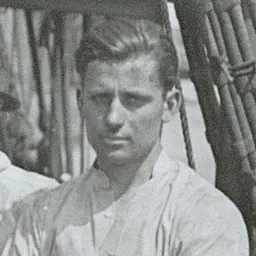

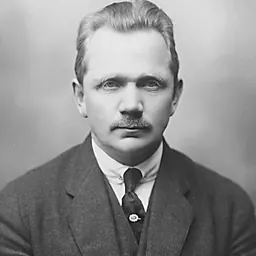
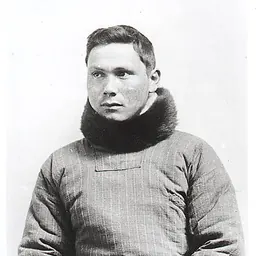


Related people
Same field, nearest in time
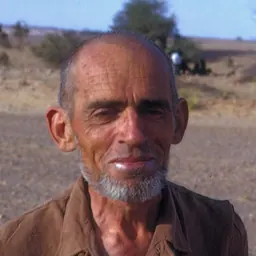

Contemporaries
People whose lives overlapped Eigil Knuth's

Frequently asked questions
Who was Eigil Knuth?
Danish explorer, archaeologist, sculptor and writer (1903-1996)
When was Eigil Knuth born?
Eigil Knuth was born on 8 August 1903 in Klampenborg.
When did Eigil Knuth die?
Eigil Knuth died on 12 March 1996 in Copenhagen.
What was Eigil Knuth's occupation?
Eigil Knuth was an explorer, anthropologist, archaeologist, prehistorian and sculptor.
What was Eigil Knuth known for?
Eigil Knuth was known for Explorer.
What nationality was Eigil Knuth?
Eigil Knuth was Danish.
Sources & further reading
Cite this page
APA: Biography.guide. (2026). Eigil Knuth. https://biography.guide/eigil-knuth/
MLA: "Eigil Knuth." Biography.guide, https://biography.guide/eigil-knuth/.
Chicago: "Eigil Knuth." Biography.guide. https://biography.guide/eigil-knuth/.
Data last updated: 2026-09-20 · Spot an error? Report a correction.
Page generated 2026-09-27 05:06 UTC