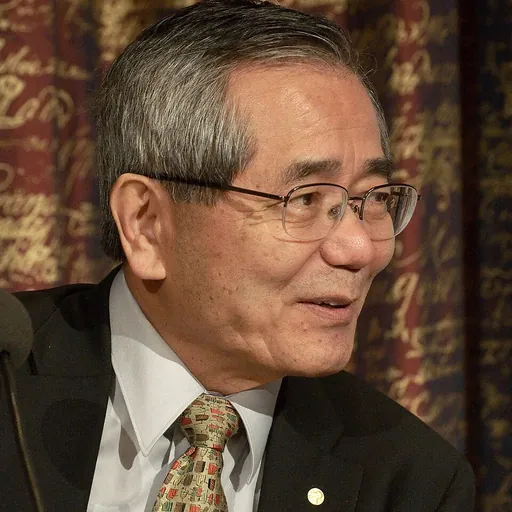
About Ei-ichi Negishi
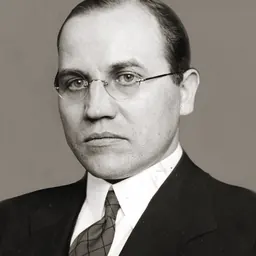
Lived 1935 – 2021 (aged 85). Ei-ichi Negishi was an American and Japanese chemist, professor and researcher, known for Negishi coupling.
was a Japanese chemist who was best known for his discovery of the Negishi coupling. He spent most of his career at Purdue University in the United States, where he was the Herbert C. Brown Distinguished Professor and the director of the Negishi-Brown Institute. He was awarded the 2010 Nobel Prize in Chemistry "for palladium catalyzed cross couplings in organic synthesis" jointly with Richard F. Heck and Akira Suzuki.
Early life and education Negishi was born in Xinjing (today known as Changchun), the capital of Manchukuo, in July 1935. In 1943, when he was nine, the Negishi family moved to Incheon, and a year later to Kyongsong Prefecture (now Seoul), both in Japanese-occupied Korea. In November 1945, three months after World War II ended, they moved to Japan. At the age of 17, he gained admission to the University of Tokyo. After graduation from the University of Tokyo in 1958, Negishi did his internship at Teijin, where he conducted research on polymer chemistry. Later, he continued his studies in the United States after having won a Fulbright Scholarship and obtained his Ph.D. from the University of Pennsylvania in 1963, under the supervision of professor Allan R. Day. Although he was hoping to work at a Japanese university, he could not find a position. In 1966 he resigned from Teijin, and became a postdoctoral associate at Purdue University, working under future Nobel laureate Herbert C. Brown. From 1968 to 1972 he was an instructor at Purdue.
In 1972, he became an assistant professor at Syracuse University, where began his lifelong study of transition metal–catalyzed reactions, He returned to Purdue University as a full professor in the same year.
He discovered Negishi coupling, a process which condenses organic zinc compounds and organic halides under a palladium or nickel catalyst to obtain a C–C bonded product. For this achievement, he was awarded the Nobel Prize in Chemistry in 2010. Negishi also reported that organoaluminum compounds and organic zirconium compounds can be used for cross-coupling. He did not seek a patent for this coupling technology and explained his reasoning as follows: "If we did not obtain a patent, we thought that everyone could use our results easily." In addition, Zr(CH) obtained by reducing zirconocene dichloride is also called Negishi reagent, which can be used in oxidative cyclisation reactions. The technique he developed is estimated to be used in a quarter of all reactions in the pharmaceutical industry.
Awards
1996 – A. R. Day Award (ACS Philadelphia Section award) 2007 – Yamada–Koga Prize 2010 – Nobel Prize in Chemistry 2010 – ACS Award for Creative Work in Synthetic Organic Chemistry
Honors
1960–61 – Fulbright–Smith–Mundt Fellowship 2000 – Sir Edward Frankland Prize Lectureship 2009 – Invited Lectureship, 4th Mitsui International Catalysis Symposium (MICS-4), Kisarazu, Japan
2011 – Sagamore of the Wabash 2011 – Fellow, American Academy of Arts & Sciences 2012 – Honorary Fellow of Royal Society of Chemistry (RSC) 2014 – Foreign Associate of the National Academy of Sciences
Personal life and death Negishi began dating Sumire Suzuki in his freshman year and they announced their engagement to their parents in March 1958. They had met at a choir of which they were both members at in university.
Disappearance On the evening of March 12, 2018, both Negishi and his wife were reported missing by family members. Police determined that, based on a purchase made earlier in the day, the couple had left their home in West Lafayette, Indiana, and headed north. At about 5 a.m. the next day, officers in Ogle County, Illinois, received a call to check on the welfare of an elderly man who was walking on a rural road south of Rockford. When he was taken to hospital, officers identified him as Negishi and found that police in Indiana were looking for him and his wife. A short time later, Suzuki's body was found at the Orchard Hills Landfill in Davis Junction, along with the couple's car.
According to a statement from the family, the couple was driving to Rockford International Airport for a trip when their car became stuck in a ditch on a road near the landfill. Negishi went looking for help and was said to be suffering from an "acute state of confusion and shock". The Ogle County Sheriff Department said there was no suspicion of foul play in Suzuki's death, although the cause of her death was not immediately released. The family said Suzuki was near the end of her battle with Parkinson's disease.
Death Negishi died in Indianapolis, Indiana, on June 6, 2021.
Don’t just read it —
keep it.
Full-length biographies made to live with: read them, listen on the way to work, watch them tonight.
- E-book
- Audio
- Video
Instant download · yours to keep · every purchase keeps this site free
Important facts
People in Ei-ichi Negishi's life
Named in this biography and alive at the same time



Related people
Same field, nearest in time




Contemporaries
People whose lives overlapped Ei-ichi Negishi's


Frequently asked questions
Who was Ei-ichi Negishi?
Japanese chemist (1935 - 2021)
When was Ei-ichi Negishi born?
Ei-ichi Negishi was born on 14 July 1935 in Hsinking.
When did Ei-ichi Negishi die?
Ei-ichi Negishi died on 6 June 2021 in Indianapolis.
What was Ei-ichi Negishi's occupation?
Ei-ichi Negishi was a chemist, professor and researcher.
What was Ei-ichi Negishi known for?
Ei-ichi Negishi was known for Negishi coupling.
What nationality was Ei-ichi Negishi?
Ei-ichi Negishi was American and Japanese.
Sources & further reading
Cite this page
APA: Biography.guide. (2026). Ei-ichi Negishi. https://biography.guide/ei-ichi-negishi/
MLA: "Ei-ichi Negishi." Biography.guide, https://biography.guide/ei-ichi-negishi/.
Chicago: "Ei-ichi Negishi." Biography.guide. https://biography.guide/ei-ichi-negishi/.
Data last updated: 2026-09-23 · Spot an error? Report a correction.
Portrait: Wikimedia Commons · author & licence
Page generated 2026-09-27 05:08 UTC