
About Egon Bittner
Lived 1921 – 2011 (aged 90). Egon Bittner was a sociologist.
Egon Bittner (April 16, 1921 – May 7, 2011) was an American sociologist who contributed to the sociology of policing. He was born into a Jewish family in Skřečoň, a village in Silesia, an historically much-disputed part of Czechoslovakia, now in the Czech Republic. He died in the Bay Area of San Francisco, leaving a wife, Jean (Genia Klein) and two children, Debora Seys and Tom Bittner.
Early life In the September of 1939, Poland was invaded by Nazi Germany and the Soviet Union. The invasion marked the beginning of World War II and inaugurated the Holocaust. As a Jew, Bittner was arrested and incarcerated for the whole of the war. He later attributed his survival of the concentration camp to his practical skills that he believed the SS officers under whom he worked valued.
Education and academic career Bitttner emigrated to the Los Angeles area in the United States in 1949. Shortly afterwards he married and became a naturalized American citizen. His initial interests in sociology related to phenomenology and ethnomethodology, which led to him undertaking with Donald Cressey a Ph.D. in the University of California at Los Angeles. He began his teaching career in its Riverside campus. Afterwards, from 1963 to 1968, he worked as a researcher at the University of California Medical School in San Francisco.
In the late 1960s, Bittner joined Brandeis University. While there he held the Harry Coplan Professorship in the Social Sciences, he was chair of the sociology department and supervised the dissertation of Nancy J. Chodorow. Bittner is known for his ground breaking studies of the relationships between police and society.
Bittner's most notable work is his book The Functions of the Police in Modern Society (1970), in which he argued that police are defined by their capacity to use force. Other significant works include his two articles The Police on Skid Row (1967) and Florence Nightingale in Pursuit of Willie Sutton: A Theory of the Police (1974), The Capacity to Use Force as the Core of the Police Role (1985), and his book Aspects of Police Work (1990).
Bittner's revision of his 1982 presidential address to the Society for the Study of Social Problems was published in 1983 as 'Technique and the conduct of life'.
In 1998, Bittner's contributions to police scholarship earned him the Police Executive Research Forum's Leadership Award.
The Bittner Award is in honor of Egon Bittner and is presented by the Commission on Accreditation for Law Enforcement Agencies (CALEA) to chief executive officers in recognition of their distinguished service in law enforcement and their leadership of an agency accredited by CALEA for fifteen continuous years.
Selected publications Articles
Miscellaneous
Books
Don’t just read it —
keep it.
Full-length biographies made to live with: read them, listen on the way to work, watch them tonight.
- E-book
- Audio
- Video
Instant download · yours to keep · every purchase keeps this site free
Important facts
People in Egon Bittner's life
Named in this biography and alive at the same time
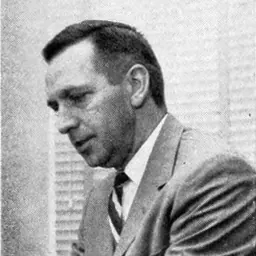
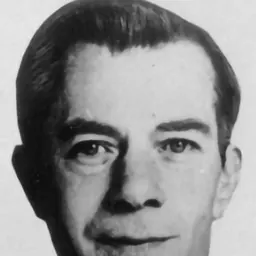
Related people
Same field, nearest in time

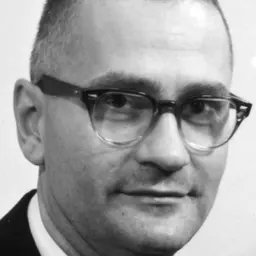




Contemporaries
People whose lives overlapped Egon Bittner's




Frequently asked questions
Who was Egon Bittner?
sociologist
When was Egon Bittner born?
Egon Bittner was born on 16 April 1921 in Czechoslovakia.
When did Egon Bittner die?
Egon Bittner died on 7 May 2011.
What was Egon Bittner's occupation?
Egon Bittner was a sociologist.
Sources & further reading
Cite this page
APA: Biography.guide. (2026). Egon Bittner. https://biography.guide/egon-bittner/
MLA: "Egon Bittner." Biography.guide, https://biography.guide/egon-bittner/.
Chicago: "Egon Bittner." Biography.guide. https://biography.guide/egon-bittner/.
Data last updated: 2026-09-20 · Spot an error? Report a correction.
Page generated 2026-09-27 05:19 UTC