
About Edwin W. Kemmerer
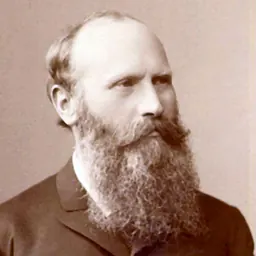
Lived 1875 – 1945 (aged 70). Edwin W. Kemmerer was an American economist.
Edwin Walter Kemmerer (June 29, 1875 – December 16, 1945) was an American economist, who became famous as an economic adviser to foreign governments in many countries (Philippines, Mexico, Guatemala, Colombia, Germany, Chile, South Africa, Poland, Ecuador, Bolivia, China, Peru, and Turkey), promoting plans based on strong currencies, the gold standard, central banks, central bank independence, and balanced budgets. He helped design the U.S. Federal Reserve System in 1911, edited the American Economic Bulletin and the American Economic Review, and became president of the American Economic Association in 1926.
He graduated with honors and a Phi Beta Kappa key from Wesleyan University, and earned his Ph.D. from Cornell University, where he taught (1906–1912). At 28, was appointed Financial Adviser to the U.S. Philippine Commission. In 1912 he became a professor at Princeton University, where he was made the first director of its new International Finance Section; by then Kemmerer had a well established reputation as an international expert on improving a nation's financial and monetary policies, a role commonly referred to as money doctor.
"Money doctors" All of the plans created by economic advisors like Kemmerer were aimed "towards the establishment of an internationally interconnected monetary and credit system based on stable national currencies in fixed value relationship with gold and other gold currencies". Consequently, the plans required among other things, central bank independence, the payment of all debts and balanced state budgets.
R. Nötel, in his essay on the International Credit and Finance of Eastern Europe, complains that the advice of these money doctors was "sometimes discordant", adding that their plans were written not only to have the debtors comply with the rules of the international financial system, but also to obtain the approval of much needed loans.
The Polish Stabilization – Context After two failed attempts at bringing "galloping" inflation under control, in April 1924 a somewhat satisfactory stabilization scheme was established that reigned in inflation and laid the foundations for a modern financial system.
The political and increasingly economic instability came to an end with the coup d'état that brought general Józef Piłsudski in May 1926, a popular military hero, to power. His increasingly right wing politics appealed to American diplomats and bankers, and the US at the time was attempting to "rebuild Europe's war-torn economy and thereby protect crucial agricultural and industrial markets, block the spread of Bolshevism, and ease the danger of renewed war and revolution."
But his recommendations apparently did not consider the particular circumstances of the Polish socioeconomic environment, which his report would have helped show. A mechanism for "automatic budgeting stability, restraint, and control", previously implanted in Colombia, Chile and Ecuador, was the same as the one that was to be implemented in Poland, a country that even with Pilsudski at the helm, was famous for its political instability.
In the end it all came down to the prestige brought by the advisor and the ceremony of the apparent implementation of his plan by the country that invited him, as Kemmerer himself admitted: "A country that appoints American financial advisers and follows their advice in reorganizing its finances, along what American investors consider to be the most successful modern lines, increases its chances of appealing to the American investor and of obtaining from him capital on favorable terms." Edwin Walter Kemmerer. 1916. Modern Currency Reforms. Macmillan.
"Economic Advisory Work for Governments," in American Economic Review 17, no. 1 (March 1927), 1–12.
Gold and The Gold Standard: The Story of Gold Money Past, Present, and Future, published in 1944.
Don’t just read it —
keep it.
Full-length biographies made to live with: read them, listen on the way to work, watch them tonight.
- E-book
- Audio
- Video
Instant download · yours to keep · every purchase keeps this site free
Important facts
People in Edwin W. Kemmerer's life
Named in this biography and alive at the same time

Related people
Same field, nearest in time


Contemporaries
People whose lives overlapped Edwin W. Kemmerer's


Frequently asked questions
Who was Edwin W. Kemmerer?
American economist (1875–1945)
When was Edwin W. Kemmerer born?
Edwin W. Kemmerer was born on 29 June 1875 in Scranton.
When did Edwin W. Kemmerer die?
Edwin W. Kemmerer died on 16 December 1945 in Princeton.
What was Edwin W. Kemmerer's occupation?
Edwin W. Kemmerer was an economist.
What nationality was Edwin W. Kemmerer?
Edwin W. Kemmerer was American.
Sources & further reading
· Wikipedia: Edwin W. Kemmerer
Cite this page
APA: Biography.guide. (2026). Edwin W. Kemmerer. https://biography.guide/edwin-w-kemmerer/
MLA: "Edwin W. Kemmerer." Biography.guide, https://biography.guide/edwin-w-kemmerer/.
Chicago: "Edwin W. Kemmerer." Biography.guide. https://biography.guide/edwin-w-kemmerer/.
Data last updated: 2026-09-26 · Spot an error? Report a correction.
Page generated 2026-09-27 05:14 UTC