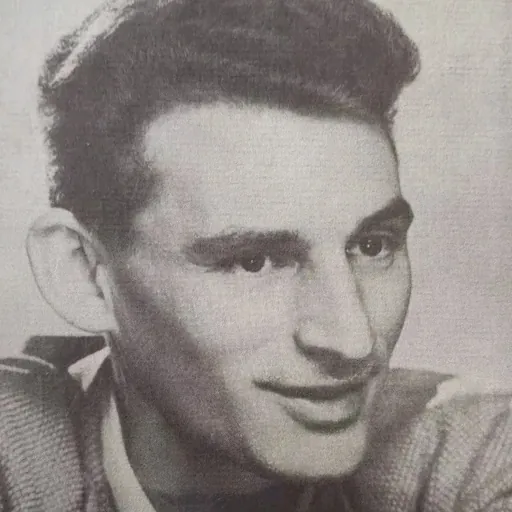
About Edwin Rolfe
Lived 1909 – 1954 (aged 44). Edwin Rolfe was an American writer, screenwriter and poet.
Edwin Rolfe (September 7, 1909 – May 24, 1954) —the group of Americans who fought alongside the Soviet-backed Spanish Republicans against the Nazi-backed fascist forces of Francisco Franco and his Nationalist faction.
Early life Rolfe was born Solomon Fishman in Philadelphia in 1909, the first of three sons. His parents were Russian Jewish immigrants who met through a marriage broker and wed in 1908. Both parents were politically active, with his mother involved in the suffrage and birth control movements, and his father a labor organizer, union officer, and committed socialist. In 1915, the family moved to New York City. Solomon attended New Utrecht High School and contributed to the school magazine, The Comet. He eventually became its editor, succeeding his close friend Leo Hurwitz. During these formative years, Solomon began to use pseudonyms in his writings, and eventually settled on "Edwin Rolfe".
Poetry career His first collected poems appeared in an anthology with three other poets. The volume was called We Gather Strength (1933). Other poetry collections of his followed, none of which were conventionally published: To My Contemporaries (1936) was put out by the small Dynamo Press after receiving contributions from Archibald MacLeish and others; First Love, and Other Poems (1951) was sold to subscribers; Permit Me Refuge (1955), with a foreword by poet Thomas McGrath, was published posthumously by California Quarterly. Its editor Philip Stevenson solicited donations from Rolfe's friends (such as blacklisted screenwriter Albert Maltz) to pay for publication costs.
Rolfe's poems were inseparable from the historical events swirling around him. During the late 1920s and early '30s, Rolfe was mentored by older radical writers such as Mike Gold and Joseph Freeman. Then, later in July, he was asked to serve as editor of Volunteer for Liberty, the weekly newspaper of the International Brigades. In 1938, he was finally allowed to "quit the desk job" and become a soldier in the Lincoln Battalion, eventually taking part in the Battle of the Ebro in summer of 1938.
Prior to the battle, while training at a camp near the Ebro River, the novelist and future screenwriter Alvah Bessie—also a Lincoln Battalion volunteer—met Rolfe unexpectedly:
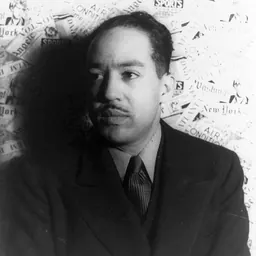
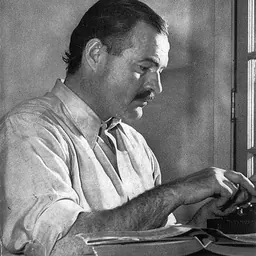
While in Spain, Rolfe befriended Ernest Hemingway and Langston Hughes and maintained lasting correspondences with both men. In 1940, unable to obtain other work, Rolfe accepted an offer for $45 a week at the New York office of TASS, the Soviet news agency. He was soon running their Latin American desk, using the Spanish language fluency he acquired in Spain. Given the delicate nature of the U.S.-Soviet WWII alliance, TASS required its U.S. employees to be "uncontroversial". That meant Rolfe had to cease all CPUSA activities, and he was prohibited from publishing any of his own writings, a restriction he found onerous since he had been completing new poems about his war experiences.
World War II and after Following the U.S. entrance into World War II, Rolfe was conscripted into the Army. When he arrived at Camp Wolters, he was met by Federal Bureau of Investigation (FBI) agents. Like other Spanish Civil War veterans, Rolfe was barred from becoming an officer in the U.S. Armed Forces. He was assigned to an anti-tank gun battalion in the infantry. He found basic training "tough as hell on a 33-yr-old" competing with recruits who were 18-20 years old. He survived the training but a couple months later, while out on maneuvers, he collapsed from amoebic dysentery (the doctor suggested he might have ingested an amoebic cyst in Spain). Rolfe spent a month in the camp hospital, and was medically discharged from the Army before seeing action overseas.
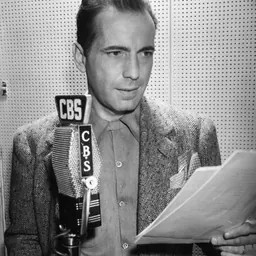
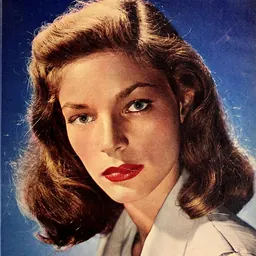
After the war, Rolfe resumed his literary work, co-authoring with Lester Fuller the 1946 mystery novel, The Glass Room. He relocated to Hollywood to adapt the novel for the screen. He was excited at the prospect—Humphrey Bogart and Lauren Bacall were set to star in the film—but ultimately the project never came to fruition. It may have been cancelled as a result of political pressure on Warner Bros. since Rolfe and Fuller were both CPUSA members. It turned out that Rolfe's only screenwriting credit would be for the 1951 film noir, The Scarf.
As he prepared the poems that would comprise his 1951 First Love volume, Rolfe's mind kept returning to the Spanish Civil War, like in these opening lines of "Elegia" (1948): Madrid Madrid Madrid MadridI call your name endlessly, savor it like a lover.Ten irretrievable years have exploded like bombssince last I saw you, since last I sleptin your arms of tenderness and wounded granite.Ten years since I touched your face in the sun,ten years since the homeless Guadarrama windsmoaned like shivering orphans through your veinsand I moaned with them.
Don’t just read it —
keep it.
Full-length biographies made to live with: read them, listen on the way to work, watch them tonight.
- E-book
- Audio
- Video
Instant download · yours to keep · every purchase keeps this site free
Important facts
People in Edwin Rolfe's life
Named in this biography and alive at the same time

Related people
Same field, nearest in time


Contemporaries
People whose lives overlapped Edwin Rolfe's



Frequently asked questions
Who was Edwin Rolfe?
American writer (1909-1954)
When was Edwin Rolfe born?
Edwin Rolfe was born on 7 September 1909 in Philadelphia.
When did Edwin Rolfe die?
Edwin Rolfe died on 24 May 1954 in Los Angeles.
What was Edwin Rolfe's occupation?
Edwin Rolfe was a writer, screenwriter and poet.
What nationality was Edwin Rolfe?
Edwin Rolfe was American.
Sources & further reading
Cite this page
APA: Biography.guide. (2026). Edwin Rolfe. https://biography.guide/edwin-rolfe/
MLA: "Edwin Rolfe." Biography.guide, https://biography.guide/edwin-rolfe/.
Chicago: "Edwin Rolfe." Biography.guide. https://biography.guide/edwin-rolfe/.
Data last updated: 2026-09-20 · Spot an error? Report a correction.
Portrait: Wikimedia Commons · author & licence
Page generated 2026-09-27 04:58 UTC