
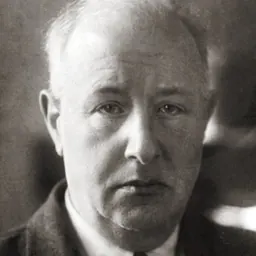
Edwin E. Salpeter
Austrian–Australian–American astrophysicist
About Edwin E. Salpeter
Lived 1924 – 2008 (aged 83). Edwin E. Salpeter was an Austrian, American and Australian astrophysicist, university teacher and nuclear physicist, known for Bethe–Salpeter equation and Salpeter initial mass function.
Edwin Ernest Salpeter (3 December 1924 – 26 November 2008 ) was an Austrian–Australian–American astrophysicist.
Life Born in Vienna to a Jewish family, Salpeter emigrated from Austria to Australia while in his teens to escape the Nazis. He attended Sydney Boys High School (1939–40) and Sydney University, where he obtained his bachelor's degree in 1944 and his master's degree in 1945. In the same year he was awarded an overseas scholarship and attended the University of Birmingham, England, where he earned his doctorate in 1948 under the supervision of Sir Rudolf Peierls. He spent the remainder of his career at Cornell University, where he was the James Gilbert White Distinguished Professor of the Physical Sciences. Salpeter died of leukemia at his home in Ithaca, New York on 26 November 2008.
Scientific contributions Salpeter has made a wide range of important contributions to physics and astronomy. In 1951 Salpeter suggested that stars could burn helium-4 into carbon-12 with the Triple-alpha process not directly, but through an intermediate metastable state of beryllium-8, which helped to explain the carbon production in stars. He later derived the initial mass function for the formation rates of stars of different mass in the Galaxy. It shows that the number of stars in each mass range decreases rapidly with increasing mass.
In 1964 Salpeter and independently Yakov B. Zel'dovich were the first to suggest that accretion discs around massive black holes are responsible for the huge amounts of energy radiated by quasars (which are the brightest active galactic nuclei). This is currently the most accepted explanation for the physical origin of active galactic nuclei and the associated extragalactic relativistic jets.
In early 1970s, Salpeter discovered that molecular hydrogen and many other molecular species are formed in the interstellar medium not as much in the gas phase but primarily on the surfaces of dust particles.
Family In 1950 he married Miriam (Mika) Mark (1929–2000), a neurobiologist born in Riga, Latvia; she was chairwoman of the department of neurobiology and behavior at Cornell from 1982 to 1988. The Society for Neuroscience created the Mika Salpeter award in her memory; it "recognizes an individual with outstanding career achievements in neuroscience who has also significantly promoted the professional advancement of women in neuroscience." The Salpeters had two daughters, Judy Salpeter and Dr. Shelley Salpeter. After Miriam's death, Edwin married Antonia Shouse.
Honors Carnegie Institution for Science Award for Research in Astrophysics (1959) Member of the American Academy of Arts and Sciences (1967) Member of the United States National Academy of Sciences (1967) Member of the American Philosophical Society (1977) Karl Schwarzschild Medal (1985) Bruce Medal (1987) Fellow of the Australian Academy of Science (1988)) Dirac Medal of the University of South Wales (1996) Crafoord Prize (with Fred Hoyle) (1997) Hans Bethe Prize (1999)
Don’t just read it —
keep it.
Full-length biographies made to live with: read them, listen on the way to work, watch them tonight.
- E-book
- Audio
- Video
Instant download · yours to keep · every purchase keeps this site free
Important facts
People in Edwin E. Salpeter's life
Named in this biography and alive at the same time




Related people
Same field, nearest in time




Contemporaries
People whose lives overlapped Edwin E. Salpeter's


Frequently asked questions
Who was Edwin E. Salpeter?
Austrian–Australian–American astrophysicist (1924–2008)
When was Edwin E. Salpeter born?
Edwin E. Salpeter was born on 3 December 1924 in Vienna, United States.
When did Edwin E. Salpeter die?
Edwin E. Salpeter died on 26 November 2008 in Ithaca.
What was Edwin E. Salpeter's occupation?
Edwin E. Salpeter was an astrophysicist, university teacher and nuclear physicist.
What was Edwin E. Salpeter known for?
Edwin E. Salpeter was known for Bethe–Salpeter equation and Salpeter initial mass function.
What nationality was Edwin E. Salpeter?
Edwin E. Salpeter was Austrian, American and Australian.
Sources & further reading
· Wikipedia: Edwin E. Salpeter
Cite this page
APA: Biography.guide. (2026). Edwin E. Salpeter. https://biography.guide/edwin-e-salpeter/
MLA: "Edwin E. Salpeter." Biography.guide, https://biography.guide/edwin-e-salpeter/.
Chicago: "Edwin E. Salpeter." Biography.guide. https://biography.guide/edwin-e-salpeter/.
Data last updated: 2026-09-20 · Spot an error? Report a correction.
Page generated 2026-09-27 05:17 UTC