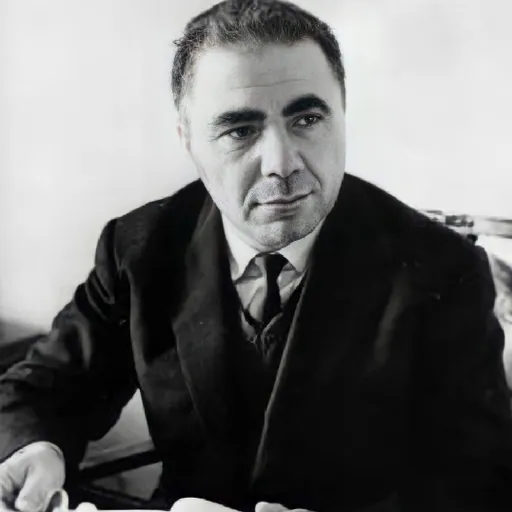
About Victor Ambartsumian
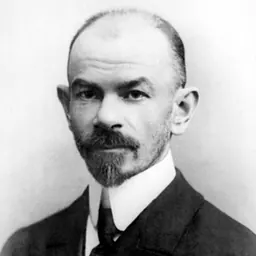
Lived 1908 – 1996 (aged 87). Victor Ambartsumian was a Russian and Armenian astrophysicist, politician, astronomer and scientist, known for Stellar association.
Background Ambartsumian was born in Tiflis (present-day Tbilisi, Georgia) on , Ambartsumian was the secretary, while Hovhannes Tumanyan, the famed poet, served as its president. Ambartsumian knew Tumanyan personally. In 1922, after the 14-year-old boy described Sirius to him, Tumanyan wrote a short poem about the star.
Ambartsumian's parents married in 1904. He had a brother, Levon, and sister, Gohar. Levon, a geophysics student, died at 23-24 while on an expedition in the Urals.
Education Ambartsumian developed an early interest in mathematics and was able to multiply by the age of 4. His interest in astronomy began with reading a Russian translation of a book by Ormsby M. Mitchel at 11. By his own account, he considered himself an astronomer by the age of 12. Chandrasekhar stated in 1977 that during his visit in 1934 Ambartsumian "was very free and very open. He was extremely critical of his seniors." and others. Ambartsumian considered Sobolev his "most brilliant graduate student." Benjamin Markarian started the First Byurakan Survey that resulted in the discovery of the Markarian galaxies.
Ambartsumian and his disciples at the Byurakan Observatory became known in the scholarly literature as the "Byurakan School." From 1977 to 1996 Ambartsumian headed a specialized council for theses defenses at Byurakan. Over 50 scientists defended their PhD (Candidate) and Doctoral theses on astronomy, astrophysics and theoretical physics in those years under Ambartsumian. At the time the "idea of star formation as an ongoing process was regarded as very speculative." by the Armenian Academy Sciences. Ambartsumian's discovery was based on his observation of stars of O and B spectral types and T Tauri and flare stars that cluster very loosely. This is significantly different from open clusters, which have a higher density of stars, while stellar associations have lower than average density. Ambartsumian divided stellar associations into OB and T groups where he first introduced the inverse Sturm-Liouville problem. He proved that "among all vibrating strings only the homogeneous vibrating string has eigenvalues that are specific to it—that is, homogeneous vibrating strings have a spectrum of eigenvalues."
Science administration
Dialectical materialism influenced Ambartsumian's cosmological views and ideas. McCutcheon noted that Ambartsumian's "scientific genius combined with his political loyalty took him to the heights of the Soviet scientific establishment."
Ambartsumian was a delegate to the 19th (1952), 20th (1956), 22nd (1961), 23rd (1966), 24th (1971), 25th (1976) and 26th (1981) congresses of the CPSU.
Cold War politics Ambartsumian often signed open letters in support of the official line of the Soviet authorities. In 1971 he was among leading 14 Soviet scientists who signed a letter to U.S. President Richard Nixon in support of Angela Davis and appealed him to "give her an opportunity of continuing her scientific work." In 1983 Ambartsumian was among 244 Soviet scientists who signed a statement attacking U.S. President Ronald Reagan's Strategic Defense Initiative ("Star Wars"), namely Reagan's plan for an effective defense against nuclear attack. The scientists stated that Reagan is "creating a most dangerous illusion that may turn into an even more threatening spiral of the arms race."
Ambartsumian's relationship with dissidents was complicated. In 1973 he refused to meet Yuri Orlov, nuclear physicist and a prominent dissident, after having offered him a job in Yerevan. Ambartsumian told him through subordinate that "there are situations when even an Academy member is helpless." In 1975 he was among 72 Soviet scientists who denounced the award of the Nobel Peace Prize to Soviet physicist and dissident Andrei Sakharov.
Armenian causes Ambartsumian revered the Armenian language and supported its usage. He insisted all internal communication of the Armenian Academy of Sciences be done in Armenian when he became president in 1947. As president of the Armenian Academy of Sciences, Ambartsumian often gave speeches at major events, such as during the commemorations of the 1600th anniversary of Mesrop Mashtots, the inventor of the Armenian alphabet, in 1962 and the 100th anniversary of Hovhannes Tumanyan, Armenia's national poet, in 1969. Ambartsumian stated: "The history of our culture has given many outstanding figures, but of all these figures, the Armenian people owe the most to Mashtots."
Armenian genocide Ambartsumian delivered a speech on 24 April 1965, on the 50th anniversary of the Armenian genocide, describing it as "extermination of the Armenian population of Western Armenia." He linked it to the 45th anniversary of Soviet Armenia and the revival of the Armenian people as a result of the October Revolution. In an article published in Pravda on 24 April 1975 Ambartsumian linked the Armenian genocide to the Holocaust and blamed German imperialism during World War I for inspiring the Young Turks and the capitalist states for failing to defend the innocent Armenian population and praised the October Revolution for saving the Armenian nation.
Nagorno-Karabakh Ambartsumian played a role in the Karabakh movement and was vocal in the initial phase of the Nagorno-Karabakh conflict. In November 1989, the Ambartsumian-led Armenian Academy of Sciences issued a statement protesting the decision of the Supreme Soviet of the Soviet Union to return Nagorno-Karabakh under the direct control of Soviet Azerbaijan.
In September 1990 Ambartsumian and four other Armenians, including writer Zori Balayan and actor Sos Sargsyan, went on a hunger strike at the Hotel Moskva in Moscow to protest the military rule over Nagorno-Karabakh declared by Mikhail Gorbachev. Ambartsumian celebrated his 82nd birthday hunger striking. According to Yuri Shahbazyan, a friend and biographer of Ambartsumian, he remained sympathetic towards the Communist Party of Russia and was critical of Western-sponsored economic liberalization in Russia and other post-Soviet countries.
Personal life Ambartsumian's house-museum in Byurakan, where he lived since around 1950 and died in 1996.
When Ambartsumian was referred to by foreigners as a Russian scientist, he corrected them by saying he was Armenian. He spoke perfect Armenian, albeit with an accent. Ambartsumian admitted to not having any hobbies: "My only passion is science, astronomy. Like a jealous wife, it expects a man to give all of himself." and is universally recognized as the founder of the Soviet school of theoretical astrophysics. (The authors of a 1981 US government report described him as "among the Soviet Union's best-known and most respected scientists abroad." During the Cold War, Ambartsumian was the first Soviet scientist to become foreign honorary member of the American Academy of Arts and Sciences and foreign associate of the National Academy of Sciences in 1958 and 1959, respectively.)
In 1977 Subrahmanyan Chandrasekhar stated: "My own impression has always been that he was, when he was in his prime, one of the most perceptive and elegant of astronomers."
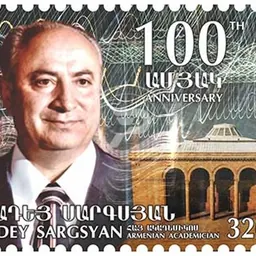
In Armenia After his visit to Armenia in 1971, William H. McNeill wrote that Ambartsumian enjoys "enormous local prestige." One of the "modern icons of Armenian pride," Ambartsumian is recognized as the most prominent scientist in 20th century Armenia, and the most important since the seventh century polymath Anania Shirakatsi. Fadey Sargsyan, Ambartsumian's successor as President of the Armenian Academy of Sciences, stated in 1998 that he went "beyond the limits of his scientific fields and in his own lifetime [became] a great national figure." for his scientific work of international significance, science administration and patriotic activism. Ambartsumian's Knot is a small tidal dwarf galaxy located in NGC 3561 in the constellation Ursa Major.
In 1998 Ambartsumian's 90th anniversary was celebrated in Armenia; the International Astronomical Union held a symposium at the Byurakan Observatory and the Pedagogical Institute of Vardenis.
In 2009 a bronze statue of Ambartsumian was unveiled in Yerevan at the park around the Yerevan Observatory in attendance of President Serzh Sargsyan and other officials. Busts of Ambartsumian stand at the Byurakan Observatory, the city of Vardenis (1978), and at the central campus of Yerevan State University. It was first awarded in 2010 and is awarded every two years. The prize was initially $500,000, but was reduced to $300,000 in 2018. It is considered one of the prestigious awards in astronomy and related fields. Gold Medal of the Royal Astronomical Society (1960) "for outstanding contributions to astrophysics" Lomonosov Gold Medal of the Soviet Academy of Sciences, "for outstanding achievements in the field of astronomy and astrophysics" (1971) Helmholtz Medal (Helmholtz-Medaille) of the Academy of Sciences of the German Democratic Republic (1971) Cothenius Medal of the Academy of Sciences Leopoldina (1974)
Membership Soviet Union Corresponding Member of the USSR Academy of Sciences (1939) Associate of the Royal Astronomical Society (1953) Corresponding member (1958) and foreign associate (1978) of the French Academy of Sciences Foreign Honorary Member of the American Academy of Arts and Sciences (1958) Foreign Associate of the U.S. National Academy of Sciences (1959) Honorary Member of the Royal Astronomical Society of Canada (1959) Foreign Member of the Royal Society (1969)
Honorary degrees Ambartsumian received honorary doctorates from several universities: Australian National University (1963), University of Paris (1967), University of Liège (1967), Charles University in Prague (1967), Nicolaus Copernicus University in Toruń (1973), National University of La Plata (1974). and noted that in a short time it had found "many appreciative readers in both German and English speaking countries." George B. Field described the book as "comprehensively and competently constructed." A. David Andrews described it as a "valuable textbook", which "contains examples of [Ambartsumian's] unique and fruitful approaches to stubborn astronomical problems."
Don’t just read it —
keep it.
Full-length biographies made to live with: read them, listen on the way to work, watch them tonight.
- E-book
- Audio
- Video
Instant download · yours to keep · every purchase keeps this site free
Important facts
Family & relationships
People in Victor Ambartsumian's life
Named in this biography and alive at the same time



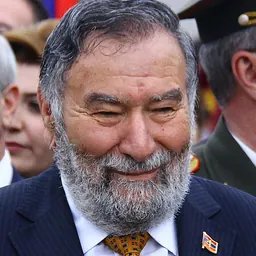

Related people
Same field, nearest in time


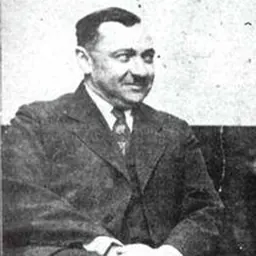
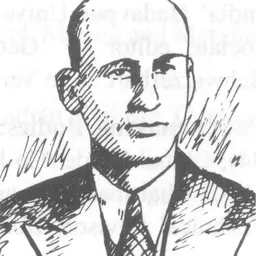

Contemporaries
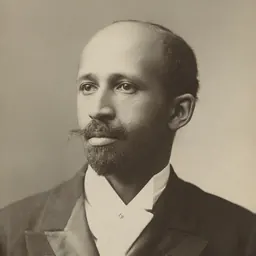
People whose lives overlapped Victor Ambartsumian's


Frequently asked questions
Who was Victor Ambartsumian?
Soviet Armenian astrophysicist (1908–1996)
When was Victor Ambartsumian born?
Victor Ambartsumian was born on 5 September 1908 in Tbilisi.
When did Victor Ambartsumian die?
Victor Ambartsumian died on 12 August 1996 in Byurakan.
What was Victor Ambartsumian's occupation?
Victor Ambartsumian was an astrophysicist, politician, astronomer and scientist.
What was Victor Ambartsumian known for?
Victor Ambartsumian was known for Stellar association.
What nationality was Victor Ambartsumian?
Victor Ambartsumian was Russian and Armenian.
Sources & further reading
· Wikipedia: Victor Ambartsumian
· DBpedia: Viktor Ambartsumian
Cite this page
APA: Biography.guide. (2026). Victor Ambartsumian. https://biography.guide/victor-ambartsumian/
MLA: "Victor Ambartsumian." Biography.guide, https://biography.guide/victor-ambartsumian/.
Chicago: "Victor Ambartsumian." Biography.guide. https://biography.guide/victor-ambartsumian/.
Data last updated: 2026-09-20 · Spot an error? Report a correction.
Page generated 2026-09-27 05:10 UTC