
About Edward Vaughan Hyde Kenealy
Lived 1819 – 1880 (aged 60). Edward Vaughan Hyde Kenealy was a British politician, writer, poet, barrister and lawyer.
Edward Vaughan Hyde Kenealy (2 July 1819 – 16 April 1880) was an Irish barrister and writer. He is best remembered as counsel for the Tichborne claimant and the eccentric and disturbed conduct of the trial that led to his ruin.
Early life He was born on Nile Street (now Sheares Street), Cork, the son of a local merchant. He was educated at Trinity College Dublin, and was called to the Irish Bar in 1840 and to the English Bar in 1847. He obtained a fair practice in criminal cases. In 1868 he became a QC and a bencher of Gray's Inn. Defence of Francis Looney and William Dowling against charges of treason-felony, (1848); Junior counsel in the unsuccessful defence of poisoner William Palmer, (1856); Defence of Ricard O'Sullivan Burke and his accomplice Casey during the Fenian Rising, (1867). Kenealy withdrew from the case following the failed attempt to effect their escape in the Clerkenwell explosion. Prosecution of the directors of Overend, Gurney and Company for fraud following the company's collapse, (1869); Counsel for Arthur Orton, alias Roger Tichborne, taking over the brief from William Campbell Sleigh in April 1873.
Private life Kenealy suffered from diabetes and an erratic temperament has sometimes been attributed to poor control of the symptoms.
In 1850, he published an eccentric poem inspired by Johann Wolfgang von Goethe, Goethe, a New Pantomime. He also published a large amount of poetry in journals such as Fraser's Magazine. He published translations from Latin, Greek, German, Italian, Portuguese, Russian, Irish, Persian, Arabic, Hindustani and Bengali. It is unlikely that he was fluent in all these languages.
In 1866, Kenealy wrote The Book of God: the Apocalypse of Adam-Oannes, an unorthodox theological work in which he claimed that he was the "twelfth messenger of God", descended from Jesus Christ and Genghis Khan.
In Parliament, Kenealy called for a Royal Commission into his conduct in the Tichborne case, but lost a vote on this by 433–3. One vote was Kenealy's, another that of his teller, George Hammond Whalley. The third "aye" was by Purcell O'Gorman of Waterford City. During this period, he also wrote a nine-volume account of the case.
Dr Kenealy, as he was always called, gradually ceased to attract attention,
Don’t just read it —
keep it.
Full-length biographies made to live with: read them, listen on the way to work, watch them tonight.
- E-book
- Audio
- Video
Instant download · yours to keep · every purchase keeps this site free
Important facts
People in Edward Vaughan Hyde Kenealy's life
Named in this biography and alive at the same time


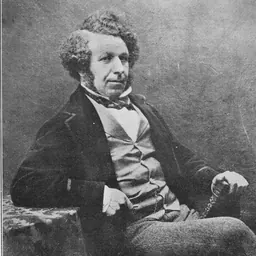
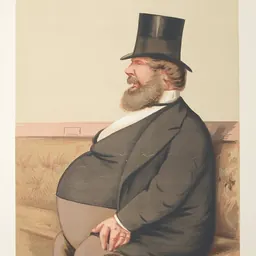
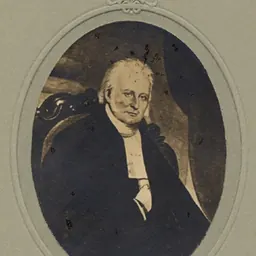
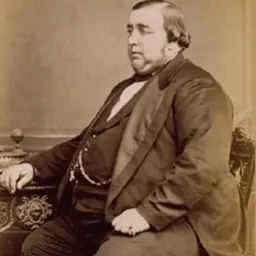

Related people
Same field, nearest in time



Contemporaries
People whose lives overlapped Edward Vaughan Hyde Kenealy's




Frequently asked questions
Who was Edward Vaughan Hyde Kenealy?
British politician
When was Edward Vaughan Hyde Kenealy born?
Edward Vaughan Hyde Kenealy was born on 2 July 1819 in Cork.
When did Edward Vaughan Hyde Kenealy die?
Edward Vaughan Hyde Kenealy died on 16 April 1880 in London.
What was Edward Vaughan Hyde Kenealy's occupation?
Edward Vaughan Hyde Kenealy was a politician, writer, poet, barrister and lawyer.
What nationality was Edward Vaughan Hyde Kenealy?
Edward Vaughan Hyde Kenealy was British.
Sources & further reading
· Wikipedia: Edward Vaughan Hyde Kenealy
Cite this page
APA: Biography.guide. (2026). Edward Vaughan Hyde Kenealy. https://biography.guide/edward-vaughan-hyde-kenealy/
MLA: "Edward Vaughan Hyde Kenealy." Biography.guide, https://biography.guide/edward-vaughan-hyde-kenealy/.
Chicago: "Edward Vaughan Hyde Kenealy." Biography.guide. https://biography.guide/edward-vaughan-hyde-kenealy/.
Data last updated: 2026-09-20 · Spot an error? Report a correction.
Page generated 2026-09-27 05:23 UTC