
Edward Tynte
Colonial Governor of the state of South Carolina
About Edward Tynte
Lived 1650 – 1710 (aged 59–60).
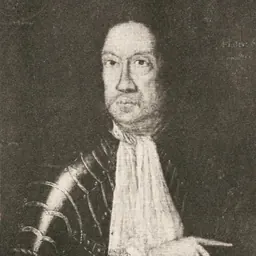
Edward Tynte (died 26 June 1710) was a colonial governor of Carolina, serving from 1709 until 1710. Descending from a family of nobility, Tynte was appointed governor of Carolina in 1708. However, his arrival was delayed, and he only held office for six months before dying in 1710.
Personal life Tynte was from Somerset, England. Tynte was a descendant of the Tynte baronets in Somerset, a group that had recently risen to baronetcy, though his mother and siblings are unknown. Tynte was a Christian, and had joined the SPG by 1710. Tynte is variously called both a major and a colonel in surviving documents,
Political career On December 9, 1708, Tynte was commissioned as the governor of Carolina by William Craven, 2nd Baron Craven. Concerning maritime trade, Tynte was instructed to allow ships to import or export goods only if their master and 75% of their crew were of English descent. Other instructions included monitoring whaling and the sale of land, along with establishing friendly relationships with the local Native Americans.
Tynte's arrival in South Carolina was delayed, as he arrived on November 26, 1709, and was officially named governor that day. Tynte succeeded Nathaniel Johnson as governor. Per the wishes of the proprietors of Carolina to encourage settlers to cultivate the local land, Tynte gave one hundred acres of land in what would become Albemarle and Bath County to any emigrant in Carolina. One of Tynte's few acts in his short governorship was signing legislation that would enact free public education in South Carolina. In accordance with the planned creation of the Province of North Carolina, Tynte was ordered to deputize Edward Hyde as its first governor, appointing Thomas Cary as the interim governor until Hyde arrived to be deputized.
Death and aftermath During his governorship, Tynte died on 26 June 1710, in Charles Town, South Carolina. In his will, made shortly before he left for Carolina, Tynte left his entire estate to Francis Killner, a spinster in London.
Before Tynte's death, he directed his three deputies to choose among themselves an interim governor to succeed Tynte. One of Tynte's deputies, Robert Gibbes, voted for himself and bribed another deputy, Fortescue Turberville, to vote for him, causing Gibbes to succeed Tynte.
Additionally, Tynte's death meant he did not officially sign Hyde's commission, causing a power struggle between Hyde and Cary that eventually led to Cary's Rebellion.
Don’t just read it —
keep it.
Full-length biographies made to live with: read them, listen on the way to work, watch them tonight.
- E-book
- Audio
- Video
Instant download · yours to keep · every purchase keeps this site free
Important facts
People in Edward Tynte's life
Named in this biography and alive at the same time


Contemporaries
People whose lives overlapped Edward Tynte's






Frequently asked questions
Who was Edward Tynte?
colonial Governor of the state of South Carolina
When was Edward Tynte born?
Edward Tynte was born in 1650.
When did Edward Tynte die?
Edward Tynte died on 26 June 1710.
Sources & further reading
Cite this page
APA: Biography.guide. (2026). Edward Tynte. https://biography.guide/edward-tynte/
MLA: "Edward Tynte." Biography.guide, https://biography.guide/edward-tynte/.
Chicago: "Edward Tynte." Biography.guide. https://biography.guide/edward-tynte/.
Data last updated: 2026-09-20 · Spot an error? Report a correction.
Page generated 2026-09-27 05:09 UTC