
Edward Tufte
American statistician (b.1942) noted for his writings on information design
About Edward Tufte
Born 1942. Edward Tufte is an American statistician, sculptor, university teacher, computer scientist, writer and political scientist.
Early life and education Edward Rolf Tufte was born in 1942 in Kansas City, Missouri, to Virginia Tufte (1918–2020) and Edward E. Tufte (1912–1999). He grew up in Beverly Hills, California, where his father was a longtime city official. He graduated from the public Beverly Hills High School.
Tufte received a BS and a MS in statistics from Stanford University, and a Doctor of Philosophy in political science from Yale University.
Career Tufte was hired in 1967 by the Woodrow Wilson School of Princeton University as a lecturer in politics and public affairs, where he steadily moved up to the rank of full Professor in 1972. He taught courses there in political economy and data analysis while publishing three quantitatively inclined political science books.
In 1975, while at Princeton, Tufte was asked to teach a statistics course to a group of journalists who were visiting the school to study economics. He developed a set of readings and lectures on statistical graphics, which he further developed in joint seminars he taught with renowned statistician John Tukey, a pioneer in the field of information design. These course materials became the foundation for Tufte's first book on information design, The Visual Display of Quantitative Information.
In 1977, Tufte left Princeton University for Yale University, where he accepted an appointment as Professor of Political Science, Statistics, and Computer Science, as well as a Senior Critic at the Yale School of Art.
After negotiations with major publishers failed, Tufte decided to self-publish the book The Visual Display of Quantitative Information in 1982, working closely with graphic designer Howard Gralla. Tufte financed the work by taking out a second mortgage on his home. The book quickly became a commercial success and secured Tufte's transition from political scientist to information expert.
Infographic work Tufte is an expert in the presentation of infographics such as charts and diagrams, and is a fellow of the American Statistical Association. He has held fellowships from the Guggenheim Foundation and the Center for Advanced Study in the Behavioral Sciences.
Information design
Tufte's writing is important in such fields as information design and visual literacy, which deal with the visual communication of information. He coined the word chartjunk to refer to useless, non-informative, or information-obscuring elements of quantitative information displays. Tufte's other key concepts include what he calls the lie factor, the data-ink ratio, and the data density of a graphic.
Tufte uses the term "data-ink ratio" to argue against using excessive decoration in visual displays of quantitative information. In Visual Display, Tufte explains, "Sometimes decoration can help editorialize about the substance of the graphic. But it is wrong to distort the data measures—the ink locating values of numbers—in order to make an editorial comment or fit a decorative scheme."
Tufte encourages the use of data-rich illustrations that present all available data. When such illustrations are examined closely, every data point has a value, but when they are looked at more generally, only trends and patterns can be observed. Tufte suggests these macro/micro readings be presented in the space of an eye-span, in the high resolution format of the printed page, and at the unhurried pace of the viewer's leisure.
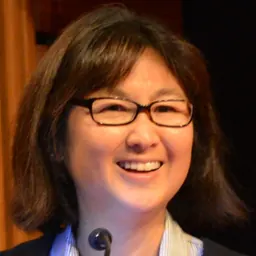
Tufte uses several historical examples to make his case. These include John Snow's cholera outbreak map, Charles Joseph Minard's Carte Figurative, early space debris plots, Galileo Galilei's Sidereus Nuncius, and Maya Lin's Vietnam Veterans Memorial. For instance, the listing of the names of deceased soldiers on the black granite of Lin's sculptural memorial is shown to be more powerful as a chronological list rather than as an alphabetical one. The sacrifice each fallen individual has made is thus highlighted within the overall time scope of the war. In Sidereus Nuncius, Galileo presents the nightly observations of the moons of Jupiter in relation to the body itself, interwoven with the two-month narrative record.
Criticism of PowerPoint Tufte has criticized the way Microsoft PowerPoint is typically used. In his essay "The Cognitive Style of PowerPoint", Tufte criticizes many aspects of the software: Its use as a way to guide and reassure a presenter, rather than to enlighten the audience; Its unhelpfully simplistic tables and charts, a design decision holdover from the low resolution of early computer displays; The outliner's causing ideas to be arranged in an artificially deep hierarchy, itself subverted by the need to restate the hierarchy on each slide; Enforcement of the audience's lockstep linear progression through that hierarchy (whereas with handouts, readers could browse and relate items at their leisure); Poor typography and chart layout, from presenters who are poor designers or who use poorly designed templates and default settings (in particular, difficulty in using scientific notation); Simplistic thinking—from ideas being squashed into bulleted lists; and stories with a beginning, middle, and end being turned into a collection of disparate, loosely disguised points—presenting a misleading façade of objectivity and neutrality that people associate with science, technology, and "bullet points".
Tufte cites the way PowerPoint was used by NASA engineers in the events leading to the Space Shuttle Columbia disaster as an example of PowerPoint's many problems. The software style is designed to persuade rather than to inform people of technical details. Tufte's analysis of a NASA PowerPoint slide is included in the Columbia Accident Investigation Board’s report -- including an engineering detail buried in small type on a crowded slide with six bullet points, that if presented in a regular engineering white paper, might have been noticed and the disaster prevented.
Instead, Tufte argues that the most effective way of presenting information in a technical setting, such as an academic seminar or a meeting of industry experts, is by distributing a brief written report that can be read by all participants in the first 5 to 10 minutes of the meeting. Tufte believes that this is the most efficient method of transferring knowledge from the presenter to the audience and then the rest of the meeting is devoted to discussion and debate. These are often used as elements of a small multiple with several lines used together. Tufte explains the sparkline as a kind of "word" that conveys rich information without breaking the flow of a sentence or paragraph made of other "words" both visual and conventional. To date, the earliest known implementation of sparklines was conceived by interaction designer Peter Zelchenko and implemented by programmer Mike Medved in early 1998.
Sculpture Beyond his academic endeavors over the years, Tufte has created sculptures, often large outdoor ones made of metal or stone,
Hogpen Hill Farms Hogpen Hill Farms, the Tufte sculpture garden in Woodbury, Connecticut, is open to the public on summer weekends.
ET Modern In 2010, Edward Tufte opened a gallery, ET Modern, in New York City's Chelsea Art District The gallery closed in 2013.
Don’t just read it —
keep it.
Full-length biographies made to live with: read them, listen on the way to work, watch them tonight.
- E-book
- Audio
- Video
Instant download · yours to keep · every purchase keeps this site free
Important facts
People in Edward Tufte's life
Named in this biography and alive at the same time






Related people
Same field, nearest in time





Contemporaries
People whose lives overlapped Edward Tufte's



Frequently asked questions
Who is Edward Tufte?
American statistician (b.1942) noted for his writings on information design
When was Edward Tufte born?
Edward Tufte was born on 14 March 1942 in Kansas City.
What is Edward Tufte's occupation?
Edward Tufte is a statistician, sculptor, university teacher, computer scientist, writer and political scientist.
What nationality is Edward Tufte?
Edward Tufte is American.
Sources & further reading
Cite this page
APA: Biography.guide. (2026). Edward Tufte. https://biography.guide/edward-tufte/
MLA: "Edward Tufte." Biography.guide, https://biography.guide/edward-tufte/.
Chicago: "Edward Tufte." Biography.guide. https://biography.guide/edward-tufte/.
Data last updated: 2026-09-20 · Spot an error? Report a correction.
Page generated 2026-09-27 05:28 UTC