
About Edward Stevenson
Lived 1906 – 1968 (aged 62). Edward Stevenson was an American costume designer.
Edward Manson Stevenson (May 13, 1906 – December 2, 1968) was an Academy Award-winning American costume designer. His film and television credits number well over two hundred, including Citizen Kane and It's a Wonderful Life (1946), both frequently cited as being among the greatest films of all time. In his later years, he worked for Lucille Ball as costume designer for I Love Lucy, The Lucy-Desi Comedy Hour, The Lucy Show, and Here’s Lucy. A large collection of his costume sketches are housed in the Department of Special collections at Eli M. Oboler Library in Pocatello, Idaho.
Early life Edward Manson Stevenson was born in Pocatello, Idaho on May 13, 1906, to Jennie Uhland Stevenson (née Dolly) and Andrew Burtner Stevenson. Andrew worked for the Oregon Shortline Railroad, a subsidiary of Union Pacific, rising from dispatch clerk to division superintendent. He served a term in 1903 as senator from Bannock County in the Idaho state legislature and was the Republican nominee in 1907 for Pocatello mayor. Andrew's political activity was often limited by time spent fulfilling his duties with the railroad, duties which included a great deal of travel. Jennie, a widowed former schoolteacher, had two sons from her first marriage to Frank Uhland Sr. who died in Denver in 1904. Andrew and Jennie married July 23, 1905 and Edward was born the following year.
Stevenson was educated at St. Joseph's Catholic school and also took correspondence courses in art. He suffered from significant respiratory difficulties, and sometime in 1915, Jennie took him to California in hopes that the change in climate would provide some relief. They stayed in California into the following year and then returned to Idaho.
In December 1919 when he was 13 years old, Stevenson's father died. By 1922, Stevenson and his mother had again taken up residence in California.
Apprenticeship and early career Sources disagree regarding Stevenson's entry into the Hollywood film community, though the various stories all relate one of two distinct paths, both involving connections with people in the film industry.
One version asserts that his mother, while traveling on a train between California and Idaho, met the friend of a Hollywood designer, possibly from the Robert Brunton studios. She impressed her new acquaintance so profoundly with some of Stevenson's artwork that she gained for her son a letter of introduction to the designer. Through this letter, Stevenson was able to get jobs as a sketch artist during school breaks, impressing those he worked with sufficiently that he was able to begin building his career.
The other story relates that Stevenson and his mother lived next door to Lova Klenowsky, a cousin of Gloria Swanson. Klenowsky became aware of Stevenson's artistic abilities and interest in design, and she introduced him to Clément Henri Andreani, known professionally as André-ani. The designer was impressed and tutored the young man in costume design for approximately two years.
Silent Film Work In 1924, Stevenson began working as a sketch artist for Norma Talmadge’s production company, and he was also allowed to submit his own designs. One Stevenson design mentioned in numerous accounts is a silver gown worn by Barbara LaMarr in The White Moth (1924). When Andre-aní was hired to replace Erte at MGM in 1925, he brought in his young protégé to sketch for him. Andre-aní designed for Greta Garbo, Norma Shearer, Louise Fazenda, and Joan Crawford during that time.
In May 1925 and April 1926, Stevenson executed costumes for stage productions presented at Pocatello High School, allowing him to gain experience designing for an actual production in a low-profile location. The productions were Once in a Blue Moon and Bizet’s Carmen, respectively.
When Andre-ani and MGM parted ways, Stevenson found work as a sketch artist and occasional designer at Fox. In the 1927 film Seventh Heaven, Janet Gaynor wore a white lace wedding gown of Stevenson's design, the only known example of a Stevenson design from this period in his career.
Warner Brothers/First National Stevenson's first contract as a designer was signed in 1928 with First National Pictures, Inc., then one of the largest theater chains and movie studios in the United States. Warner Brothers had recently gained controlling interest in First National and installed one of their production executives, Hal Wallis, as studio head. It was Wallis's wife, comic film actress Louise Fazenda whom Stevenson had met while at MGM, who convinced Wallis to give the aspiring designer a chance.
Warner Brothers purchased First National in November of the following year, bringing in their own designer, Earl Luick. There was plenty of work for both of them, including the film "Paris", but when Stevenson's contract was up, Orry-Kelly was hired in his stead. Stevenson's name was also excluded from the credits of many of the Warner/First National films on which he had worked, so after his departure he filed suit on the company.
Independence From August 1931 through August 1932, Stevenson worked independently, costuming five films for Columbia Pictures, as well as Hotel Continental for Tiffany Pictures. Three of the five Columbia movies were Frank Capra films and included Platinum Blonde (1931) with Jean Harlow and Loretta Young. Stevenson was also brought in to Hal Roach Studios to design clothes for Thelma Todd, whom he had likely met while designing for Broadminded (1931) at Warner Bros./First National. That effort didn't bear the fruit Stevenson had hoped for and by January 1943, he was back at RKO.
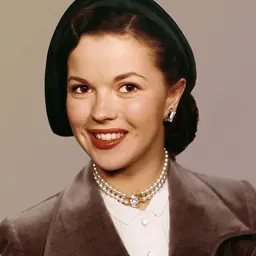
Homecoming Stevenson resumed his duties as head of RKO's costume and wardrobe at a time of both relative stability and dynamic creativity. These were the years of Val Lewton’s famous “horror” unit, Shirley Temple’s attempt to transition from child star to ingénue roles, heavy borrowing of star performers from other studios, and the rise of film noir. Stevenson was involved in all of this, costuming The Curse of the Cat People (1944), The Bachelor and the Bobby Soxer (1947), Government Girl (1944), and Out of the Past (1947), among others. Stevenson also costumed The Spanish Main (1945) with Maureen O’Hara, RKO's first all-Technicolor film since Becky Sharp (1935).
Oscar Nominations
All 3 were for Best Costumes.
24th Academy Awards-Nominated for The Mudlark (in Black and White Costumes). Nomination shared with Margaret Furse. Lost to A Place in the Sun. 24th Academy Awards-Nominated for David and Bathsheba. This was for color costumes. Nomination shared with Charles LeMaire. Lost to An American in Paris. 33rd Academy Awards-The Facts of Life. This was for black and white costumes. Shared with Edith Head. Won.
Personal life
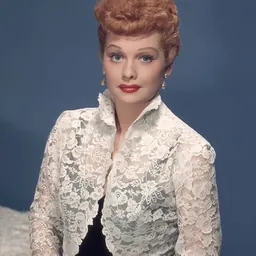
He was friends with actress Lucille Ball for whom he designed costumes starting in her early days at RKO.
Don’t just read it —
keep it.
Full-length biographies made to live with: read them, listen on the way to work, watch them tonight.
- E-book
- Audio
- Video
Instant download · yours to keep · every purchase keeps this site free
Important facts
People in Edward Stevenson's life
Named in this biography and alive at the same time





Related people
Same field, nearest in time



Contemporaries
People whose lives overlapped Edward Stevenson's
Frequently asked questions
Who was Edward Stevenson?
American costume designer (1906–1968)
When was Edward Stevenson born?
Edward Stevenson was born on 13 May 1906 in Pocatello.
When did Edward Stevenson die?
Edward Stevenson died on 2 December 1968 in Los Angeles.
What was Edward Stevenson's occupation?
Edward Stevenson was a costume designer.
What nationality was Edward Stevenson?
Edward Stevenson was American.
Sources & further reading
· DBpedia: Edward Stevenson (costume designer)
Cite this page
APA: Biography.guide. (2026). Edward Stevenson. https://biography.guide/edward-stevenson-costume-designer/
MLA: "Edward Stevenson." Biography.guide, https://biography.guide/edward-stevenson-costume-designer/.
Chicago: "Edward Stevenson." Biography.guide. https://biography.guide/edward-stevenson-costume-designer/.
Data last updated: 2026-09-25 · Spot an error? Report a correction.
Page generated 2026-09-27 05:11 UTC