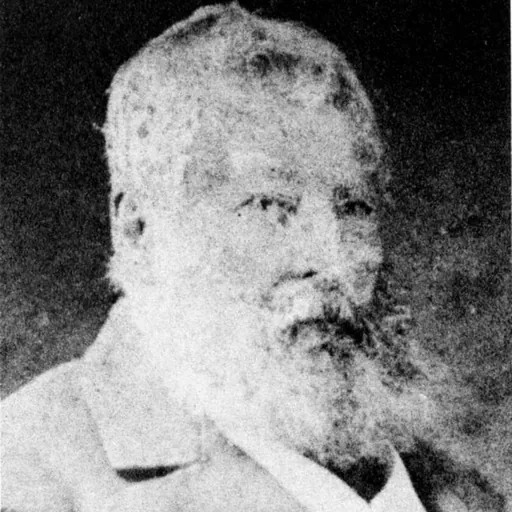
About Edward Snell
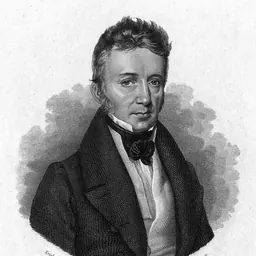
Lived 1820 – 1880 (aged 59). Edward Snell was an Australian civil engineer and engineer.
Railway work
It was Snell's work as engineer for the Geelong and Melbourne Railway Company, from 1853 until he resigned in October 1857, that established his fortune, for which he had been paid more than £17,000. His designs included a substantial terminal station and workshops at Geelong (which were only partly realised).
However, his railway work was not without controversy as he was criticised for the inadequacy of the engineering, with light timber bridges requiring extra maintenance and having a short life span, and the decision to build only a single track leading to slow and infrequent trains, and travelers between Melbourne and Geelong continued to prefer the bay steamers across Port Phillip Bay leading to diminished profits for the company. Snell gave evidence at a number of railway commission enquiries, defending his approach as necessary to complete the work in time, with the expectation that the engineering works would be upgraded as traffic and revenue increased. In reply to the presentation and testimony given to him by the Company in March 1858, he again highlighted the problems of building "a new undertaking, in a new country, and surrounded by innumerable difficulties."
The railway also had the misfortune of a fatal accident on its first run. The company's superintendent – and a friend of Snell's – was struck when leaning out of the train's engine as it approached a tunnel. An inquiry cleared the company of any negligence.
Private practice
Snell also undertook private work as a surveyor and engineer. He formed a partnership with Frederick (German Friedrich) Ferdinand Kawerau on 1 January 1853, which prospered for a time, but was dissolved in the 1854, and later a partnership with Edward Prowse, which was dissolved in 1855, both of whom became prominent architects in Geelong.
Snell was an avid reader and self educator, joining the Adelaide and Geelong Mechanics Institutes; he became a member of the Geelong Society of Architects, Engineers and Surveyors; and the Philosophical Institute of Victoria in 1857 (later the Royal Society of Victoria)
Later life
Snell returned to England in 1858 with his family on the Norfolk, to a life of retirement, having amassed the fortune that was his intention, and secured a considerable income of around £300 per annum. In retirement he undertook his own reading and invented a 'stockless' ship's anchor.
Artistic works
While the illustrations in his diaries and engineering drawings constitute his primary artistic output, his sketches, water colours and oil paintings form a moderate compendium of works of some note. Examples Include:
HMS 'St George' and 'Arethusa' on the Hamoaze near Bull Point. The "Frolic" crossing Yorke's Peninsula, 14 June 1850, watercolour. Prospect of Swindon Railway Works and Village, Wiltshire Two watercolours of the new locomotive works and railway village in Swindon 1849. Williamstown Hobson's Bay, 1854 lithographed R. Quarrill & Co., [Melbourne] 1854. Kangaroo Hunting Yorkes (sic) Peninsula, watercolour, 18 August 1850.
Edward Snell's diary is a frank account of his time in Australia was not written for publication and has a frank, intimate and irreverent flavour. It is illustrated profusely with detailed and humorous watercolours and sketches. Snell's diary is one of three State Library Victoria goldfields records listed in the Australian Register of the Memory of the World.
Don’t just read it —
keep it.
Full-length biographies made to live with: read them, listen on the way to work, watch them tonight.
- E-book
- Audio
- Video
Instant download · yours to keep · every purchase keeps this site free
Important facts
Family & relationships
People in Edward Snell's life
Named in this biography and alive at the same time


Related people
Same field, nearest in time


Contemporaries
People whose lives overlapped Edward Snell's




Frequently asked questions
Who was Edward Snell?
Australian civil engineer
When was Edward Snell born?
Edward Snell was born on 27 November 1820 in Barnstaple.
When did Edward Snell die?
Edward Snell died on 13 March 1880 in Saltash.
What was Edward Snell's occupation?
Edward Snell was a civil engineer and engineer.
What nationality was Edward Snell?
Edward Snell was Australian.
Sources & further reading
· DBpedia: Edward Snell (engineer)
Cite this page
APA: Biography.guide. (2026). Edward Snell. https://biography.guide/edward-snell-civil-engineer/
MLA: "Edward Snell." Biography.guide, https://biography.guide/edward-snell-civil-engineer/.
Chicago: "Edward Snell." Biography.guide. https://biography.guide/edward-snell-civil-engineer/.
Data last updated: 2026-09-23 · Spot an error? Report a correction.
Portrait: Wikimedia Commons · author & licence
Page generated 2026-09-27 05:08 UTC