
About Edward Sismore
Lived 1921 – 2012 (aged 90). Edward Sismore was a British aircraft pilot.
Air Commodore Edward Barnes Sismore DSO, DFC & Two Bars, AFC, AE (23 June 1921 – 22 March 2012) was a British air navigator and fighter pilot during the Second World War, and a senior Royal Air Force officer in the post-war years. Sismore served as the thirteenth Commandant Royal Observer Corps between 1971 and 1973. Towards the end of the war, on 1 February 1945, he was awarded a permanent commission as a flying officer.
Sismore trained as a U/T Observer, joining No. 110 Squadron as a navigator when they were operating the Bristol Blenheim, and mainly involved in anti-shipping strikes. He then transferred squadrons, continuing to operate as a navigator on a Blenheim squadron.
Reynolds/Sismore Immediately after being commissioned, in December 1942 he joined No. 105 Squadron, navigating a De Havilland Mosquito alongside pilot Squadron Leader Reginald Reynolds. Over the following 20 months, the pair would see little rest and make some of the most daring targeted raids of the war, which came in retrospect to recognise Sismore as the RAF's finest low-level navigator of World War II. when Göring was due to address a parade commemorating the 10th anniversary of the Nazis' being voted into power. The mission gave the lie to Göring's claim that such a mission was impossible, and kept Göring off the air for more than an hour. Goering himself was not amused; six weeks later he harangued aircraft manufacturers that he could "go berserk" when faced with the Mosquito, which made him "green and yellow with envy."
For the rest of the spring, the pair mostly led strategic daylight raids against key targets, including power stations, steelworks and factories, and railway assets. Sismore remained Reynolds navigator after he was appointed Commanding Officer of No. 139 Squadron. In this new group, the pair led six Mosquitos on what became the RAF's deepest ever daylight low-level penetration of Germany from Britain, attacking the Schott AG glass works and Carl Zeiss AG optical works at Jena, near Leipzig. He also participated in the successful raid in late October 1944 against the Gestapo HQ in Århus, Denmark as navigator to Reynolds.
Notably in March 1945, whilst serving on No. 140 Wing, Sismore, by then an acting squadron leader, took part in Operation Carthage, a precision raid on the Gestapo headquarters in Copenhagen, Denmark. Sismore was the lead navigator in the Mosquito Mk.VI flown by the raid leader, Group Captain Robert Bateson. The raid, while not being completely successful with a large number of civilian casualties, succeeded in destroying the Gestapo HQ allowing some prisoners to escape. Sismore was awarded a Bar to his DFC and was also honoured with the Danish Order of Dannebrog, Degree of Knight.
Post-war Sismore remained in the RAF after the war, qualifying as a fighter pilot and occupying several senior officer posts. In 1947 Squadron Leader Sismore and former Dambuster pilot, Squadron Leader 'Mick' Martin, broke the London to Cape Town flying record, covering the 6,717 miles in only 21 hours and 31 minutes. They were subsequently awarded the Royal Aero Club's Britannia Trophy for 1947. From 1953 to '56 he commanded No. 29 (Fighter) Squadron. Sismore was promoted to group captain in 1962, and from 1964 to 1966 he served as the Station Commander of RAF Bruggen in Germany. From 1966 to 1970 he was the Senior Air Staff Officer of the RAF's Central Reconnaissance Establishment at RAF Brampton.
Royal Observer Corps On 4 January 1971, on promotion to air commodore, Sismore was appointed as Commandant of the Royal Observer Corps taking over from Air Commodore Denis Rixson. Sismore handed command of the ROC to Air Commodore Roy Orrock on 24 May 1973, and was appointed the Director of the Air Defence Team, planning a new UK air defence environment system.
Retirement Sismore retired from the Royal Air Force on 23 June 1976, and became an advisor to the Marconi Company.
22 June 1945 – 2nd Bar to Distinguished Flying Cross
18 March 1949 – Squadron Leader Sismore was awarded the Danish Order of Dannebrog, Degree of Knight by Frederik IX, the King of Denmark. 31 May 1956 – Squadron Leader Sismore was awarded the Air Force Cross whilst commanding No 29 Fighter Squadron.
Personal life Sismore married his wife Rita in 1946, and the couple had a son and daughter.
Following a stroke, Sismore died on 22 March 2012 in Chelmsford, Essex, survived by his son and daughter.
Don’t just read it —
keep it.
Full-length biographies made to live with: read them, listen on the way to work, watch them tonight.
- E-book
- Audio
- Video
Instant download · yours to keep · every purchase keeps this site free
Important facts
People in Edward Sismore's life
Named in this biography and alive at the same time


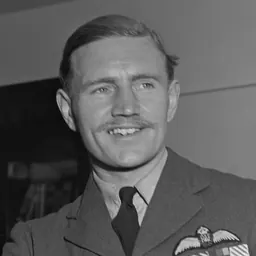



Related people
Same field, nearest in time
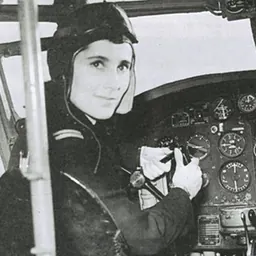
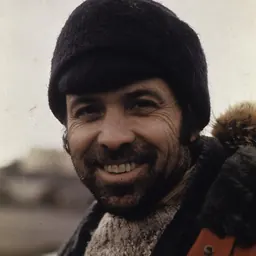

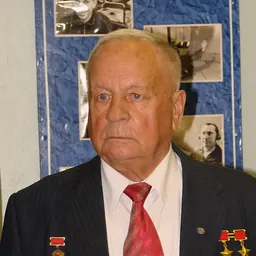
Contemporaries
People whose lives overlapped Edward Sismore's




Frequently asked questions
Who was Edward Sismore?
Royal Air Force officer (1921-2012)
When was Edward Sismore born?
Edward Sismore was born on 23 June 1921 in Kettering.
When did Edward Sismore die?
Edward Sismore died on 22 March 2012 in Chelmsford.
What was Edward Sismore's occupation?
Edward Sismore was an aircraft pilot.
What nationality was Edward Sismore?
Edward Sismore was British.
Sources & further reading
Cite this page
APA: Biography.guide. (2026). Edward Sismore. https://biography.guide/edward-sismore/
MLA: "Edward Sismore." Biography.guide, https://biography.guide/edward-sismore/.
Chicago: "Edward Sismore." Biography.guide. https://biography.guide/edward-sismore/.
Data last updated: 2026-09-20 · Spot an error? Report a correction.
Page generated 2026-09-27 05:30 UTC